Reviews by Matthew Clayton

Meatball Séance

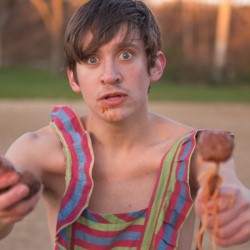
As the caffeine levels increase and you approach the final week of the Festival Fringe, it is a fair observation to make that your shock tolerance increases. What may have startled you on day four barely makes a dent – at this stage you’ve seen it all before, right? Then, along comes Meatball Séance and you’re forced to recalibrate your judgement...John Michael bounces onto the stage, apron-clad (and I mean only apron-clad) and ecstatic. “I have a BOYFRIEND,” he screams into the slightly bewildered audience. It seems that things are looking up for our host, until we discover that his mother passed away a short while ago and there is nothing that can be done to satisfy his wish that the two meet.So begins the meatball séance: a re-creation of his late mother’s infamous recipe guaranteed to summon her back from the dead in preparation for their introduction. With the help of the audience, together we embark on a supernatural journey through the elusive lands of raw garlic cloves, grief and Fleetwood Mac.Much of the humour comes from absurdist audience interaction, and whilst participants are consenting, the predominant punchline consists of the lengths to which John Michael will go to shock. And spoiler alert: it’s quite far. What is branded as subversive participation is ultimately a more extreme version of the usual, with the audience providing the perplexed energy force with which the otherworld may be contacted.Unfortunately, what starts out as intriguing soon becomes grating, and the preposterousness of the storyline quickly becomes too farcical for its own good. Though John Michael is admirable in his ability to remain engaging for the duration of the entire performance, it is simply not enough to sustain interest without the backing of a fully-fleshed narrative.Admirable in its intent, Meatball Séance is a bizarre but ultimately confounded performance that blurs the distinction between mourning and humour. Though John Michael makes for a talented performer, it might be worth pursuing the vegan option next time.

PBH's Free Fringe @ Bar Bados Complex • 3 Aug 2019 - 24 Aug 2019

Table Manners with Jessie Ware

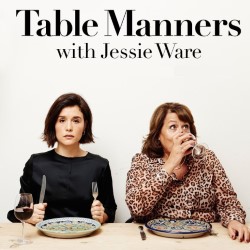
Uber ratings, patisserie and misophonia. What more could you possibly need to host the perfect brunch?Table Manners with Jessie Ware is a live recording of the hit podcast, starring singer Jessie Ware and her mother extraordinaire, Lennie. With a table creaking under the finest food on offer and a special guest to cross-examine each episode, the podcast is a heart-warming and belly-rumbling foray into the people behind the celebrity.With three sold-out shows at their Edinburgh Festival Fringe debut, there is a certain level of expectation preceding the hosts and their guest. Where the podcast exceeds, however, is with the down to earth authenticity of Jessie and Lennie. Together they make a formidable duo; effortlessly making the crowd feeling at ease and sustaining an hour’s worth of improvised – and interesting – conversation. Jessie moves in and out of the audience with charm and wit, sharing personal anecdotes and asking for opinions on a variety of culinary issues.Award-winning comedian Heidi Regan is today’s guest, discussing her Australian childhood and the secret to a good self-saucing pudding. She is a natural entertainer, and soon falls into the charming rhythm of the show. The fact that each Edinburgh guest is revealed once the audience is seated is both a testament to the podcast’s reputation and to the talents of the guest – it must be rather nerve-wracking to walk on stage as a surprise appearance.Today’s dinner table consists of doughnuts from Edinburgh-based bakery - Twelve Triangles - and Lennie’s savoury cheesecake; although Jessie finds herself amidst a period of fasting and the food takes somewhat of a backseat. Though a Fringe show does posit a certain number of logistical dilemmas, it is a shame to overshadow what is normally the focal point of the podcast. In fact, the entire meal for those on stage consists of a peach Bellini and half a doughnut – not exactly a sales pitch for the upcoming cook book.Nevertheless, Table Manners with Jessie Ware delivers an intimate catch-up amongst friends – a welcome blessing amongst the bustle of the Fringe’s opening weekend.

Gilded Balloon Patter Hoose • 2 Aug 2019 - 4 Aug 2019

Atomic Saloon Show

Welcome to the Atomic Saloon: a place where the beer is flowing and anything goes, so long as you can afford it…Madam Boozy Skunkton is our host for the evening – the straight-talking, discipline-loving and knee-slapping proprietor of the establishment. What she lacks in decorum she more than makes up for in charisma; taking the audience under her wing and setting the tone for the evening. She is faithfully aided by singing cowboy extraordinaire Blue, whose foul-mouthed introductory remarks has the crowd in stitches and whose cowhide chaps leave little to the imagination.Throughout the course of the evening we are introduced to a motley crew of miscreants – from Boozy’s Irish cousins to the local Mayor (who, for some reason, manages to lose his clothes in a mysterious accident). It seems the Atomic Saloon lives up to its mischevious reputation, with thongs disappearing into clouds of confetti and more sins than the Preacher can handle. It is a high-budget production and certainly makes for an entertaining evening, although beyond this it can be difficult to find much consistency within the show itself. Whilst certain acrobatic moments stand out, cracks soon appear behind the façade of the Wild West – although it is a minimal detail amongst the aerial artistry and holy ping pong balls. Certainly a number of the punchlines involved are outdated, scraping for cheap laughs in the uncomfortable sexualisation of same-sex audience interaction. Equally, the audience interaction itself relies predominantly on the discomfort of those selected – particularly during a scene in which unsuspecting individuals are forced to engage in a spaghetti-fuelled four-way kiss. It is an unnecessary side-track and one which undermines the genuine talent of the performers.That said, Atomic Saloon Show stands as an impressive benchmark of exactly what Fringe theatre is capable of.

Assembly George Square Gardens • 1 Aug 2019 - 25 Aug 2019

Sam Morrison: Hello, Daddy!

Meet Sam Morrison: a 24-year old American comedian with a theatrical flair and a penchant for daddies. Hello, Daddy marks a frank and unashamed exploration of sexuality, prejudice and finding your feet (and, it seems, your tribe).Considering the subject material, you would be forgiven for expecting Morrison to be foul-mouthed in his portrayal of a potential obscenity. Instead, we are presented with a softly-spoken millennial whose memorability stems from his ability to command the room with an unassuming and intimate sense of familiarity. In fact, where Morrison’s routine excels is in its ability to confront us with our own prejudices: why is ‘daddy’ considered an inappropriate term of affection whilst ‘baby’ goes by unchecked?Of course, stand-up composed around a fondness for bears could quite easily rely on the gimmick of rinsing the subject matter for cheap laughs, but Morrison cleverly uses the humour involved to make a cutting observation on the double standards implicit to heterosexual and homosexual expectations of normativity. Flitting between observational comedy and an overarching narrative that documents a recent rendezvous with a certain Seth Rogen-esque suitor, Morrison’s routine is simple and unassuming. He is a charismatic performer and works hard to make the material relevant to a wide demographic without resorting to stereotype.However, whilst Morrison’s material delves beyond the superfluous, oftentimes the show ventures into incoherency. Whilst daddies may be an overarching theme within the play, punchlines soon drift in and out of other genres whose only relation stems from it being in some way sexual. Though a varied routine does well in maintaining attention, it does seem to somewhat dilute the integrity of the show’s intentions. Forthright, honest and revealing: Hello, Daddy is a brazen soiree into a community often excluded from mainstream conversation. Bold in its nature and sensitive in its delivery, it seems that comedy has a place in serious conversation.

Just the Tonic at Marlin's Wynd • 1 Aug 2019 - 25 Aug 2019

It's Britney, Bitches

Oops, I did it again...It’s Britney, Bitches is a verbatim exploration of Britney super fans across the globe. With live music, dungarees and a whole host of pink lighting; the show is a bold and glitzy evening soiree into the deepest and darkest corners of the fandom. Claire and Jonno make for a charismatic duo, bouncing off one another with sharp timing and an admirable confidence. The (somewhat inebriated) audience has a lot to say about Britney, and their quips are seamlessly incorporated into small moments of improvised genius.The show adopts a varied form – with a glorious menagerie of quizzes, dance routines and, of course, singalong opportunities to educate us with all things Britney. If you weren’t already indoctrinated into the Britney cult, you certainly are now. Claire and Jonno make a point to remind us of exactly what Britney has done for us: the friendship, the solidarity and, of course, the bangers. Just think; if Britney can overcome 2007, you can achieve whatever you put your mind to.For a show entitled It’s Britney, Bitches, there is a surprising poignancy to its narrative. Amidst sequences of utter foolishness appear stark reminders of her mental health struggles and past addictions. The show is mindful of her humanity, working to portray her as an individual rather than an ethereal idol. However, the stark contrast in genre means there is often an ambiguity with the shows intentions – is it a comedic celebration or is it an exploration into the negative impacts of fame? The very fact that it could be both means that it ends up being neither. That said, It’s Britney, Bitches is a memorable hour of cabaret theatre. And, if you were doubtful as to which household celebrity name makes an anagram of ‘Presbyterian’, this show certainly holds the answers.

Gilded Balloon Teviot • 31 Jul 2019 - 26 Aug 2019

Pamela's Palace

Welcome to Pamela’s Palace. Is it just a trim for you today, my love?Pamela’s Palace is a joyous and farcical hour of high-energy musical nonsense. Beauty extraordinaire Pamela is preparing for the finals of the prestigious Salon of the Year competition, but there is trouble on the block as rival Dante (that’s Dante Alicante) also manages to secure a place in a last minute bid for success. As salon assistant Bronwyn is sent undercover to suss out the competition, things are complicated by the discovery that colleague Tiffany is dating him. As a cobweb of lies begins to untangle and tensions rise, it seems that someone might just get cut…It is a gloriously funny production that relies on well-intentioned audience interaction to facilitate the storyline, but what makes tonight’s performance particularly hilarious is the bombardment of bad luck the actors receive. Props get stuck in the glitzy net curtains, quick-changes result in the wrong costumes being worn and an unsuspecting audience member really end up getting her hair cut (with a fringe, of all styles). It makes no match for our razor-sharp protagonists, however, and they effortlessly incorporate the mishaps into triumphant moments of improvised brilliance. There is no doubt as to the fun they are having on stage, and we have fun along with them.Soon, though, the plot thickens and it seems that Dante (that’s Dante Alicante) may not be the kind-hearted soul he makes himself out to be. In fact, it seems that his relationship with Tiffany might have been built on the ulterior motives of the underground hairdressing scene. Though Tiff had originally been prepared to leave the sausage rolls of Pamela’s Palace for the sweet pastry of Dante (yes, that does make sense), Pamela finds it in her heart to forgive her and offer Tiff her job back. After all, there is nothing stronger than the sisterhood of scissor-hood.Bold, bright and brilliant – Pamela’s Palace offers a treatment we are all in need of.

Assembly George Square • 31 Jul 2019 - 25 Aug 2019

The Populars

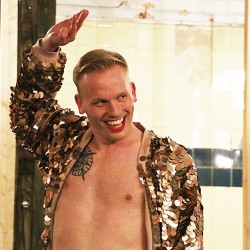
So, you think you’re cool? The stage is non-existent, you’re stood beneath the pseudo-stage lights and it seems as though you might be a part of the performance… So, what exactly is this? The Populars is a genre-defying and glorious rejection of traditional form. Boldly creating its own rules, it looks to a divided future and questions whether or not we actually like what we see. Working to break down our own personal boundaries, we are confronted with the chance to form opinions without preconception. From Brexit to popularity contests, blue passports to Stevie Nicks: we become one and the same, likened through our differences and separated by our similarities.The piece takes place in a brightly-lit room. Four charismatic performers move their way around us, bringing us into the spotlight and into the dance routine. It certainly makes for an uncomfortable prologue (and some quickly make their way for the door), but isn’t this exactly what theatre is about? Taking risks for the sake of narrative? Of course, with a piece like this there is a large degree of interpretation that must be undertaken for the show’s message to be unlocked, but the Volcano Theatre Company are mindful to implement a wide array of performance mediums in the pursuit of accessibility.As we progress further into the experimental production, it becomes evident that the audience is not just immersed in the show, but is in fact an integral component within it. Our opinions are collated and incorporated into the mesmerising and fluid experience. Are you a Nowhere or an Everywhere? Do you think these trousers are cool? What do you like to dance to?Dynamic, bold and triumphant in its execution, The Populars is a sweaty, sequin-fuelled and riotous analysis of what popular means in the political arena. Listening to what theatre ‘should’ be, Volcano Theatre Company promptly ignores it and dances to its own beat. This is promenade theatre at its finest.

Summerhall • 31 Jul 2019 - 25 Aug 2019

Square Go

Max has done something stupid. He said he absolutely should not have done to Danny Guthrie (who, I heard enjoys drinking beer from a glass) and now he’s been summoned for his first Square Go – a coming-of-age ceremonial fight outside the school gates. As Max formulates somewhat of a game plan in the school toilets, his friend Stevie Nimmo is on hand to help him. The only problem, is that Stevie Nimmo might in fact be more incompetent than Max when it comes to the fire-breathing, stubble-growing and face-smashing Danny Guthrie. Square Go is a hilarious and nuanced look at youthful logic and the toxicity of hegemonic masculinity. Using the in-the-round immersion of Roundabout to his advantage, Daniel Portman’s Max has the over-confident swagger of an acne-ridden teenager – working his adoring crowds into a frenzy before he embarks on what he has no doubt will be a glorious victory. Gavin Jon Wright as Stevie makes for a good contrast – the weedy, strawberry lace-eating voice of (partial) reason, who promptly reminds Max of his imminent death. Effortlessly they bounce off one another with sharp wit, playing up to the audience and savouring their time on stage.Kieran Hurley and Gary McNair’s masterful writing is at once intelligent but unpretentious, finding easy humour within a broader and more nuanced narrative. Glimpses into Danny Guthrie’s childhood and the homophobic abuse his brother received speak to broader issues of social inequalities, creating fleshed-out characters within what initially appears as farce. It seems you never know what goes on behind closed doors, not even with the people you’re closest to.Rip-roaring, loud and brilliant; Square Go is a hilarious glimpse into the confidence of youth from the luxury of hindsight. Back for a second year, it seems this lycra-clad and award-winning production has come for its victory lap.

Roundabout @ Summerhall • 31 Jul 2019 - 25 Aug 2019

Sex Education

As I write this review I find myself enveloped by a certain degree of caution. After all, this will be easily available online and as our host for the evening points out: that means his Mum could find it…Sex Education is a semi-autobiographical exploration of our attitudes towards sex and how it is taught in schools, particularly with reference to queer relationships and sexual activities. Crude, explicit and downright shocking; we are asked about our own experiences of sex education and the impact it has on us in later life.Harry Clayton-Wright is as frank as he is enigmatic, creating a show that aims to shock but holds a clear and powerful message: a queer-inclusive sex education may well be a form of suicide prevention. After all, how can the queer youth of today be expected to feel comfortable in their own skin if the syllabus supposedly representing our society actively excludes them? In light of ongoing debates in Birmingham surrounding this very matter, the show is a timely and poignant reminder of the long way we have to go in pursuit of equality.The show is structured between a variety of vintage pornographic videos, which Harry’s father bought him when he came out as a teenager. They are as outrageous to a modern audience as they are hilarious; incorporating nuanced storylines, pet rabbits and battery-powered torches. If this is indicative of past sex education I can appreciate why he is calling for a reform.That said, the show is not without its sensitivity. Amidst a comical series of facts pertaining to Harry’s sexual history he recalls a time he was sexually assaulted. Whilst the take home message might not be in suggesting a more comprehensive sex education will eradicate sexual assault, it does work to highlight the contradiction in censorship surrounding non-normative sexual activity. If queer sex is a taboo in the context of a classroom discussion, how can we find the language to discuss it in times of trauma?Humorous in its delivery and bittersweet in its essence, Sex Education is both a moving indictment against our national curriculum and a fierce celebration of difference.

Summerhall • 31 Jul 2019 - 25 Aug 2019

Parakeet

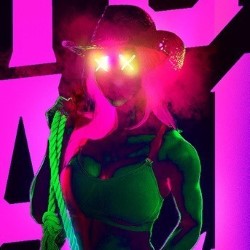
In a bizarre but glorious amalgamation of all things good, Parakeet stands as a protest piece that calls for greater measures against climate change and, well, a commitment towards a deep held obsession with parakeets.The green-haired and brilliant Brigitte Aphrodite introduces us to the show (reminding us that she is a parakeet), inviting us to write something we want to affect in bold letters on our skin in a literal embodiment of the change we want to see. Quiet Boy (another parakeet) sits by her side, surrounded by a small menagerie of instruments. With spoken word, dialogue and protest music, one thing is certain: the Parakeets will be heard.We meet our protagonist, Girl, in Margate – a disillusioned young teenager stuck as a cog in the huge and seemingly meaningless system of life. She can just about tolerate the brutish incompetency of her dishevelled stepfather, but when the local authorities decide to cut down the tree that marks the home of the Parakeets of Thanet, it becomes too much and brings an end to her complacency. Together with Dust and Tam – two teenagers from the local area – Girl creates a band whose music marks a triumphant and deafening protest against injustice. They are The Parakeets, and they’re changing the world, one song at a time.Boundless Theatre’s youth-focussed ethos gives a feel of authenticity to the narrative, creating a politically-charged and proud piece of gig theatre. What could easily become hyperbolic is instead a modest and unpretentious call to arms. If 16 year olds can have sex and join the army, why can’t they vote for the policies dictating their individual freedoms? However, aside from the concept there is little in the way of thematic undertone bringing the storyline together. Whilst the parakeets may stand as a metaphor for greater things: the environment flock mentality, finding your voice; the production feels somewhat segmented.With standout musical performances and its heart in the right place, Parakeet makes for an inspirational, if a little contrived, call to change in the neighbourhoods we call home.

Roundabout @ Summerhall • 31 Jul 2019 - 25 Aug 2019

E8

It’s a late Friday afternoon and Polly is packing her things before she starts her PhD. Her time as headteacher has been enjoyable, but it is time to leave the Pupil Referral Unit (PRU) – an alternative to mainstream education for those unable to attend through exclusion, illness or otherwise – and form a thesis around her experiences. Her pupil, Bailey, is desperate for a referral to live somewhere other than her Auntie’s house, but the laptop charger is missing and classmate Ryan isn’t doing anything to help. Marika Mckennell’s script has a strong feeling of authenticity, drawn largely from her own work in PRUs. Where her success lies is in her ability to present a play that does not feel theatrical – instead, opting for a fly-on-the-wall approach without the embellished and unnecessary flairs of showmanship. E8 is a real-time account of the injustices in our education system, placing a harrowing spotlight onto the people it fails. Alice Vilanculo gives a stand-out performance as Bailey, portraying her with a troubled conviction. She is trapped by her circumstances and very much lost within the system, with any cries for help soon absorbed into the institutionalised and underfunded machine of the local authorities. Though living with her abusive Auntie is less than appropriate, social services decide to intervene by informing her Auntie of the concerns and promptly deciding it may continue. They make the mess, but leave before the clean-up. Small moments of situational humour break the heaviness, particularly evident in Bailey’s relationship with Ryan. He remains an unexplored figure within the production, keeping himself to himself but clearly nursing a troubled past. It is an interesting writing technique to make the audience work for its character development, but one that adds to the realistic portrayal of an educational environment. You don’t get given a detailed character breakdown in real-life, so why should you for this?A rich and accurate depiction of a system usually hidden from the public eye, E8 gives a platform to those lost within the cavernous belly of state care.

Pleasance Dome • 31 Jul 2019 - 25 Aug 2019

Since U Been Gone

No one ever said that life was easy, but it’s what you make of it which defines who you are.Recalling the past with a tender – if somewhat bittersweet – nostalgia, Teddy Lamb is an engaging and modest performer; quickly establishing common ground with the audience and creating a warm and intimate feeling in the room. It doesn’t feel so much as theatre as it does a reunion amongst old friends. There are no theatrical flairs, no elaborate set changes or even the emphatic rhythm of monologue. Rather, this is a spoken-word memoir about growing up in the Noughties and finding your identity through grief.Accompanied on stage by musician Nicol Parkinson, the narrative is softly undergirded by the cosy resonances of mellow synth-pop. It adds a welcome dimension to the piece, and softens the tone for what is objectively difficult and heavy content.As the title suggests, a large focus of the piece is how they deal with mourning, with two of Teddy’s closest friends having passed away. These pivotal moments work as catalysts for a deeper analysis of Teddy’s own life. Since then, they’ve found confidence in their trans identity and worn a dress in public for the first time. It is hard to negotiate your own self-confidence in the shadow of death. Aside from this central element, there seems to be little in the way of literary consistency. What are beautifully-written and poetic reflections on life appear anecdotal rather than plot-driving. Childhood romances are interspersed with considerations on friendship; supporting friends through depression are located next to self-doubts about Pride events. The result is a more authentic and relatable composition – if Teddy is striving for truth rather than theatre, then what better way to do it than to reflect the inconsistencies and messiness of life in the storyline itself? Since U Been Gone is a heartfelt and emotive recollection of youth and being forced to grow up in the wake of grief.

Assembly Roxy • 31 Jul 2019 - 24 Aug 2019

Spray

We find ourselves between a neighbourly feud in a block of flats in Seoul. The resident of 709 is plagued by an inconsiderate neighbour, whose screechy cat and night-time musings repeatedly keep him awake. One day, our protagonist finds himself in erroneous receipt of a parcel intended for a different flat, but rather than return it he discovers that it gives him a thrill like nothing else. Soon he finds himself rummaging through post boxes; dodging the night guard and avoiding the judgements of his co-habitants in search of this newfound adrenaline: a deep-held desire only the postal service can satiate.It is a rather silly storyline, but one which works well with the over-emphasised clowning of Cho-In Theatre Company. Korean dialogue is translated by two assistive television monitors, although the production’s strength lies in its physicality rather than narrative. Sets are changed by a polished ensemble moving several large fabric screens across a gridded floor in precise unison, before projections transform them into a myriad of different locations. The premise of this physicality is impressive, requiring an expert and precise manipulation to align the screens with the wealth of projections illuminating them. But beyond the concept of these transitions, the actual delivery is patchy and erratic. Projections only cover a small number of fabric screens, working to highlight the beige nothingness of those unilluminated. Similarly, the aesthetic vision of the projections is a wholly inconsistent haphazard concoction of pseudo-realism and saccharine cartoons. Ensemble work is tight and evidently well-rehearsed, but the excessive exaggeration of even mundane plot points makes for excruciatingly mawkish viewing. When the storyline comes from physicality rather than text, a lack of differentiation in facial expression creates a somewhat confusing affair. Elements of clowning that may have once added to the theatrical experience become a monotonous and unwelcome standard of hyperbole.Bold in character and unique in presentation, Spray is promising in its concept but ultimately fails to deliver.

Assembly Roxy • 31 Jul 2019 - 26 Aug 2019

Dep

ĐẸP is a Vietnamese word that translates as ‘beautiful’, and is also the starting point for Dam Van Huynh’s dance work that explores the nature of the human condition, taking inspiration from his Southeast Asian heritage.One by one, the six dancers walk to the front of the stage and stare intently at a house-lit audience. By societal convention, their nakedness makes them vulnerable, bare and exposed in a room full of voyeurs; but as they stand in defiant silence it becomes apparent that they are in fact looking at us – illuminated and unprotected by the overhead lights. Perhaps we are the vulnerable; perhaps it is the other way around?As with any dance piece it is vital to consider the context through which the creator has taken inspiration. In this case, choreographer Dam Van Huynh considers the notions of death and rebirth, and their prevalence in his native Vietnamese culture. Forced to flee at the age of five to America as war refugees, he comments on his own rebirth within another country. Furthermore, in Vietnam death is a form of rebirth and commences a series of rituals which facilitate the deceased’s transition into another, higher state of being. ĐẸP takes this cyclical journey and delves into the crux of human nature – striving to find the core of what personhood is and the primary emotions which bind us. The dancers are accompanied with sounds curated by Martyna Poznańska, many of which incorporate field recordings made in Vietnam. The human voices within, particularly the recording of the traditional folk song which began the performance, brought a sense of authenticity; and with it a sadness for the reality of the suffering explored throughout. Movement throughout the piece is carefully designed to portray a storyline of human and emotion and more abstract concepts – often the choreography is impressionistic and seeks to encapsulate the idea of a ‘moving image’ which Dam Van Huynh set out the achieve. A raw and visceral production that transcends the need for verbal communication, ĐẸP looks behind closed doors and stands defiantly in its appreciation of human fragility.

Zoo Southside • 3 Aug 2018 - 18 Aug 2018

Toujours et Près de Moi

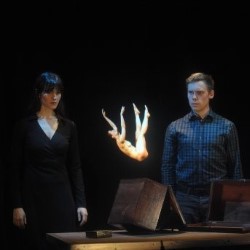
Toujours et Près de Moi is a holographic puppet opera by multi-disciplinary arts company, Erratica. At the heart of the piece stands the 150-year old technique of Pepper’s ghost – a process whereby images are projected onto the downstage floor and reflected by a large two-way mirror, carefully angled between the actors and the audience, on which the ethereal visions exist. Exploring the breakdown of a lost love, the performance questions human emotion and how subconscious abstracts – emotions, frustrations and fantasies – subsist alongside us in a physical and rational world. Behind the mirror stand a man and a woman clearly burdened by a complicated history and a fractured nostalgia, and a table supporting two boxes. From within one of the boxes comes an unexpected knock, and when the pair decide to open it out fall the projected visions of their younger selves; and a beautifully melancholy glimpse into what went wrong. The piece is set to a haunting score which intertwines Renaissance madrigals by Gesualdo with more contemporary harmonies by the likes of James Weeks and Christopher Fox. In this instance, composition serves to say what a purposeful lack of dialogue does not, and elicits a more intimate response from the audience. Interestingly, the actors are entirely unable to see the Pepper’s ghost imagery, and spend the performance reacting to empty spaces, taking their cues from the music in a well-choreographed and intricate routine. As creator Patrick Eakin Young comments in the programme, the very nature of the projection means that both absence and presence play an equal role in forming the narrative – in a similar way to memories which have happened in the past but exist in the present as nothing more than a synaptic trace. What the audience sees is a visual representation of a memory; although by its very definition the imagery is an illusion - something that isn’t there. So where does the boundary lie? Are all memories illusions? And is there a difference between illusion and truth?A powerful piece which explores the depths of human emotion, Toujours et Près de Moi takes an old trick and makes it accessible to a contemporary audience. Charming in its delivery and understated in its presentation, it takes a fundamentally human emotional concept and places it in a new, carefully-reflected light.

Assembly Roxy • 2 Aug 2018 - 27 Aug 2018

Feed

Feed is a thought-provoking and memorable piece by Theatre Témoin that explores the insidious relationship between the Internet and capitalism. Focusing on the notion of the attention economy – the profitable importance of standing out amidst the endless stream of stimuli and the profit it reaps – the play makes a timely response to clickbait culture and the recent Cambridge Analytica data scandal; which serves to remind us only how contemporary and truthful its terrifying themes are. We open to the welcoming words of an SEO (search engine optimization) expert, but he soon takes off his headset and glitches – changing his accent and demeanour several times until he has the optimal style to maintain our attention. It is a stark reminder of the forces at play behind our screens, which want nothing but our time – even if that means standing one step removed from human decency or ethical consideration. In the same way cars slow down to look at a traffic accident, some of the most popular videos feature content unacceptable in a public setting.At the heart of the plot is a struggling journalist who reports on a dead child overseas and uses an unrelated picture of a dead infant to gain traction – a photo her partner had taken and did not grant permission to use. As the story goes viral we are introduced to a beauty blogger, who expresses her ‘genuine sadness’ in a tutorial (a video we learn has taken seven times to get right). Soon after the SEO expert uses his technical expertise to increase digital coverage of the blogger, and in turn the story. In quick succession, the four become entangled in a virtual spider web and computer-led (in other words, without moral limitations) algorithms work behind the scenes to lead the play out of reality and into the dark recesses of a global and digital infrastructure. As the play becomes more absurdist it becomes more compelling – the actors are giving us what we want in the same way that Facebook data is sold to give us the adverts we supposedly want. The beauty blogger has to find more ways to keep her viewers’ attention, and in a sinister turn of events cuts her arm in support of the dead child, before cutting her finger off and moving onto removing her limbs. The play culminates in her beheading – the ultimate sacrifice and show of support for the dead child’s suffering (and the way to get the most views). It becomes even more vulgar when we remember the child in question is a different individual altogether: one whose photo was not interesting enough for the story. Her death is a way of increasing her readership, and the story from which she is profiting is in itself a lie. Particularly interesting was the transformation of the SEO expert, who throughout the play slowly undressed to reveal a green morph-suit and his true identity as Internet-troll. At first, I thought that the SEO expert was a troll all along - but upon further consideration I wondered if perhaps this digital addition – producing more and more shocking content to receive the hit of fame so many crave – resulted in this transformation. Perhaps no one can stay removed from the forces at play; even if you are supposedly the one programming such forces. An interesting foray into a different aspect of something so integral to many of our lives, Feed cleverly uses a variety of techniques to make its point. Strong in its execution, this is certainly one to click on.

Pleasance Dome • 1 Aug 2018 - 27 Aug 2018

Departure Lounge

Set in the airport returning home after a lads’ holiday to Malaga, Departure Lounge takes a look at the fragility of hegemonic masculinity and its effects on teenage life. With an excellent score, beautifully played by guitarist Jazz Bullen, the musical was certainly catchy but somewhat unfulfilling.The premise had potential: take four macho lads in the departure lounge returning home from their final holiday before university and give each of them an individual, emasculating secret in order to explore how it is affected (and usually oppressed) by their continual acts of manliness.Hidden sexuality and the challenges of growing up orphaned were both featured themes, and with their level of poignancy could have given way to a deep and well-rooted production. I felt as though the company missed an opportunity to explore how, by virtue of the social dominance young masculinity so often seeks to achieve, mental health is often overlooked to the detriment of the very individuals who ignore it. It was evident that each character had his own inner baggage, but the production never seemed to venture beyond such a statement. The script did not explore the sentiments or the effects of such topics with enough conviction to justify their existence in the plot, and occasionally the meaningful topics came across as throw-away lines.Technically the performance was strong, and the quartet of actors complemented each other’s vocals during the rich and varied harmonies. In particular, Ben Clark, who played the character of Jordan, is a strong singer and slipped easily through key changes and varying octaves.The only female character – Sophie, portrayed by Emily Thompson – was also let down by the script. I would have liked to see her character have more agency to exist as a fully-formed person, rather than the object of male gaze that she was throughout the piece. Appearing predominantly for the boys’ flashback scenes it was difficult to remember that she had also been in Malaga for the entire week and, like the content of the musical, did not serve just to fill time.Overall the piece was a solid effort – if a little misguided at times – and was a good example of how to work a stage with minimal props and space. In terms of entertainment it ticked all the boxes, but whether it provoked further dialogue is another question indeed.

Quaker Meeting House • 7 Aug 2017 - 12 Aug 2017

Tinder Rehab

A friend of mine and I were recently chatting about how – even today – sexism is still very much in existence. Unfortunately, this archaic viewpoint reared its ugly head today: combine that with what I can only describe as the worst show I have ever seen at the Fringe, and you have a rough summary of Tinder Rehab.A triple threat of lacking humour, prehistoric viewpoints and a general bore to the content set this production apart from the rest. Created by Bentley Browning (cue an overworked and puerile joke about the derogatory usage of the word ‘bent’) the piece aimed to detox the audience from their Tinder addiction using a supposedly comedic twelve step process. Patronising millennials and modern technology? What a wonderfully original idea!After a particularly tedious version of Human Tinder in which a female audience member had to physically swipe between three male ones, Bentley thought it acceptable to physically place a ‘Reserved’ sign onto the girl’s chest until after the show. Even after time to reflect on this I am still at a loss as to what he had hoped to achieve, other than the symbolic, metaphorical and literal objectification of women. Sadly, though, this theme seemed to continue, and crept up in a good majority of the dozen steps he feebly tried to advocate. It crawled in when he asked an older member of the audience if she was her husband’s sex slave, and it popped up when he made crude and insensitive remarks about previous dates. Furthermore, in a futile attempt at a confidence-building step, Bentley went around the room and gave us a compliment to which we had to reply, “I know”. It turns out that I “take six women at once” – I won’t mansplain why this is degrading; there is enough of that in the show.Using a disproportionate and uncomfortable amount of audience participation to fill the void of time, Bentley gets us up on our feet to flirt with other audience members whilst putting on a somewhat irrelevant twitch. Great. At some point he places a piece of rose quartz in his underwear as part of an alternative method of finding love (because of course love and affection are just glorified versions of pulling women, no?)I was actually quite incensed when I left. Not only did I feel an hour of my life been wasted, but it had been filled to the rafters with nothing but personified ignorance and poor taste – and that’s without even mentioning the paedophile jokes that lurk in the script as well. The same friend as before asked me my initial impressions – I told her I thought it to be a frankly pathetic excuse of a show; I suggest his next twelve steps involve learning to become a functional and polite member of the 21st century. Even if you ignore the audacity of the material, very few gags hit the mark and, being purely technical, his comedic timing could have done with a watch. Though the technology might be new, there is nothing modern about the opinion: easily the fastest swipe left of the year.

Sweet Grassmarket • 7 Aug 2017 - 20 Aug 2017

Bat Boy: The Musical

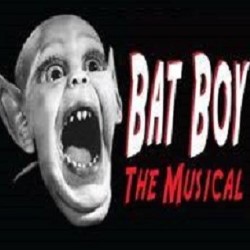
Billed as a uniquely grotesque combination of satire, horror and comedy, Bat Boy: The Musical has a small but dedicated cult following. Performed by Ophiuchus Rising, the semi-professional cast effortlessly made sense of the bizarre and risqué storyline. Based on a mysterious bat-like creature which was found in a cave and given to the Parker family for safekeeping, the plot follows the fictitious town of Hope Falls in West Virginia as they navigate their way through accepting this outcast into a previously closed and prejudiced society of a few decades ago.Utilising every inch of the stage and seating, the seventeen-strong ensemble seamlessly transitioned between flashy numbers and more intimate renditions, achieving a most varied and interesting production. Ava Chenok as Meredith Parker in particular gave a stellar portrayal, adding well-timed elements of humour into her frequent (and often tricky) songs.At first I felt that the musical was a little too mature for the company, comprised predominantly of young teenagers. With sexual elements, murder and incest I winced at a few of the jokes when they came from the mouths of such young performers, but I soon eased into it upon the strong and convincing command the cast had over the piece. Smutty moments of dialogue were delivered with conviction and purpose and soon even the leather-strap costume of well-meaning but easily influenced Sheriff Reynolds, played exceptionally convincingly by Connor Johnson, became nothing more than a well-integrated part of the show.Though the cast was well-polished and projected clearly during dialogue, I did feel that perhaps they should consider using microphones. Shirley Bassey would struggle to compete with a four-piece band, and it would mean that individual lines within songs would not be drowned out so much, complementing the performance even further. Bat Boy Nikolai Granados would certainly have benefitted from a microphone. He had the difficult job of singing through fangs; not the most convenient for strong projection. On this note, I was most impressed by Lily James’ Reverend Billy Hightower, whose bluesy gospel chords of the church sermon comfortably overcame instrumental noise and surpassed expectation.A well-polished performance all round, Bat Boy will have you dangling from the rafters with love at first bite.

Paradise in Augustines • 6 Aug 2017 - 12 Aug 2017

City Love

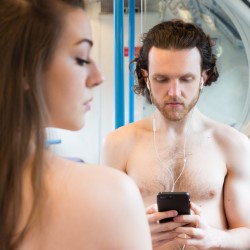
City Love provides an honest and hard-hitting look at relationships, starting with a chance encounter between two young London professionals on a night bus. Utilising a delicate combination of monologues, narrative and physicality, the two-person cast lead us through the emotional journey of their subsequent relationship.The duo’s strong chemistry is undeniable, and their genuine affection for one another makes the whole thing particularly engaging. It also amplified the upset when things aren’t going the way that Hollywood has conditioned us to expect.Simon Vinnicombe’s script is punchy and engaging, succeeding to connect with the audience on a personal level. Often the most common of themes – in this instance, love – are the hardest to explore and represent accurately. Themes like this are common because they affect us all, but affect us all in different ways – there is no shared experience. City Love did not exemplify the so-called chick-flick relationship. Instead it was gritty, spiteful and depressing when it needed to be. It was, for most of us at some point in our lives, the truth.I particularly enjoyed watching the replay of certain key events – such as the couple’s first chance encounter on the night bus – through the lens both parties involved. Mimicking the physicality of what had happened but changing the narrator gave us an insight into each of their personalities and inner-most thoughts. When used appropriately it allowed us to venture into both sides of the story, learning how both parties are right and wrong simultaneously in the argument, although sometimes I thought this premise was overworked and I began to expect it at certain points of the play.Both actors had their strengths, and complemented each other extremely effectively. In particular, Sam Blake’s accurate depiction of male angst was refreshing to observe. His self-depreciation was subtle and truthful, and as with the rest of the production it corrected the stereotypes of patriarchal confidence in romantic situations which we are constantly conditioned to believe in. Elizabeth Lloyd-Raynes was also a force to be reckoned with, especially during her delicate portrayal of the couple’s post-breakup reunion.City Love places a magnifying glass onto what constitutes a relationship and reminds us of the things we seldom notice. Though a little obvious at times, the actors are tender through their illustrations of intimate snapshots, and remind us just what it means to be human.

Bourbon Bar • 5 Aug 2017 - 27 Aug 2017

Alice – Underground Lives My Buried Mind (Deflowering Lewis Carroll's Script)

Physical theatre can always lend itself to a degree of interpretation, and inevitably the risk of confusion. I often think of it as being one of the trickiest forms of performance for this very reason – where do you draw the line between the aesthetic and the literal representation? Arguably this divide, the directorial edit that separates the abstract from exact reflection is what determines the success of such a form, but again this falls victim to a raw subjectivity only possible when the visual art is intended to be non-representational.ALICE – Underground Lives My Buried Mind, though breathtakingly spectacular in its brightest moments, falls victim to a sense of convolution and ambiguity in its message. Whilst I am an advocate of allowing an audience to interpret something as it sees fit, a performance needs structure; it needs the groundwork to which someone can add their own fleshed and thought-out explanation.The set, comprising of nine separate AstroTurf panels – each illuminated at varying times by its own desk lamp – does nothing to aid the storytelling, instead serving only to make the space otherworldly and curious in its appearance. Additionally, any dialogue is drowned out entirely by a combination of unamplified voices, weak projection and unintelligible pronunciation. Individually and as an ensemble, the cast excel in their physicality. In particular, I thought the representation of (what I assume to be) the Mad Hatter’s Tea Party went beyond expectation, and pushed the boundary of what theatre can be, although I have to wonder if it stood out partly because of the lesser success of certain other scenes.After the performance I checked the Fringe programme to see if my lack of comprehension was an isolated occurrence – the official description is equally vague. “A girl confronts herself with her own ghosts”; hardly a beginning, middle and end kind of plot. In hindsight though, I wonder if perhaps that is the very point: the audience is as lost as Alice seems to be, and maybe the so-called ghosts form part of the confusion and suffering she is so clearly experiencing. Possibly the piece is as much of an experience for the audience as it is for the protagonist; meeting all manner of dark and twisted fantasies in the process together.Disjointed both in intention and in execution, Alice will have you questioning what you expect of a performance. Its success in this pontification will, inevitably, come down to your analysis of its figurations – but expect to be challenged: in true Wonderland style the answers will be there; just be prepared to have to work for them.

Zoo • 4 Aug 2017 - 20 Aug 2017

What Lies Beneath

What Lies Beneath is a semi-absurdist exploration into male grief, observing how it plays out in our minds and affects those close to us. Paired with Scandinavian folk music and portrayed through increasingly surrealist movement, we learn about the protagonist through his largely abstract flashbacks.We begin with an acapella rendition of a folk song, which conveys the scene of a desolate mountain very effectively. A man is grieving and this is his self-help. Whilst several questions remain unanswered; a blend of physicality, song and interesting lighting are used to create the story in the process. Gradually more and more people from his life before the tragic event (which is still ambiguous by the end beyond the fact that his significant other has died) emerge from the solitary tent on stage as figments of his imagination, bringing him back to who he was and trying to help him get through the mourning process. Whether they aid the development of the plot (as is the nature of absurdism) is a subjective matter, but I can’t help but feel that they have destroyed any emotional build-up and contributed nothing to the story other than time in the script with their somewhat jokey manner of speech.The company as a whole is clearly very talented, and present several different styles of theatre with conviction. The problem is, however, that the chosen styles seem to clash more than they complement one another. Physical theatre can be emotive, powerful and expressive – perhaps more so than naturalism – and when the company performs these scenes, they tick all of the above boxes. Near the end of the piece Chris Mawson, Benjamin Ecclestone and Michael Blundell-Lithco surpass all expectations with what I would refer to as a mute monologue; an informative series of movement conveyed through abstract physicality.On the other hand, dialogue between the male characters; the protagonist and his father, brother, and friend seemed too naturalistic and is entirely incongruous. Whilst my interpretation of this is a representation of how male dialogue in real life equally never scratches below the surface or bonds on a deeper level, it doesn’t fit with the piece and so the message is lost. If the protagonist’s own family are unable to connect with him then the audience certainly aren’t able to either. Any atmosphere or responsive tension created by the folk songs or by the physicality are quickly wiped out, and as a consequence the production has little lasting effect on me.What Lies Beneath is strong in its concept, but fails to deliver upon its execution. Whilst trying to be everything at once it somehow manages to be very little: and though individual scenes serve as the redemption from certain others, the full piece somehow feels empty.So, what really does lie beneath? It seems not a whole lot.

Zoo • 4 Aug 2017 - 28 Aug 2017

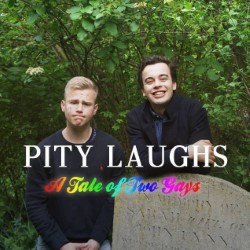
Pity Laughs: A Tale of Two Gays

This show is so much more than a tale of two gays: it is a tale of success. As I came out of the small auditorium at Just the Tonic, it dawned on me that I had just experienced my first true gem of the 2017 Fringe.Pity Laughs! is the debut brainchild of university friends, Mark and Will. They’re both gay, and one doesn’t have any parents: probably not the most obvious theme for comedy. Seamlessly mixing sections of stand-up with erotic diary readings and live music (featuring maracas made of Mark’s parents’ ashes, no less) the audience are led through the highs and lows (but mainly lows) of sexuality, inequality and grief. I challenge anyone to turn those themes into tears of laughter as the pair so straightforwardly did (through the classic medium of salt and vinegar crisps, no less). Gay orphans are not normally an amusing subject and I don’t know what was more shocking; the content of the night or just how hilarious I found it. It was equally refreshing and empowering to watch the twosome unashamedly take control of their injustices and weave them into a most chaotic and intelligent celebration of minority.Before the show, Will stood on the door and wished us good luck (cue taking a seat at the back away from potential audience interaction). And it’s true, this show is not for everyone. A few walked out during a particularly graphic (and hysterical) reading and if you are visiting with parents I cannot stress enough how far you should keep them away – but that is the beauty of this show: it doesn’t apologise. You walk into their space and their hour begins, no exceptions. And with so much otherwise stacked against them I don’t think anyone has the right to disagree. Never have I seen such a stylish middle finger pointed at homophobia and general misfortune.I thoroughly recommend this show – you will, without a shadow of a doubt, leave feeling unclean and somewhat morally violated but I guarantee you will do so with a smile on your face far greater than any post-show trauma that will, inevitably, occur.

Just The Tonic at the Caves • 3 Aug 2017 - 26 Aug 2017

Luke McQueen: The Boy With Tape on His Face

Meet Luke McQueen: The Boy With Tape on His Face, not Tape Face. The difference? Tape Face cannot speak, The Boy With Tape on His Face cannot move his forehead. A subtle difference, granted, but an important one nonetheless.Bouncing (quite literally) onto the stage in a semi-inflated human-sized balloon, McQueen is clearly a confident performer, despite the excruciatingly honest comments coming from his mother, who welcomes him on with a fairly depressing Skype conversation about his lack of future career prospects.A lot of Luke’s humour comes from self-depreciation. Whilst it is vital to be able to laugh at yourself, I would urge him to have more confidence in his pre-planned material. When delivered with conviction his witty and risqué sense of humour tittered smoothly around the walls. Self-criticism can soon become somewhat repetitive.As with many stand-ups, a lot of Luke’s material is about his life and where he hopes to end up. He dreams of his own TV show, and he is in luck: he has been called for an important meeting with the big bosses who would make it happen should the hoped decision be made. The next day he is a steward for the Guinness World Record attempt for the most people simultaneously bounding on miniature trampolines, or as it is otherwise known: the highs and lows of living the celebrity lifestyle.As the set progressed, it appeared that there was very little related material to the tape on his forehead, or the lack of movement associated with it which I had anticipated to be central to the theme. I wonder, therefore, why it was relevant. On the one hand it is a quirk for promotional material, with its uniqueness drawing crowds in simply from curiosity. On the other hand, it seems redundant, and I struggled to find his reason to include it at all (other than perhaps playing off the humorous similarity to Tape Face).Nonetheless, Luke McQueen is a likeable entertainer, and is willing to share a lot with you for your love (I am of course referring to the X-Rated video: to say more than that would be too satisfying). If you are looking for alternative comedy, I would struggle to think of anything more avant-garde than adhesive tape; and if someone is willing to wax their face each night in the pursuit of jokes, then I would argue they are worth a chance.

Heroes @ Monkey Barrel • 3 Aug 2017 - 27 Aug 2017

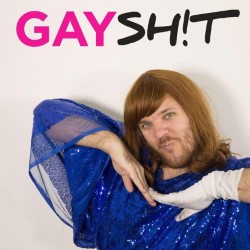
Gayshit

If I were to condense this review into a single word, it would unfortunately have to be the title. Gayshit is a queer cabaret and comedy night, created by Wayne Carter in response to a lack of job opportunities for other like-minded performers. A wonderful concept in theory, but one that failed to achieve any sort of success.Wayne comperes the night with an air of unpreparedness, leading us through an unimpressive line-up of distinctly average performers, of whom several have standalone shows up at the Fringe. The first act – a Glaswegian drag queen – takes her place on stage, and the incorrect backing track is played. Perhaps the night is not going be the accomplished celebration of variety for which I had hoped. Following suit is another drag queen; this time the correct music is played but the queen has decided not to pin her wig and to wear heels she can’t walk in (let alone dance) without falling over.Australian comedian Rosie Brady manages to save the night a little, bringing her uniquely brash sense of humour to the otherwise dull line-up. Her stand-up routine incorporates how similar the Scottish are to Australians and punchy anecdotes about feminist issues of the modern world entertain before sadly it’s time to return to Gayshit.Rosie Sings also makes an appearance, using her time to sing and to tell us about the diva lifestyle of her character, but it isn’t enough to attract me to her show.In the interest of giving credit where due, I was impressed by the Jesus sketch of double-act Hurt and Anderson, in which they discussed the testament as though it had happened in the modern day. It’s true: the party doesn’t start until Jesus walks in (and turns everything to wine). If only he could have been there for the rest of the show – I certainly needed it. 

Just The Tonic at the Caves • 3 Aug 2017 - 26 Aug 2017

Myra DuBois: DuBois Entendre

Perhaps the definition of late-night Fringe; the ever-talented and always vulgar Myra DuBois will have you reeling off your chair – both from laughter and from shock. Holding the audience’s attention in the palm of her gin-soaked (and man-sized) hand, Myra holds no prisoners when it comes to her humour. Wasting no time in informing us of her appearance on John Bishop’s show last year, it is clear that we are in fact in the same room as an A-Lister: a bundle of talent whose repertoire includes acting, singing and dancing. And that’s at the same time as being stunningly beautiful: it seems some just have it all.A generally strong character, Myra jokes about the moment when her shows seem to become ‘hostage situations’. And it’s true – a couple of girls went to leave the auditorium and she thanked them for their time with enough blasphemy to cause a cathedral to crumble. But that was the style of the performance – out there, inappropriate and filthy. Myra lamented at the things she had to do for money in the modern climate: with the worst of the worst being children’s entertainment (cue a joke about how the name Myra generally doesn’t mix with children). Following soon after was a failed – and admittedly hilarious – magic trick sequence.Talented as she is, when it comes to cracking jokes there are a few topics which will never – under any circumstances – be funny (or even vaguely acceptable). Racism and the disappearance of Madeline McCann both feature on this list, but unfortunately also feature in tonight’s set. Myra DuBois: DuBois Entendre manages to venture where anyone with an ounce of decency decides not to, and places a flag of ignorance in its place. I thought it a shame to include such puns, especially as her other material had us in stitches without being so needlessly boorish.Becoming more inebriated (and more toxic with her audience-based slurs) as the night progressed, Myra joked about how she wanted it to end. I must admit, though hysterical at the start – I felt as though she had put more effort into the opening part of the act. It takes more talent to come up with one-liners and to formulate witty stories than it does to swear and be crass, even if it did make us laugh. That’s not to say it wasn’t an enjoyable night, though, and it was well-placed (if a little superfluous) in the proceedings of the set.A humorous night combined with mild fear, Myra and her tonic will take you to the raunchiest pits of farce: leave your inhibitions at the door and – whatever you do – don’t be late. 

Laughing Horse @ The Counting House • 3 Aug 2017 - 26 Aug 2017

Hans: Mein Camp

Certain thoughts are inevitable when you hear the title Hans: Mein Camp, and the chances are they will probably be accurate. Bursting onto the stage adorned in Lycra and communism, Hans will unashamedly take you through an hour-long banquet of unapologetic cabaret-cum-world-dominance, pausing only for you to praise him and his immense talent.A true performer, Hans (the creation of Australian artiste Matt Gilbertson) effortlessly leads the crowd through a night of wonderfully aggressive entertainment, even incorporating a small technical mishap into a moment of sheer hilarity. No one is safe from the uprising, and no one can hide from the sequined bulge of revolution. I must admit I felt nervous sat on the end of the row, unsure as to where his tap shoes would saunter next or who would be the next lucky recipient of the VIP Hans treatment; but I suppose he was looking to control the world.Alternating between piano, accordion and the Sound Of Music, Mein Camp is a feast for the senses, and I have to mention the incredible talent Matt has for music: the show may be more fabulous than a Celine Dion-flavoured Martini but the diva in Hans really comes out when he is on the keyboard (singing about Trump with Abba hits, of course).Before the show I was a somewhat apprehensive about the politically incorrect theme of 1930’s Germany, but Hans uses the theme as a middle finger to what has happened, and much of the related humour comes from the lingering threat of being offensive rather than the actual act. But that’s not to say he doesn't’t shock in other ways (it’s quite surprising which emotions glittery spandex can summon), and if his control of the stage is anything like the total domination coming later, I suggest we start getting ready.Hans down one of the most hilarious nights of the Fringe: prepare yourselves, hunnies, for the revolution has arrived.

Underbelly Med Quad • 3 Aug 2017 - 28 Aug 2017

And For My Next Trick

It’s a fair statement to make that there are both straight-up sceptics and those who actively try to believe when it comes to magic, but the fact still remains that an audience for any show – no matter their magical persuasion – wants to be entertained. Thankfully the star of the show, Kevin Quantum has a natural gift for working an audience, and effortlessly makes his way down the aisle; holding the bated breath of the masses in his seemingly enchanted hand.And For My Next Trick relies heavily on audience participation and during the selection process for the lucky few it appears that pigs really can fly (even if in the form of a stuffed toy lobbed across our heads). It is a nice touch to engage with the crowd and topple the wall of doubt that is all too existent with magic. When an audience is kept away from the stage it can feel as though there are a host of hidden rigs and things we ought not see, but Kevin makes the whole show accessible, igniting a childlike wonder amongst us that grows with every sleight of hand.I struggled, however, to get on board with the actual magic of the show. A couple of the tricks were things I had either seen before or knew the secrets to. In fact, it was between routines when Kevin Quantum impressed me the most: filling a few seconds with a tissue paper that burned into a beautiful rose or some card wizardry that left me wanting more. The main tricks – in particular the calculation of a large number from important numerals selected by random audience members – just didn’t wow me as much as the so-called sideshow illusions. That’s not to say they weren’t enjoyable though, and Quantum’s unique blend of comedy and charming appeal made the evening glide by.A skilful set performed by an accomplished and seasoned entertainer, And For My Next Trick will amuse you throughout – but if doubt still remained as to whether or not Kevin Quantum actually possessed magical powers, then this show unfortunately confirmed the answer to be no.

Underbelly, Cowgate • 3 Aug 2017 - 27 Aug 2017

Diane Chorley: Rhythm of Live

Meet Diane Chorley, legendary 80s superstar, part-time piccalilli representative and full-time diva. Slinking onto the stage dripping in pearls and shoulder pads higher than the seawalls of her home turf, Canvey Island, Diane soon eases into what she does best; owning the room and talking about herself. Accompanied by mute Swedish guitarist Milky Bar Chris de Burgh, she takes us on a journey through her classic 1987 album Rhythm of Live – an album so exclusive and trendy that no one has even heard of it. Celebrating its thirtieth anniversary in style, Diane recounts with elegant relish her fall into stardom; proud owner of an exclusive night club one day, the next forced into a celebrity life by supposed popstar Michael what’s-his-name… Jackson, or something? Diane has seen it all; from recorder stalkers to Michael Sheen and a particularly sad tale of a rare Peruvian tribe, there is nothing for which this lady does not own the T-Shirt – I guess that’s the price you pay when the whole world is in love with you.I should mention here (partly because it took me a while to work this out) that Diane Chorley is the fictitious drag character of performer David Selley, seemingly the only person who could give Diane a run for her money in terms of talent and hilarity.Leaving no stone unturned (in case there is Calpol hidden under it) Diane hilariously brings us up to speed with recent events, and as with all good friends it feels as though it has been no time at all. Over the course of the hour she performs for us the record, track by track in all of its synth-loaded glory. Even in the midst of all of the divine bejewelled farce, Diane packs a punch not just with her wit but with her vocal ability, too. Between tracks, however, is where Diane really shines: the fact I haven’t heard of the songs is certainly not because they lack talent – just prior existence.With more lip-twitches than the King of Rock and Roll, Selley’s portrayal is nuanced, meticulous and inspired in every possible way. His command of the character is magnificent, and Diane’s stagecraft shines brighter than crepe de chine on fire. They say you should never meet your heroes, but Diane doesn’t bite: she is too busy being a global sensation.Hold onto your hats boys and girls, the Duchess of Canvey herself, Diane Chorley is back.

Underbelly, Cowgate • 3 Aug 2017 - 27 Aug 2017

Choir of Man

There is something remarkably welcoming about being handed a free pint with a smile as you walk into a show. The Assembly Rooms have been converted into The Jungle – your friendly local for the night - and your hosts are ready with a drink in one hand and open arms. Taking us on a journey through song, get ready for a wild night with old pals.Eventually we finish catching up and Ben – the narrator of the show and real-life poetry slam champion - introduces us to the remaining eight men at the pub. Each one is uniquely talented, representing men as diverse and inclusive, coming together each night to create new memories. As the show progresses we learned of each of their special skills: trained dancers, opera singers and musicians all make an appearance at some point; each of the multi-gifted cast featured so beautifully to the best of their individual abilities.Special mention must be given to Andy, a trained opera singer whose stunning rendition of The Impossible Dream left the entire venue speechless. Effortlessly serenading us with his sultry dulcet tones he dominates the space, relishing every last note.Taking huge chart hits and making them your own is not an easy task, and if you had asked me before if nine men could have given Adele a run for her money with their version of ‘Hello’ I would have laughed – how wrong I could have been. A sombre, melancholy version split into mellow harmonies and repeated phrases was certainly a high point, and John’s leading vocals were exceptionally emotive.I enjoyed the fact that Choir of Man told a story in the process. Though the songs performed were largely modern classics, they had also been selected on a more personal level. The bartender’s song did not just entertain us: it informed us of his marriage problems, allowing us to get to know him better. The Jungle is a place to leave your worries at the door, and it seems that this applies to everyone. John may work there, but it is more than just a job: it’s his life.A feast for the senses, Choir of Man will have you dancing down the aisles. Leave your worries in your coat and grab a pint – your friends are waiting: all the best bits of your favourite pub (just without the sticky floor).

Assembly Rooms • 3 Aug 2017 - 27 Aug 2017

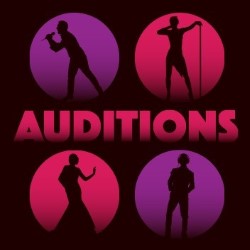
Auditions

The premise of this musical is that four professional actors share their insights into the scary world of auditions. The problem is that based on this show I would struggle to give a single one of them the part. Auditions – created by Michael Sharmon as a collective of his personal experiences – follows the achievements and struggles of the actors as they divulge anecdotes and advice which only an expert could know.As the first jarring chords of the synthetic backing score blared out of the speaker I realised that this musical was going to be cheesier than a toasted sandwich. Shortly after followed the floods of overexerted facial expressions and uncomfortably dramatic arm movements. Corny jokes and excessive prop changes ricocheted violently across the Sweet Grassmarket stage, before a pink-sequined and lacklustre attempt at a finale ushered us out of the door.In terms of musical ability, it was evident that each of the cast could sing, and Sandra Waters’ sensitive vocal portrayal of Vivian landed particularly softly on the ears. I was surprised to discover the large number of accolades the cast hold between them – Ralion Alonso, who played Lee, was a former Disney lead vocalist in Hong Kong – and between them they have enough theatre credits to cast the entirety of the West End. Sadly, on this occasion there seemed to be a clash between the performers and the material – a lack of engagement I believe stemmed from the superficial nature of the content. Olivier-winners would struggle to bring any sort of genuine meaning to the musical numbers Best of Luck and Who I Am, and the result was a shallow production.Fusing together song, short dialogue and soliloquies wasn’t enough for redemption, though, and the piece failed to convince on any sort of meaningful level. How did Auditions go? No callback this time, I’m afraid.

Sweet Grassmarket • 3 Aug 2017 - 13 Aug 2017

Soweto Gospel Choir

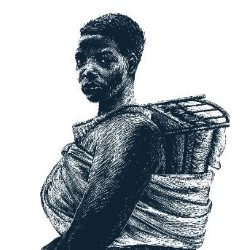
The Soweto Gospel Choir was formed in 2002 and embraces the diverse music of South Africa, a country with eleven official languages and subsequent communities. Guiding us on a tour of its sonorous heritage, the choir holds a phenomenal ability to create a rich and exquisitely harmonious tapestry out of simple ingredients: usually just the human voice and some form of traditional drumming as accompaniment.Boasting a ridiculous amount of talent, the choir was breath-taking in its soulful renditions of gospel. On each occasion a lead singer would step forward and sing the melody, supported (but by no means to a lesser extent) by the other members who would provide the complementary parts. Singing in a range of different languages seems an impossible task, but the choir takes this as light work, managing to take the breath of the entire room during their whistle-stop tour of the nation. The extent to which music can have an emotional impact on you really is surprising; and I found myself at several moments with goose bumps from the raw passion amplified through the music.There was a defining moment in the set, however, which saw the choir switch from traditional gospel and folk music to more modern chart hits (presumably to satisfy a Western audience). Though they covered James Brown’s I Feel Good extremely well, I did feel that the choir should have been more stringent in their quota of performing traditional gospel.Every member of the choir carried a phenomenal talent; be that in singing, dancing or bringing the best out of the instruments on stage. Showcasing each of these on a rotation throughout the songs was a wonderful way of highlighting a wide variety of music and many different aspects of what gospel means in such a uniquely multicultural society like that in Soweto.Overall, it was a fantastic show and whatever aspect of music they turned their minds to was a triumphant success; I would challenge anyone else to take Leonard Cohen’s Hallelujah and cover it with a fresh twist that hasn’t been done at least ten times. If you are looking to be entertained (rather than educated), then the Soweto Gospel Choir has a remedy to soothe your soul.
Assembly Hall • 3 Aug 2017 - 27 Aug 2017

Perhaps Perhaps Quizás

I have a great admiration for clowning; whilst superficially there is most certainly a stereotype of the heavily made-up children’s entertainer doing nothing more than blowing up dog-shaped balloons and being silly for a couple of hours, there is actually a great deal of technical ability required to clown (especially when utilised in a one-woman show in front of an adult Fringe audience). Mexican clown Gaby Muñoz, the creator and sole performer of Perhaps Perhaps Quizás, is commendable in her unique style of clowning – one that incorporates adult themes such as lust and heartbreak and breaks the stigma of what the art form so frequently is thought to be.Taking inspiration from long-lost love, her performance follows her (mostly fruitless) pursuit at finding a husband. We observe her walking down the aisle in her small front room, hand-made toilet-roll bouquet in one hand and a man’s empty tuxedo jacket in the other. It is quite a dark image, but Gaby makes it light-hearted with her wonderfully over-expressive reactions. Soon a suitor is discovered amongst the audience (along with the vicar and bridesmaid) and we take our seats for the big day. Audience participation can quite easily become uncomfortable – especially when it constitutes three-quarters of the action on stage at any one time – but Gaby manages to (non-verbally, no less) instruct each of their individual roles, and continually maintains her place as the star of the scene. Even when the others have particularly humorous moments planned or improvised, Gaby keeps command of the scenes progression whilst giving them their five seconds of fame. I thought this was particularly impressive for a clowning show, as the only tools of communication she has are physicality and over-exaggerated facial expression, and the scene she orchestrates is fairly complex.Unfortunately, her marriage is not to be. After a particularly complicated (and equally hilarious) wedding night, the piece quickly takes a rather sombre turn. In a turn of events that sees Gaby physically crawl into a pile of papers and cocoon herself on the sofa, I find myself being surprisingly moved by her portrayal. Yet again she turns what we might consider clowning to be onto its head and presents us with a fresh interpretation: a commendable feat in its own right.Gaby’s performance is humorous and endearing, although I did feel that sometimes the same sort of scene was played out for too long (such as the wedding ceremony). Whilst it is important to be able to develop a scene so that the climax pays off, I would have liked to see a wider variety of situations in which to see her excellent clowning unfold. The show is an hour – plenty of time to afford such a thing.Gaby Muñoz has a gift for challenging our preconceptions, and entertaining with something fresh and alternative. She makes clowning (something often considered either puerile or niche) accessible to the wider audience and is a fantastic entertainer. I just wonder if, in Perhaps Perhaps Quizás she could have had incorporated more material into this otherwise enjoyable show.

Assembly George Square Theatre • 3 Aug 2017 - 28 Aug 2017

Out of the Blue

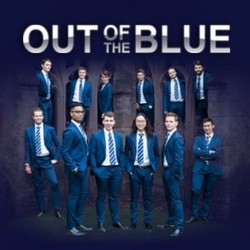
I remember the time when, several years ago, Out of the Blue came to my school and did an assembly. One of its members had been a student there, and wanted to come and visit again. In an arduous disarray of teenage angst, I remember distinctly thinking that I was far too cool for acapella, and swore I wouldn’t ever be caught at one of their shows, even if you paid me. All I can say is that I’m glad opinions change when you grow up.More polished than a can of Mr. Sheen, the dozen-strong group of Oxford students bursts onto the stage with well-justified, playful confidence. Each member is individually talented as they take the front of the stage during alternating solo parts, but I would argue that the group’s real strength lies in their ability to create such beautiful backing vocals. Forty minutes into the set and I was still astonished that every single audible sound was the product of the human voice, and that the complex score was the creation of someone’s exquisite musical intelligence. Tantalising the crowd with a moreish recipe of harmonisation, beatboxing and a general air of sophistication, Out of the Blue dances the afternoon away to the delight of an awestruck audience. There is something incredibly uplifting about watching people enjoy themselves on stage – so often a performer is concentrating on getting things correct that their own fun suffers, but the group managed to succeed on both levels. As they boogied up the aisles an infectious grin began to infiltrate the rows of seats, and soon everyone was on their feet.With acapella comes a risk of it becoming corny. Whilst this is admittedly part of the charm, Out of the Blue manages to get the best of both worlds by incorporating both contemporary chart hits and more retro numbers in their routine. Alternating between genres in a set that included Justin Bieber and Footloose, they ensured that there was something for everyone, although I’m sure they could have made Amazon’s terms and conditions sound magnificent if they had tried that too.A professional, fearless and heart-warming show, Out of the Blue will have you smiling from ear to ear. In the age of acapella there is a wealth of options from which to choose, but take my word for it: these boys are the real deal; these boys are pitch perfect.

Assembly George Square Theatre • 3 Aug 2017 - 28 Aug 2017

Oyster Boy

Oyster Boy is a comic telling of the fictional relationship between two young lovers on Coney Island and their subsequent journey into marriage. As newlyweds on a trip to Paris they are treated to fresh oysters, and soon the aphrodisiac starts to kick in… Fast forward nine months to the birth of their first child - Sam - and we learn that perhaps the seafood has had more of a lasting effect than just a salty aftertaste. As Sam (the title role) struggles to find approval in a society with an affliction to difference, his parents are forced to make a difficult choice – will family loyalty or the desire to be accepted come first?The production had several convincing elements, but in particular I had a great admiration for the creativity in the way they led us through the tale. Utilising several different storytelling techniques in order to convey the plot; puppetry, song, physical theatre, poetry and music all made an appearance on this extensive list, although I can’t help but feel that sometimes the large array of skills made the piece slightly fragmented, being stilted in some parts by the time it takes an audience to get on the wavelength of whichever visual form is in front of them. Whilst this is no reflection on the quality of individual elements, the narrative of the play as a whole must always be most important, with theatrical devices serving to complement this rather than be showcased for the sake of variety.The company outdid themselves in their depiction of Sam – a puppet made of papier mache and knotted material. Using a light source and material to create the silhouette of him swimming was absolutely stunning, and the whole ensemble worked like clockwork to create the illusion. I found myself forming an emotional attachment to the character, which (with him being an inanimate mollusc) is a great credit to the cast and their impressive stagecraft. Where this became disjointed was through the everyday, non-stylised speech patterns opted for in the dialogue. When equally abstract and larger-than-life characters (such as the surgeons involved with Sam’s condition) speak like regular people, the fantasy becomes patchy and I found myself slipping back into the real world, therefore rendering the more imaginative portions of the production superfluous and somewhat unbelievable. Nonetheless an enjoyable feat of showmanship; Oyster Boy is a delicacy in its own right… I would have just preferred it without the extra seasoning.

Assembly George Square Theatre • 3 Aug 2017 - 28 Aug 2017

Tshepang: The Third Testament

Casting a blinding light on the atrocities of human nature, Tshepang: The Third Testament is a harrowing portrayal of the true story of Baby Tshepang – a nine-month-old South African baby who was brutally raped in 2001.With such a heinous and explicit event taking centrefold of Laura Foot’s critically-acclaimed script, there are a number of ways the two performers could have taken it. They opted for a largely symbolic approach, utilising an emblematic miniature model of the village as part of their set. It was an interesting touch to introduce the characters of the event long before revealing their role in the crime, instead focusing only on their daily routines and personal traits. That woman – the one who walks around the village every day; she observed the rape of Baby Tshepang and ignored it out of fear for whistleblowing. The man over there: he lost his job at the dried fruit factory and turned to alcoholism for comfort. He was also accused of being one of the six men suspected of gang rape. Even on a third person basis we were given time to form some sort of emotional attachment. The fact that seemingly regular, initially decent people could commit such an act made the whole piece even more disconcerting, challenging our stereotyped images of what constitutes evil in the process.Despite this nuanced form of storytelling, though, I must admit I thought the dramatic exploration of the aftermath was underwhelming. The trauma for those involved did not stop when Baby Tshepang was taken away for urgent surgery; it did not stop when arrests were made and it did not stop when the victim’s mother was denied contact so that further analysis could be carried out. An incident of this callous proportion changes lives forever, although in this production that sense was not conveyed. I felt that the monotonous pace of delivery was in part responsible for this - though the content carried much gravitas, a change of rhythm is essential to ensure the audience’s total concentration.That aside, though, the performance had several strong points. One of the most emotive scenes I have seen at the Fringe was the sodomisation of a loaf of bread (which had been cradled affectionately by Tshepang’s mother as a hollow replacement for her lost child) with a broom handle. As chunks of crumb violently rained onto the floor my heart sank, and if you were still at this point unsure of the situation’s lead-weight gravitas, the destruction of this baby-sized object soon made it apparent.Tshepang: The Third Testament will shock, sadden and anger you. You will question morality as you learn of the 20,000 annual infant rapes in South Africa and you will come away with a very heavy heart. I have to wonder, however, whether this is the result of flawless storytelling or the plot: the central event being something which will always have that effect, no matter how it is told. Either way, this piece will have you searching for what it means to hold compassion, or even just for what most of us consider innate: to be human.
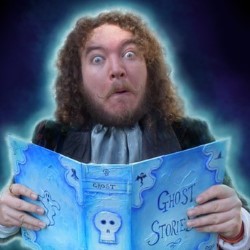

Assembly Roxy • 3 Aug 2017 - 27 Aug 2017

Will Seaward's Spooky Midnight Ghost Stories IV

There has never been a more perfect match for the phrase ‘larger than life’ than Will Seaward. Adorned in purple velvet as he welcomes us into the room with a great big booming voice, Will is a true showman (although I get the feeling that this persona is the real person and not just an act). With great relish he takes to the stage and informs us of the horrors lying ahead: he is, of course, referring to the demons of the story we are about to witness, but you could be forgiven in thinking he meant the production.Opening a book of demons, he begins to read the first chapter: it is an entertaining (if not a little convoluted) prose, full of all manner of comedic and hideous beings. Though Will excelled as a storyteller, I couldn’t help but get a little lost as the plot progressed. When the only way of collecting information is from a continual monologue it is very easy to get lost. If you mishear, drift off (it is midnight, after all) or simply don’t understand there is no chance of catching up; just doing your best to slip into the flow at a later point.The story finishes on a cliff-hanger, and the remaining time of the show is dedicated to following clues to find the other half of the text. To say more than this would to be give away the mysterious secrets of the tale; but a fair summary of the night would be an hour of entertaining silliness, despite the few ghosts thrown in to disturb us.In an especially amusing scene, Will takes us through a séance. Suddenly a spirit has made contact: we are in luck. As the lights flash and the audience takes a deep breath we await the all-important message communicated to us from the afterlife. Time passes and the tension is unbearable but abruptly the message comes: they seem to be lyrics. To say more would be giving the joke away but Will makes a particularly amusing reference to pop culture. It is a very humorous moment but unfortunately several more cracks to the fourth wall follow. When done well, these can be light-hearted moments. When relied upon for laughs, however, the wall shatters and you can’t help but wonder whether paying for a ticket is money well-spent if props are not pre-set and the comedy stems from lack of preparedness.Whilst there were several sections of merit, Will’s sense of humour is particularly niche: some of the jokes are science-based to be in keeping with the story, although I can’t help but feel that this is perhaps a little inaccessible to the general public. Nevertheless, as a performer he excels, and what is lost through lack of knowledge is soon made up for in entertainment value; Will Seaward’s Spooky Midnight Ghost Stories IV is a roller ghoster of emotions.

Gilded Balloon Teviot • 3 Aug 2017 - 29 Aug 2017

Workshy

Workshy is a performance art piece by Katy Baird, a lady more experienced in customer service roles than theatrical ones. Despite this rather steep career change, you could be forgiven in taking Baird to be a seasoned professional – her command of the stage and her unashamed approach to storytelling could rival several large names, and her first-hand experience of the issues she addresses gives the whole piece an authentic air.As with all performance art, what an audience takes away will be subjective; resonating different emotional chords in its individual interpretations. As an overview, it explores just what work constitutes in today’s culture, poking a politically-driven satirical finger at class differences in the workplace. Leading us through first-hand accounts of everything from microwaving mashed potatoes at Wetherspoons to fetish-work on a webcam, the production has a refreshing honesty. At the end of the day, a job exists to earn money, but with it comes a unique set of conditions: camaraderie, loyalty – even danger, depending on the role. Quite how these conditions influence us will inevitably be a significant consequence of employment in a capitalist society, and during the piece I was forced to challenge quite how integral employment affects other (apparently unrelated) social values at the same time.It is a great skill to be able to hold an audience single-handedly, and Baird succeeds beyond expectation. Using a variety of art forms to make her point, the Summerhall venue quickly becomes a safe space for open dialogue about the subjects mentioned. You even get fed.Going above and beyond what is traditionally considered taboo in modern society, Baird will make you laugh, force you to think and shock you unexpectedly. And if this performance is anything to go by, we may well have found Katy Baird’s next employment sector: the arts. Thank goodness it isn’t food hygiene

Summerhall • 2 Aug 2017 - 27 Aug 2017

Yvette

Every once in awhile a piece of theatre comes along so powerful that it wobbles you, requiring time long after the curtain call to be processed in its entirety. Yvette, a one-woman play written and performed outstandingly by Urielle Klein-Mekongo, is one of these pieces. It focuses on thirteen year-old Yvette (otherwise known as Evie), a young girl struggling to navigate through the difficulties of childhood and under-the-table racial injustice until one day, in a moment of sadness, she is preyed upon and raped by her uncle.When faced with tormenting content, it can be very difficult knowing how to write the script: whether you take verbatim accounts and let what happened speak for itself or whether you should stylise it in order to make a more personal connection with the audience due to the ability for individual interpretation. One of Yvette’s great successes is the controlled release of information throughout the script. From the beginning we are told that the protagonist had her childhood taken away; but in which manner remains concealed until later on. Instead we are introduced to Evie as an individual: an awkward adolescent managing the unknown world of childhood dating; an unhappy daughter struggling to find compassion in her mother; a victim of racial prejudice in today’s society. A key message I took away from the performance was how sexual assault is too often used to define someone: not only have they been victim to such a heinous act but they are forced to live a life without agency to escape from it socially. Because we were not told what happened to Evie early on, we learned that Evie – an individual - was raped as a standalone event. Should it have been the other way round (if we met Evie after we had found out about the sexual assault) I think that perhaps the audience would – on some level – think her to be a product of the assault. It is an upsetting thought, but the piece challenged this viewpoint – unfortunately, something that is still prevalent nowadays on a subconscious level.An original soundscape is created live each night by Urielle in between scenes with a single microphone and a loop pedal, and serves as the perfect accompaniment to the script: it provides moments of emotional relief to allow the audience time to process script’s harrowing content, and music as a form has the ability to connect with people on an emotive level that sometimes words alone simply cannot reach.Yvette handles a difficult topic with sensitivity but without hesitation. So often we can think of rape as being black and white when we hear about it through various forms of media, hearing about it through formal outlets as a clinical act. Whilst the news tells us the facts, it makes no comment on the extreme emotional upheaval and distress the victim undoubtedly suffers. Yvette takes this and personifies it, bringing home just how horrendous such an act is. Theatre has a unique ability to confront an audience with their own moral compass, but so rarely is this used to its full effect. This piece, however, does not shy away and Yvette is an education I encourage everyone to have.

Pleasance Courtyard • 2 Aug 2017 - 26 Aug 2017

Wall 2.0! A Thinly Veiled Manifesto for How to Mend Our Broken World Disguised as a New American Musical

Wall 2.0! follows the citizens and aristocrats of Nowallia, a dystopian land which had in the past been divided by an impassable wall. The backstory to this is explored further in the company’s other Fringe show – Wall 1.0! (which runs directly beforehand) – but for all intents and purposes was a while ago. Power relations are challenged when the charismatic but perhaps overbearing leader First Minister Sludge is confronted by a lowly citizen, resulting in the eruption of civil chaos.On the whole the thirty-strong cast - made up of students at the Denver School of the Arts Theatre - gave an energetic and enthusiastic performance, and I must admit I was pleasantly surprised by the debut of the original score (which in my experience can often be a gamble - for every well-known musical there must be two-hundred which unfortunately could not stand the test of time). It was evident from the first ensemble number that a lot of love and hard-work had gone into this production. Whilst I did feel that the maturity level of the script could have done with growing up by a few years – if you are not performing in a children’s show I would urge anyone to avoid singing about a “poopy” nemesis – there was undeniable talent amongst the performers. In particular, those who portrayed First Minister Bruno Sludge and his political rival Larry outdid themselves with bluesy renditions throughout the performance. I couldn’t help but be fully aware, however, that this was a school play. It ticked all the boxes to delight proud parents: corny dance routines, questionable costumes (I’m looking at you, Abraham) and exaggerated reactions from members of the chorus. I would argue that the joy of a school play often comes from watching friends and relatives rather than the execution of the production, but nevertheless I found myself suitably entertained.The Fringe offers a wonderfully accessible platform that allows anyone and anything to have a go, try out new ideas and receive some of the most honest feedback going; and I’m sure that this educational experience will make the cast stronger actors because of it… although I couldn’t help but feel that the show was geared more towards the students’ schooling than to the paying audience’s enjoyment.

C venues – C • 2 Aug 2017 - 15 Aug 2017

Underground Extreme Paranormal Ghost Tour

Renowned for being an especially haunted city, Edinburgh has many mysterious secrets lurking beneath the cobbled façade of what we wrongly assume to be ground level. Led through its dark past by an actor in the role of the long-dead James Douglas, Fourth Earl of Morton, we made our way up the Royal Mile – which is a spectacle itself under the explosive remnants of the Military Tattoo’s infamous fireworks.Stopping off at the most gruesome of sites, our engaging and knowledgeable host holds no gory details back. Showing us the places of all manner of grisly happenings, we are treated to the locations where the devil has allegedly made an appearance and where thieves were tortured (by nailing their ear to a door, no less) before winding our way down the Mile’s closes on our way to the statue of Greyfriars Bobby.Greyfriars Kirkyard is a particularly sinister location in the dark, especially when twinned with tales of Burke and Hare and repeated occasions of being buried alive. In a fascinating bit of storytelling our guide tells us of erroneous burials, in which people were merely sleeping or unconscious. In response to this bells were placed above graves, which could be rung should the deceased wake up – hence the phrase ‘saved by the bell’.The tour culminates with a trip to the company’s exclusive underground (and apparently haunted) vaults. Used as a recording studio until the mid-1990s, when they decided the strange effects the space had on the music – such as mute drums and crackling software – were detrimental to the end product, it has since been the site of many paranormal investigations and tour visits. Even if you are a sceptic when it comes to ghouls, it was fascinating to step into this hidden world just a few feet below the surface of South Bridge. Unfortunately, no ghosts decided to make an appearance that night but it was still interesting to venture around the damp and cobbled walls, and I must admit it is not somewhere I would want to be left alone at night.A unique insight into the city’s darker past – even if ghosts themselves cannot be guaranteed, an enjoyable night certainly can.

City of Edinburgh Tours • 1 Aug 2017 - 31 Aug 2017

The Great Hipster Songbook

Angus Munro and band offer you a medley of ‘Hipster’ songs reimagined as 20th Century Jazz classics. It’s not entirely clear why they do this, but hey – it’s fun, and they play some great music, music you won’t have heard before, and also Biffy Clyro.The band is a four-piece, with Munro on vocals and saxophone, supported by drums, keyboard, and double-bass. Each song is given a brief introduction by Munro and a “Hipster score” out of ten which is a nice touch. The atmosphere is a fun one; people chat, drink, and cheer while Munro enjoys himself onstage. The covers are generally well done. A version of Chvrches’ The Mother We Share (5/10) is nice – Munro sounding incongruously cheery with the line “I’m in misery…”. Strange Powers by The Magnetic Fields (10/10) goes down well: it’s reworked here in the style of a Frank Sinatra song.Sometimes the covers lose their way. A couple of times the underlying music is fully reinvented in Jazz style while the vocals are performed in the style of the original song, so the crowd is given the impression that they’re listening to two different songs being played at the same time. But generally Munro (and pianist David Patrick who’s responsible for the arrangements) have a good feel for the soul of a song, and manage to keep hold of what’s important to it. The Mountain Goats’ This Year works brilliantly as a rockabilly track: Munro’s version sounds less on edge than the original, more like a manifesto for an angry teenager. A cover of Radiohead’s Burn the Witch manages to recreate that unnerving undercurrent with the double-bass and also injects a manic piano solo from Patrick.It’s a good show, and I hope Munro is back with an expanded run next year.

The Jazz Bar • 17 Aug 2016 - 18 Aug 2016

Mixtape

This is a pleasant little show which deserves a bigger audience. Mixtape is billed as a “cross between a live gig and a lunchtime music club”, and it delivers on this well. Sophie Grant shifts between a different theme for her songs every couple of days – I got Living in the City (inspired by the Stevie Wonder track) – and she plays a range of music around said theme. Between tracks, Grant talks a little bit about each song, explaining, eloquently and earnestly, both its background and why she likes it.Grant’s voice is lovely – light and soulful – and she offers stripped back covers of some great songs. The tunes range from Billy Joel, with Vienna, to Gil Scott Heron, with an excellent rendition of We Almost Lost Detroit. Each song feels appropriate to Grant’s theme and to the general mood and they wash around the small tent at The Three Sisters nicely.The show ends with a nice touch: a cover of the aforementioned Stevie Wonder track which requires the audience to help out with makeshift “fruit-shoot shakers”. All in all, Grant creates a nice lunchtime atmosphere and backs it up with a great voice. What more could you want from a free show on a sunny day?

Laughing Horse @ The Free Sisters • 16 Aug 2016 - 28 Aug 2016

The Beatbox Collective

Watching beatboxing is fun for most of us in the same way that watching acrobatics is – it’s the enjoyment that comes from thinking ‘I could never do this in a million years’. The Beatbox Collective (think beatboxing super-group) present a performance which is essentially audible gymnastics: they use every part of their mouths, popping, clicking, humming, trying to deliver on their mantra that any sound on earth can be replicated by the human voice. And they do make an incredible variety of sounds, very realistically. Close your eyes for a few seconds during this show and you really could plausibly be at home watching tv, or standing on the tube, or listening to the radio.It’s unclear how far this disbelief on the part of the audience can carry a show. Beatboxing is a novelty and it needs to remain novel to keep the audience engaged: it doesn’t always necessarily sound nice, so at every moment it must be impressive. And to be fair, The Beatbox Collective manage this very well. They’re clearly all masters of their craft, but they’re especially good at combining to create a wall of sound that invariably sounds exactly like whatever phenomenon they’re trying to mimic. They recreate Garage tracks, they musically reconstruct a day in the life of a beatboxer (waking up to an alarm clock, eating breakfast, commute to rehearsal), they perform a mashup of classic hip-hop tracks which goes down extremely well with the crowd.Conscious perhaps of the need to constantly shake things up to engage the audience, The Beatbox Collective shift between different sections of the show with great fluency. I’m no beatboxing aficionado, and neither, it seemed, was anyone else in the crowd, so it’s hard to tell when the performers are doing something really impressive – it all sounds bonkers – but what’s genuinely impressive is their imagination. They are good humoured, earnest, and so inventive with the sounds they create that I do believe they could recreate any artificial sound organically. A highlight of the show was when the performers ‘battled’ each other; they clearly enjoy it, and enjoy impressing and making each other laugh.This show is what it promises: an hour-long showcase of a skill you almost certainly don’t have, and don’t see every day. It’s good fun in the evening with a drink, and the large crowd certainly had a great time. The Beatbox Collective received a standing ovation at the end of their show, and I don’t think it will be the last one they get this Fringe.

Gilded Balloon at the Museum • 14 Aug 2016 - 29 Aug 2016

Nick Harper

Nick Harper is a great guitarist and a good singer, but a middling lyricist. This is a real shame, as Harper’s unsubtle and occasionally jarring lyrics detract from his genuinely impressive musicianship.Harper’s guitar playing stands out almost at once. Unannounced, he starts aggressively strumming his acoustic guitar, opening a good-natured show. He begins with In Our Time, a dark, tumbling and ultimately optimistic love song. “I believe the strength within each soul can shape its destiny”, Harper urges, his voice strong, with a strained quality. He moves on to Breathe, giving the assembled crowd a first glimpse of his beautiful falsetto voice. Breathe, like some other of Harper’s songs, carries echoes of Jeff Buckley on Grace – Corpus Christi Carol is the obvious song to compare. But riffs on other tracks also evoke songs like Lover, You Should’ve Come Over and Mojo Pin. Breathe is a lovely song and is one of the highlights of the set.Unfortunately, Harper’s song-writing later on becomes a bit of a distraction. Quite often Harper seems to settle for an obvious line in his verses when a lighter hand would have been more effective. On Blue Sky Thinking – a song Harper introduces by saying it’s about making one’s dreams come true – Harper sings “make my blue sky dream come true”. On Juicy Fruit Girl (about a girl who Harper knew who ate juicy fruit chewing gum), Harper – presumably striving for a rhyme – simply ends a line with “yum yum”; elsewhere he describes how “when she kissed you she’d slip it [the juicy fruit] up inside her gum, to free her tongue”. It’s hard not to feel that Harper could have done better than this.There’s also a lovely cover of Purple Rain which really allows Harper’s talents to shine. He’s a great guitarist, and reimagines the song with a different, (even) more melancholy tone. He’s heartfelt, sounds honest, and thankfully didn’t write the lyrics to this one. Elsewhere Harper is funny between tracks, and popular in the room. It’s a good show, though Harper would do better to focus on his strengths.

The Jazz Bar • 14 Aug 2016 - 27 Aug 2016

An Evening of Ryan Adams With Easy Tigers

A brief introduction to Ryan Adams for the uninitiated - he’s a rock/country singer from Carolina who’s released a new album every year or two since the turn of the century; some of them truly fantastic. A brief introduction to Easy Tigers for the uninitiated - they’re an Edinburgh-based band inspired by Adams (they’re named after an album of his), with a great sound and a nice energy to their playing. The two make a good mix.Given that they’re such big fans of his, you’d expect Easy Tigers to relish an evening with just Adams' songs, and they clearly see the whole event as a real treat (at one point the evening is described as one of “pure indulgence” for them). We kick off with a gorgeous rendition of Shadowlands – the band has brought on a string quartet and they really wallow in the emotional heft of the song. This moves on to My Winding Wheel and again the band seem to really relish what’s great about Adams: those aching vocals, the long, tremoring chords fizzling out into the air in the background of the song.The venue has turned the gig into an all-seated affair which I think is a mistake – the result is a reserved and respectful audience, which isn’t exactly what the band is after. They want a party, and we’re exhorted to “go and drink as much as you can during the interval so you can come back and shout at us”. I don’t know if the audience follows this advice, but the show really takes off in the second half. The band launches into a string of lively hits from Adams’ two undisputedly classic early albums, Gold and Heartbreaker. The band run through Firecracker, New York, New York and Harder Now that it’s Over and the tone and tempo have changed. They’re properly rocking out, people are up and dancing, and they bring a string of friends on to help them out with the songs – figures clearly popular in the local music scene.You wouldn’t have to be an avowed Adams fan to enjoy this: his output is varied enough, and the band dot about enough, that liking anything under the vague banner of ‘rock music’ should be sufficient for finding something here to like. The show builds to a great finish; there’s a nice duet of Oh My Sweet Carolina and a foot stomping, loud, wild cover of To Be Young (Is to be Sad, Is to be High) which gets all the crowd on their feet. The band’s good-humoured all the way through, and despite a few long breaks for tuning between songs which somewhat harm the tempo of the show, the night is a blast.

The Queen's Hall • 9 Aug 2016

The Sorries

Douglas Kay and Martin Philip of The Sorries are likeable, witty, and talented performers, and they put on a great show here. As we take our seats in the steep raked audience at the Quaker Meeting House they enter playing Bodhrans (Celtic drums) and singing I Will Go – a stirring, earnest duet as they walk amongst the crowd. It sets the tone nicely. The Sorries specialise in old Scottish songs (at one point Kay jokes that Lads Among the Heather from the nineteenth century, is the most modern song in the set) and they work them artfully – picking their way around the old language of the lyrics and updating them where appropriate.The performance is just so fun and energetic, it’s impossible to not be drawn in. Philip keeps beat on Charlie is my Darling by stamping his foot, and the crowd is encouraged to help by clapping along. The result is a deletion of the space between performers and audience. Clapping and singing as we are, we feel as though we’re helping Kay and Philip – less being sung to, and more joining a grand old singalong: exactly what these songs were written for in the first place.The two really are just charming – they tell jokes, they’re self-effacing and poke fun at each other between songs, and above all they make everyone feel welcome. Their voices merge well. Philip’s is the more powerful (‘lusty’, it might once have been called); Kay’s has this endearing throatiness, as if he’s been wounded, that is fully able to evoke the melancholy in these songs. An acoustic performance of Ae Fond Kiss is genuinely moving with that wavering on “Ae fond kiss and then we sever…”.It’s interesting to think about the subject-matter of these old songs. It seemed every Scottish audience-member knew them all, knew the words, and there were murmurs of appreciation when the title of the next track was announced. Almost every song shares the same “Jacobite politics”, the same pride in Scottishness, which makes the jokes about Brexit and Scottish independence feel seamless and relevant to the Sorries’ music. The old fault lines remain beneath the surface.Go and see The Sorries. You won’t be disappointed. They’re fun and talented and if you haven’t heard these songs before then you should – you’re in Scotland. If you have heard them before, then you won’t have heard them as good as this.

Quaker Meeting House • 8 Aug 2016 - 27 Aug 2016

Folk at the Fringe

We walk down into the stone basement of the Royal Oak; a tiny room, space for a couple of performers and a crowd of about thirty, all crammed in. The sets are unplugged, and we’re sat a matter of feet from the performers, standing with their guitars.First, Louis Gilman. He’s a good singer, with a natural understanding of how to work a space like this – his playing is gentle, and he draws the audience in closer to him, sometimes so that we’re almost straining to listen. The songs he plays also benefit from a light hand: they’re old folk songs, the kind you used to hear around a campfire, and they’re darker and more gothic than much ‘folk’ music you’ll hear today. Someone observes that Edinburgh’s a good setting for songs like these, and a good day for them too; outside is all mist and drizzle and stone passages. Two highlights are Leave her Johnny and Queen Jane. Gilman doesn’t apologise for the sombre tone of his songs. “Music’s sweet and lovely” he says bluntly, “so if you just sing about sweet and lovely things you get an overload. You need to contrast it with the darker things in life”.The second performer is James O’Hara-Knight. He has a different style to Gilman, more upright, and he strums at his guitar rather than picking individual strings. His voice is deep like oak, and his songs perhaps more recognisable. He sings about the human and mundane, he covers Dylan among others, and again it’s a good set. The audience clearly enjoy themselves; there’s a friendly atmosphere throughout, and each song is greeted by generous applause.This show is exactly what it promises: good music for a fiver, played by talented musicians. Take it in with a pint one afternoon and you won’t be disappointed.

Lost Horizons at Ryries Bar • 7 Aug 2016 - 18 Aug 2016

John Hunt Four O'Clock Afternoon Blues and Swing

The Jazz Bar is packed for this one, and no wonder: this is music you can’t help but tap your feet to. John Hunt comes on a few minutes early and chats to the crowd; he seems to capture the mood of this dark room – “The Jazz Bar is like a country, it has its own time-zone”. What Hunt offers us is a time-warp. He takes us back to the America and the music of Willie Dixon, Muddy Waters, and Howlin’ Wolf.John Hunt plays on homemade guitars and his music has a similar quality: rough verve-y plucking and a deep craggy voice that displays a surprising richness as the set goes on. The sight of these guitars alone might be worth the entry-price. The first looks like it’s been hacked out of a plank of driftwood and wired-up by a Robot Wars contender. The second is even more bizarre. It looks lovely, it’s thirty years old, and it’s made out of papier-mâché. Copies of Melody Maker magazine to be precise. Hunt says he needed a guitar, and all he had was copies of this magazine “filled with adverts for guitars I couldn’t afford”, so he decided to put it to work.This dark wit is continues throughout the show. On a song dedicated to an elderly uncle who’s recently married, he sings “My woman loves me so much she feels the need to get a vicar involved… I love my woman so much I don’t really feel the need to get the government involved”. On another song dedicated to vinyl records, Hunt’s lyrics and riff get ‘stuck’ on repeat on the final refrain. He offers blues-ed up covers of Frank Sinatra, and jaunty songs about his car being stolen and priests drowning.Hunt is engaging, makes the crowd laugh and above all plays good music. This show is a haven in a busy city centre. Catch it if you can.

The Jazz Bar • 6 Aug 2016 - 27 Aug 2016

The Red Guitar

The Red Guitar is, essentially, the story of John Sheldon’s life. John Sheldon has lived quite a life. And it just so happens to mirror the development of rock music over the latter course of the last century. The stories merge into one another, and are told with real grace and charm. If you’re at all into rock, country or the blues, then this is the show for you.Sheldon talks of singing folk songs at summer camp, how learning those folk riffs naturally lead on to learning country ones, how this leads to his love for blues music, how that leads him on to… You get the idea. By the time he’s in angry middle-adolescence, Sheldon has (perhaps not entirely coincidentally) discovered rock music, electric guitars, amplifiers, and all the rest. He candidly describes the highs and lows of his youth, providing moments which are, in turn, both witty and genuinely moving.The main attraction here is undoubtedly Sheldon’s guitar playing. It’s brilliant. The natural and gentle way he picks out notes or fiddles with dials means you can’t help but be put at ease. It’s one thing seeing this kind of playing at a large-scale gig; it’s quite another seeing it ten feet away. Two moments in particular stand out. First, Sheldon’s description of how he became obsessed with Green Onions by Booker T and the MG’s, and ended up writing a letter to the lead guitarist (“He wrote back!”). Second, his tale of stumbling across Jimi Hendrix warming up in a studio room. Sheldon imitates Hendrix’s routine, whilst deconstructing all the different musical traditions Hendrix is mashing up and putting to work for his own purposes. He seems to really get lost in the music here, and for good reason.Sometimes Sheldon’s narrative overreaches itself. There are a few lines which strive a bit too hard for profundity and fall short (“Even a dream can have balls, if the dream is real”). There’s also an extended sequence in which Sheldon acts out a conversation with the Muse, who offers him inspiration for a song he’s writing. It’s a frustrating section because what Sheldon is actually describing – the process through which he developed a tune for his song – is really fascinating. The notes, Sheldon points out, are constantly climbing upwards, striving for a position of clarity and peace, before inevitably falling down and beginning the process all over. Sheldon’s playing here is truly lovely, and the Muse interlude just proves to be a distraction. It’s as if Sheldon feels the need to include a theatrical device simply to keep the audience engaged. He shouldn’t; he should have faith in the music. After all, it’s rock and roll.  

theSpace @ Surgeons Hall • 5 Aug 2016 - 20 Aug 2016

Ross Leadbeater's Great British Songbook

Ross Leadbeater is an alumnus of the all-male Welsh choir Only Men Aloud!, who won the 2008 television show Last Choir Standing. He’s in Edinburgh singing songs from the Great British Songbook, but over the course of a hit-and-miss hour it proves quite difficult to pin down exactly what this Songbook is supposed to be. The result is a show that feels like it’s still trying to find its feet, or its audience.Leabeater’s model is clearly the Great American Songbook, but whilst that phrase refers to a defined period in American music (think Irving Berlin and Cole Porter), Leadbeater tells us that The Great British Songbook contains music all the way up to the present day. Is it simply songs by singer-songwriters, or from musicals and films then? Apparently not, for Leadbeater confidently informs us that Chris Martin of Coldplay belongs to the pantheon of Great British songwriters. Is it just great music from Great Britain? Then why does Leadbeater sing all his songs in the style of music written by men like Noel Gay and Ivor Novello (“very much the Ed Sheeran of his day”), who belong to roughly the same period as their Great American counterparts? Leadbeater isn’t very much more helpful when he proclaims that he’s discovered the formula which makes a Great song: “It’s that combination of words and music”. Even he can’t be too convinced by this, since he goes on to perform a wordless rendition of the piano-part for the song Memory from the musical Cats.This lack of clarity in his theme would be forgivable if Leadbeater would relax and let the audience sink into the medley of hits that he plays – he’s likeable, a talented and engaging singer, and a smooth piano player – but he doesn’t. The audience, on a quiet Sunday evening, is clearly smaller than Leadbeater is used to, and this noticeably affects his patter with the crowd. He often turns to the audience asking whether they at least enjoyed his last track, as if they were being ungenerous. By my reckoning they weren’t – it’s just that Leadbeater misjudges the kind of reaction he should be hoping for. The crowd was older and generally content to enjoy the performance, occasionally quietly singing along with the songs they were familiar with. This seemed appropriate given the pacing of the show – Leadbeater sits alone at a keyboard and gently serenades the audience. But instead of trusting the audience to do what they’re comfortable with, Leadbeater often aims for some energetic call-and-response, which aside from anything is out of step with the style of music he’s playing. And while it’s of course understandable that Leadbeater had an off-night, he should know better than to make jokes about how badly the show is going. I can’t remember ever seeing this tactic make a show suddenly go better.Leadbeater is talented, but would benefit from making a decision about what he wants from his audience, and what he wants to play.

Assembly George Square Studios • 5 Aug 2016 - 21 Aug 2016

Gone Native

Gone Native is made up of two Scottish musicians, Kevin Gore and Bobby Nicholson, who decided that there wasn’t enough of a local presence at the Fringe. Their songs are angry, passionate, and decidedly political. They sing – and sometimes shout – about Scottish Independence, the rise of the far-right, consumerism and poverty. These moments are always powerful and they moved those in the room. But they’re sometimes guilty of a flaw common to protest songs; they focus on evoking powerful emotion at the expense of nuance, with the effect of alienating those they target, rather than challenging them.Gore opens the show with Far Amerikay, a song about Celtic people emigrating from Scotland and Ireland due to poverty. It’s a gripping start. Gore’s voice is like a force of nature, so powerful that it rings around the small room without the aid of a microphone – it’s a rare and powerful instrument and for me, Gore’s voice was the highlight of the set.The set moves on to Come Join the Forty-Five, a reference to the 45% of Scottish people that voted for independence. It’s a good song, and Gore’s voice carries it through, but it’s here that Gone Native’s songwriting begins to fall into the protest-singer’s trap. The song opens with the line “We stand proud, our conscience clear”, and goes on to denigrate the ‘lies’ and ‘propaganda’ perpetrated by the Remain campaign, and swallowed by those who voted for them. Now, perhaps I’m not in the best position to comment on music like this. I’m English and I couldn’t vote in the Scottish referendum. However, I have a lot of sympathy for those who voted for independence. But this song (and the other two in the set on the same topic) are aimed directly at the half of Scotland that disagree with Gore and Nicholson and, basically, I wished the songs had been more convincing. Music has no obligation to be balanced, of course, and many of Gone Native’s songs are just cathartic. But calling those who disagree with you “sheep” and “liars” obviously won’t convince those you’re singing at. Again – there is definitely a place for music like this, but insofar as these songs are meant to be a political tool, I can’t see how they can be a useful one. The rise of the right-wing across Britain is scary, but above all it’s complicated. It is frustrating to see left-wing music like this only reach for the low-hanging fruit of accusing the right of racism and xenophobia. Much of the time these accusations are accurate, but they don’t explain the whole story.I’ve focused on Gone Native’s politics because they seem to see their music as marked by its “social commentary”. If you’re unsure about the politics then I’m not sure if this show is for you. If you’re comfortable with the environment Gone Native create (and I, for the most part, was), then you’ll enjoy their playing. They have clear talent, even if at times, it’s a little frustrating.

The Royal Oak • 5 Aug 2016 - 29 Aug 2016

My Leonard Cohen

My Leonard Cohen is, above all, very, very fun. Stewart D’Arrietta and band run through a medley of Cohen’s hits, but you probably haven’t heard them like this before. Too often when people cover Cohen they can’t help but try to emulate his style – they offer stripped-back, softly sung piano-led tracks which pale in comparison with the original (with a few honourable exceptions). Not here.D’Arrietta and co. launch straight into a muscular, energetic Everybody Knows and don’t look back. The crowd is on board from the start – in D’Arrietta’s hands these are proper rock songs – and the band is clearly having a great time. Like Cohen, D’Arrietta himself has the appropriate gravel for these songs, but his voice has a different quality. Cohen’s voice carries the weight of the years and his melancholy; D’arrietta sounds like someone has soaked his lungs in whisky and set them alight. It’s Leonard Cohen getting the Tom Waits treatment.Famous Blue Raincoat is dealt with expertly, and Bird on a Wire makes a fitting tribute to Cohen’s Marianne, whose real-life counterpart passed away recently. The rest of the band are on good form and invest these songs with a dark, throbbing energy – Dr Michael Kruger on piano-accordion particularly stands out. A highlight was Dance me to the End of Love. D’Arrietta speaks of learning what inspired Cohen to write the song: Cohen found out that Jewish string quartets had been used to play inmates in concentration camps into the gas chambers. Upon hearing this, D’Arrietta reinterpreted the song, and it’s played here as a piece of music that might be performed by a klezmer band; D’Arrietta snarls into the mic and the song is angry and defiant, and the crowd claps along as the song climaxes and D’Arrietta howls. It’s startling and moving.One misstep is the slightly tasteless rendition of Chelsea Hotel #2. D’Arrietta declares that the hotel is the scene of “the most famous blowjob in history”, and emphasises the well-known line. But the song is intended to be a sad testament to a life and talent cut short too soon – it’s one of Cohen’s most moving, and the lyrics (it seems to me) are intended to be candid, not jokey or blokey. Cohen himself has stated his regret at revealing who the song is about; his example might have been followed.This being said, in the context of the whole performance the misstep is a minor one, and the band soon redeem themselves with a magnificent, belting sing-along to So Long Marianne – a staple of Cohen’s concerts and a crowd favourite. The hour-and-a-half set flies by. I could have stayed for hours, and all those around me felt the same.

Assembly Hall • 4 Aug 2016 - 28 Aug 2016

Out of the Blue

Out of the Blue are something of a Fringe staple by now. It’s their thirteenth consecutive year here, they tell us, and judging by the roar from the audience when asked if anyone’s seen them perform before, some of the crowd might be here for the thirteenth consecutive year as well. They’re an all-male a cappella troupe from Oxford who went viral a couple of years ago with their cover of Shakira’s Hips Don’t Lie, and since then it seems like they’ve moved commercially from strength to strength; Shakira’s endorsement rings out loudly on their promotion poster.The musical arrangements are in parts very impressive, and to a man Out of the Blue are seriously good singers. This is most evident during moments when the soloists (by my count every member of the 12-strong troupe has a solo at some point in the show) take a step back and the group sings together as a collective. A cover of James Blake’s Retrograde is particularly good. Aside from their lovely voices, Out of the Blue have a good understanding of when the tone and tempo of a performance needs to change, and they manage to vary the pace of the show well. The dancing arrangements are more sketchy, and a bit corny in places (members of the group all wave to each other when they sing the word ‘farewell’), but that can easily be forgiven. Out of the Blue are primarily musicians, and that’s the way it should be.More seriously though, one can’t help but feel that this show is something of a missed opportunity. Out of the Blue don’t play a single song that you wouldn’t expect them to play, to the extent that sometimes the show feels like an introduction to the last fifteen years of pop music for a slightly older audience. They open with American Boy, move swiftly on to Justin Timberlake and Destiny’s Child, and even find time for The Lion Sleeps Tonight in their 45 minute set. It all feels very safe and comforting, which I suspect is why many people found the show so enjoyable. But it also feels like they’re performing with the handbrake on, and unwilling to try anything really daring - we've seen and heard all this before. There’s real talent here, and it is under-utilised.I suspect you already know whether or not you want to see Out of the Blue. If you’re a fan of a cappella, you’ll enjoy the show. If you’re not already a fan, I’m not sure they’ll win you over. They offer an hour of singing and smiles (and £10 CD’s - £15 if you pre-order their new album now) with the sweetness turned up to 11. They hand out stickers at the end, and at one point they even sing that they’re ‘sticky sweet’ and ‘saccharine’. Many will judge it an hour well spent. I suspect others will find the sweetness sickly.

Assembly George Square Theatre • 4 Aug 2016 - 29 Aug 2016

(I Could Go on Singing) Over the Rainbow

It’s a strange and unsettling thing being stood stock-still for a few minutes, gazing into a stranger’s eyes. It’s supposed to be an encounter marked by intimacy, but how close can you get when you’ve bought a ticket and when the stranger across from you shares the same moment every night, with tens of different people? I’m not sure.You stand on a cross, you hand over your ticket and FK Alexander takes it and puts it in her bra, over her heart. She gives you a smile that might be a snarl. She gets dressed up – heels, make-up, sparkly jacket – takes you by the hand and sings to you. You might have heard about this part. Alexander sings along with Over the Rainbow, a recording Judy Garland made just months before her death, and – truly – it’s astonishing.There are years of heart and loss behind Garland’s words in the song. Her voice quavers, the volume peaks and troughs and she struggles to a difficult climax. Here, the room is dark and filled with the noise of static, booming drums like thunder and screeching, wailing bird calls. The track plays through this horrid background clamour, and it’s unclear if the music is rising out of or falling back into it.Alexander sings the song over and over, each performance the same, with the same rituals observed. By the end of an hour we’re all closely familiar with the song. She only sings to one person at a time; when you aren’t on the cross, you sit or stand around the room, simply watching. It’s a mesmeric effect – you watch the same routine repeat itself, you look at the faces of those around you and you wonder what they’re thinking. I’m sure everyone takes something different with them away from this show; I felt almost embarrassed at having seen into Alexander’s routine; a friend felt comforted to be taken by the hand.At one point in the song Alexander winked at me. She winks at everyone but it felt just then like it was only for me, and there was no one else in the room. You can know what she is about to do; it feels different having it done to you.Judy Garland was beaten down by life and this song is mainly what we have to remember her by. She’s given defiant new life for a few moments here, and ultimately Alexander’s feels like an act of kindness. This is a unique, powerful performance. See it.

Summerhall • 3 Aug 2016 - 28 Aug 2016

Epic Love and Pop Songs

This is a pretty great show. It’s about two teenagers, Doll and Ted (Norah Lopez Holden and George Caple respectively), who both have a lot going on in the background of their lives – barely any of it good – but who spend an hour, essentially, telling us the story of their friendship. They’re an odd pair. Doll’s pregnant but she won’t tell anyone who the father is – not even Ted. Ted’s had a tragedy in his life which he won’t talk about with anyone – not even Doll. The secrets they keep from one another will be revealed over the course of the play, and both actors play these moments of revelation with a real tenderness.The acting in the play as a whole is fantastic. Lopez Holden and Caple are truly committed; they don’t shy away from, or try to underplay, hard moments for their characters, but they also manage to bounce off each other with a pleasing energy during lighter moments. Director Jamie Jackson clearly has a good appreciation for space (the small stage never felt stifling), and it also seems as though a lot of focus has been put into the actors’ movement. Both are fluent in the awkward and self-conscious but determined flouncy-ness which marks Doll and Ted’s adolescence. Caple has great comic timing and an appealing puppyish eagerness, which gradually subsides as the play goes on and we learn more about him. Lopez Holden is just a bundle of complexity and anger and hurt – it’s a great performance which finds proper depth in Doll’s character.The writing is strong throughout. ‘Teenaged lies which spiral out of control’ is a well-worn trope, but Phoebe Éclair-Powell’s script stays original. She makes her characters eloquent, but in a way that feels natural to their personalities and the words they use. Doll at one point wants desperately to tell her mother that she wants to ‘be wrapped in a blanket full of her arms’. It’s desperately sad.As for the ‘epic’ love and pop songs, they’re playing almost throughout, gently in the background (apart from a couple of scenes in which they blare out, and Doll and Ted dance furiously and defiantly). They’re a nice touch. As Doll informs us early on, this is her story, and these songs feel exactly like the ones a sixteen year-old Doll would choose to soundtrack her life.Doll and Ted aren’t just looking for attention – that’s far too simplistic. They’re looking for something which even they can’t really define – some point or purpose, or at least a brief period in their lives which won’t be underwhelming or disappointing. Eventually these characters will have to ‘Grow the fuck up’ and realise that ‘Life’s just not that exciting’, as Doll’s mother cruelly sneers during a particularly hard scene. It’s unclear if Doll and Ted find what they’re looking for or simply give up the search.

Pleasance Dome • 3 Aug 2016 - 29 Aug 2016

Strange Face – Adventures With a Lost Nick Drake Recording

Strange Face is Michael Burdett’s story; Drake himself is something of a side character. The show opens with Burdett offering a short biography of Drake’s tragic young life. Born abroad, dropping out of Cambridge to pursue a career in music, three astonishing, hazy, sad albums and no mainstream success, and death by suicide at the age of twenty-six. Burdett’s own story begins with himself as a young man, desperate to break into music, sending a letter to Drake’s record company begging for a job. He gets one – as “the lowest of the low” (“I wasn’t the postboy; I was his assistant”) – and discarded among the company’s outtakes he finds an unreleased recording of Cello Song, which he takes home with him. Years later, Burdett resolves to travel around the country, playing the recording to strangers, interviewing them, and photographing them while they listen.It’s the small moments and the wry observations that make this show. Burdett’s story tries to emphasise the odd similarities that people will share and the coincidences that bring them together. Strange Face is strange and uplifting and Burdett’s narrative progresses meanderingly, with good humour and moments of real emotional depth. He remembers the names and the faces of everyone he’s interviewed for this project, and all of them, he says, surprised him. Burdett gleefully proves this by asking the audience to guess from photos of the people he interviewed what kind of music they like; we never got one right. Not all of them had heard of Nick Drake, but almost all of them enjoyed and were moved by the recording. Above all, the show is proof that everyone has a story to tell – and if you stopped a stranger in the street and asked, they’d probably be happy to tell you.You don’t have to be a Drake fan to enjoy this show, but it might help – not least because the show will encourage you to listen to him anew. Pink Moon is my favourite of his albums too, Michael, and I’m grateful for the opportunity to have spent time with it again. A highlight of the show is the reactions of people who’ve never heard of Nick Drake before. One man asks which album of Drake’s he should listen to, and Burdett tells him that they get sadder as they go on. The man smiles: “I’ll listen to them in reverse.”

Pleasance Courtyard • 3 Aug 2016 - 29 Aug 2016

One Hundred Homes

Yinka Kuitenbrouwer welcomes you into her shed, pours you a cup of tea, gives you a house-shaped biscuit, and the words come out in a torrent. First, just names: the names of all the people in all the hundred homes that she visited for this project. Second, connections between them all. Ridiculous connections which only real life could throw up: people share a cousin who went to the same primary school, people live on the same street in different towns, people share an ugly green vase in a hallway. Third, their stories.Kuitenbrouwer visited one hundred homes, and in each she gave the occupants tea and house-shaped biscuits, and asked them what they think a ‘home’ is. She describes them in loving detail – with the air of someone describing a friend you’re about to meet – and repeats their words. One of the nicest things about this show is the total lack of judgement with which these people are presented. Kuitenbrouwer takes them as they present themselves, their thoughts and beliefs are reported, rather than endorsed or criticised. Immigrants and emigrants describe how they have settled - or not - in new places. Provincial farmers describe how grounded they feel in their local communities. A young boy says he thinks a home is just somewhere where his bed is. Actually, no, a home is where people that love him are. Actually, really, it’s where the people that he loves are – but he usually loves people that also love him. And come to think of it, if he was with people he loved, he probably wouldn’t need a bed – he could sleep on the floor.These stories are by turns uplifting and depressing. Some people are homeless, some squat, some live in retirement homes or train stations or family homes or flats. It’s a mark of the humanity of the show that these people always surprise you. If you hear that someone lives alone in a foreign city, it’s natural to think of them as being lonely. But some of the solitary people Kuitenbrouwer describes are among the happiest; some of the most dislocated are those who live with their families. During each interview Kuitenbrouwer takes a photo of her interlocutor, and when describing them she fixes each photo to her head. The effect is a powerful one. I’m not sure how well any of the audience – or even Kuitenbrouwer – could claim to know these people. People are complex. But we certainly feel that we’re being granted a window through which to get a glimpse of their lives.This show is a gem. It’s everything you’d hope it would be: funny, sad, and strange. I’d like to see it all over again.

Summerhall • 3 Aug 2016 - 28 Aug 2016

Actions

From where I'm sitting, Irish Modern Dance Theatre is a hefty heading, especially given that the troupe exists solely to create the work of a single choreographer, John Scott - in this case, a no-frills duet. Scott's hubris in branding begs questions as two guys step out and we wonder how the content of the next half hour can be enough to embrace a nation and summarise an entire genre. Justification here is approached via dance-making that addresses a cultural trait: Scott observes that his work is pioneering in a place known more for its literature and text-based drama than for its modern dancing. Manoeuvring this notion, Actions' extrovert performers, Daniel Squire and Andre Zachery, practically never stop talking while they never stop dancing. They are outstanding but not seductive. They want to be liked for their skills (abundant) and train of thought (as wayward as anybody's). Waiting for nothing, they know their tasks but not each other. A wheedling, part-improvised verbal dialogue (exasperating and endearing by turns) buzzes around the athletic dance expertise of this odd couple as they stab at further personal acquaintance. Nobody in the house is not drawn in. Even when punters are asked (by Zachery) for ad-hoc proposals (on which he sportingly acts, while elsewhere an un-ruffled Squire levers his horizontal spine in a sequence of gorgeous slow balances), it's only a continuation of the way in which observers are engaged in 'conversation' with this rapidly evolving event. That the space teems with collective fascination is brought about by this mature choreographer's wit and sophistication. John Scott's actions deftly juggle fixed moves and prepared text-clusters with episodes of spontaneity and banter. There is lyrical rawness too as the gents careen about, spraying their sweat, lofting and shlepping each other into more or less graceful partnered instants. The payoff for this immediacy is a lack of a really memorable signature moment. The choreographic element is scored as a kind of second-fiddle, just to equip registers of a pursuit which is ephemeral and all about presence - maybe yours?

Unknown • 1 Jan 1970

Now and at the Time of Our Turn

Edoardo Okamoto has played this piece for seven years now and it has become part of his identity. Even so, his portrayal of Pedrinha, a vulnerable Brazilian street kid, remains volatile. Charged spontaneity is maintained here by Okomato’s access to cardinal dance disciplines, in a global sense. To see how he coils his spine in intensely low squats then rises up as if impelled and how he shape-shifts his bared abdomen and ribcage in an intoxication of unbound expression (extending to plangent vocals) is to know full-blown physical immersion. Witnessing Now and at the Time of Our Turn requires punters sit around darkened edges and ponder two intersecting strips of light (oops, a cross!) within which Okamata’s Pedrinha waits entrapped. Then, flailing backwards and forwards, spilling his soul, neurotically all akimbo but finding sudden animal reflexes of terrified stillness, he has us learn (and retain) how his persona has become deranged by a mindless trauma he has witnessed. Stellar actors and dramatists all find ways to do this but here it is rendered searingly individual. Before his skull becomes the resonant instrument of self harm, we repeatedly notice the articulate detail of how this head, neck and throat (bearing crucifix and precious earring) suspend an eloquent mechanism for primal outlet, right up from the gut, up and over the muscular tongue. This visionary sensuality delights to the degree that we can’t fail to know the nugget of marvel deeply embedded in kids gone feral. Hence, the narration of their brutal destiny flays us but also inspires. This artist and his director, Veronica Fabrini, have examined a troubled terrain and mastered the means (including a basic but telling Anglo/Portuguese script) to take us there and to haul us back emotionally dishevelled. Dazed, I felt my way out of the premises, oddly cherishing the hope that, taking his cue from Pedrinha’s final wishes, Edoardo Okamoto might someday free himself from the crucifying burden of this piece. His future playing, choreography or dancing would be astonishing I’m sure, but meanwhile he is phenomenally present this way.

Unknown • 1 Jan 1970

24h

Summerhall has been serving up a remarkable slice of Polish avant-garde theatre this Fringe. Many of these shows have been characterised by a complexity of set design, and a level of polish (pardoning the unfortunate pun), that wouldn't look out of in the grander setting of this August's Edinburgh International Festival. But watching '24h', Waclaw Mikłaszewski's one-man 24-hour-long perspex-encased epic, it isn't hard to recognise the vast and rugged heart of Fringe theatre beating beneath the show's visually stunning surface. 24h is a risk taken and grasped in both hands - a wild, provocative and utterly spellbinding performance by a true experimenter. Mikłaszewski's genius is manifest, even when its expression is difficult to digest or even endure.I sat through all of it, and so (with some absences) did two others. Meanwhile, with perhaps the record number of late entrants and walk-outs for any Fringe show, a large floating audience came and went. Their comings and goings created a tidal atmosphere in the space surrounding the one-door room’s central transparent box, inside which Mikłaszewski was making all the weather. He controlled lighting and mic effects, and positioned props including a small globe which, lit by a single light, mirrored the projected videos of the Earth from space that scattered around the four walls of the outside room. This beautiful sequence was on a shortish loop, as was a subtle soundtrack of muffled noises of everyday life: footsteps, doors, a baby crying. Meanwhile a clock ticked noisily.The show is 24 hours long. So what does he do in all that time? For some of it, he tells a story, through a cast of 24 characters living in the same apartment building (presumably as functional and cuboid as the performance box itself). The characters interacted heavily with the audience, forcing viewers to become actors themselves. His ability to improvise so effortlessly in a foreign language was impressive, but more impressive was the way he used the possibility of a language-barrier as a crucial aspect of the production; one of the most interesting distinctions between the characters was their varying grasp of English. Though there was progression in their narrative strands, often revealed second hand by another character, these characters live lives in stasis. They might have been waiting for someone or something, or have found themselves with a day off and nothing to do. Slowly one got a sense of the weight and depth of a single day, its texture and its mass. All the time the miniature globe was lit up and the world on the projection went on spinning. We are used to seeing similar footage accompanied by a soaring soundtrack, as a way of encouraging us to think of the insignificance of human life when viewed from a grand cosmic scale. But accompanied only by Miklaszewski’s distorted vocals the contours of the blue planet seemed dreary and repetitive, stretching on and on like each endless day off work. Mikłaszewski’s vocalisations – his highly accomplished scat singing, and long droning sections of beatboxing – set the tone between the acted scenes, often throwing up occasional words and phrases from the random and mundane to the pertinent, drawing on ideas raised by the acted segments. Sometimes these intermissions lasted ten minutes, sometimes two or three hours. The hypnotic effect of these segments is almost impossible to describe.Inevitably, the bodily needs of audience and performer – the need for sleep, and for food – are put under the spotlight. I regretted choosing soup for lunch. Miklaszewski actively encourages audience members to fall asleep in certain segments of the show, and his singing – distorted as if coming from several miles underwater – is indeed soporific. A real sense of solidarity develops between audience and performer – by joining Miklaszewski’s vigil, the audience become a central part of the performance. One expression of this solidarity took the form of an exchange of food, Miklaszewski kindly handing out chocolate to the audience. At first the proffered gifts from his impossibly small provisions box seemed to hint at a cosmic theme: a packet of Milky Way Magic Stars, a few pieces of Galaxy. But characteristically he refused to be pinned down to a simple formula, with half a Snickers at 11:25pm scuppering my theory for good. By the early hours of the morning, the tendency to start coming up with theories and interpretations of this work is almost irresistible, especially if the analysis is chocolate-based.As I constructed a fort out of chairs and clothing and settled down to sleep out the last hour or so, I realised that on this, perhaps the first day in my life spent almost entirely in one room, I was more conscious than ever of the vast distance covered in that time by the spot I occupied on the Earth. Remaining motionless while watching the Earth move is perhaps the best reminder that sometimes the most static experiences are the most moving. I cannot speculate as to the reasons for the show’s lack of publicity, nor can I be sure of what sort of audience the company hoped for. With all its play on audience interaction, it would be impossible to label this production as indifferent to its viewers. I can only encourage you, in the unlikely event that you are reading this before the second Edinburgh showing, to see it, and come for the day if you can.

Unknown • 1 Jan 1970