Reviews by Julia French

The Death of Ivan Ilyich

Ivan has done everything he was meant to do. He worked hard, he married, he had children and he moved to the country. He is middle aged, middle class and middlingly happy. He snaps at his family and worries about the minutiae of pen on the sofa and handbags left lying around. However, in the blink of an eye, mortality comes barrelling towards him when an apparently trivial home decorating injury quickly develops into something worse. Doctors offer all kinds of diagnoses and treatment, some more believable than others, but Ivan Ilyich swiftly knows that he is dying. When confronted with the pain, invisibility and loneliness of his condition he begins to reflect upon his life choices and the very nature of pain and death. For his family and colleagues, his death is an awkward embarrassment; they are relieved not to be dying themselves but also disturbed by the obvious truth. As Ivan exclaims 'we are all doomed to suffer this utter horror'. This story is not a cheery one. Only in the character of Ivan’s endlessly kind end-of-life nurse, Gerasim, are we allowed a more hopeful view of human nature. Written in the 1880s as a novella by the literary giant that was Leo Tolstoy, The Death of Ivan Ilyich wrestles with themes of happiness, family, superficiality and of course, death. Tolstoy became somewhat obsessed with death and the concept of a life well lived in his later years. He himself walked out of his family home, and out on his wife of 48 years, to die a handful of days later in a railway station of pneumonia in the depths of the parochial Russian winter. He lived and died as he wrote. It is a huge story for a Fringe production to tackle, but Luke Ofield and Pip O’Neill have given it a good go. For such a morbid premise the show starts very frothily and makes good use of its contemporary setting. There are a surprising number of big laughs generated with knowing jokes at the expense of the impersonal medical industry and millennial ‘go getter’ culture. Ivan is variously prescribed ‘Yakult’, drugs and a course of mindfulness for his illness. One of the more poignant moments was the arrival of a procession of Amazon parcels for the invalid as the family attempt to replace care and empathy with retail goods. For me, the acting was a bit hit and miss. Kevin Cherry, as Ivan, delivered with gravity in the latter half as things took a darker turn. Liam Murray-Scott believably and pleasingly interpreted a modern version of Gerasim, but was less convincing with the dislikable Schwartz. The juxtaposition of contemporary comedy with dark themes can be done brilliantly but doesn’t quite knit together here and leaves the audience neither rolling in the aisles nor seriously contemplative. The show suffers when compared to its source material for a general lack of weight and impact but in itself is a well turned out piece.

Rialto Theatre • 7 May 2019 - 13 May 2019

Antigone Alone

Michael McEvoys’s tight re-telling of the story of the fierce young heroine Antigone weaves together all three of Sophocles’s Theban plays into an intimate and impactful solo piece. Antigone finds herself at odds with the new King as she seeks to bury her brother’s body after battle. Her conscience propels her on to a perilous path that she hopes to explain to her audience but never shies away from. Modern audiences may find it hard to identify with her desire to respect the Gods and her very real fear that without the correct ritual observances, his spirit will be lost. What will be universally understood though is her loyalty to her family and her determined defiance of the state when it conflicts with personal responsibility. One of the joys of discovering (or rediscovering) the classics is that moment of resonance, that moment when a theme examined two and a half thousand years ago strikes a contemporary parallel. Antigone today, might be in the Extinction Rebellion riots or leaking government cover ups. Utterly alone onstage and utterly compelling, Joanna Lucas inhabits the titular heroine in a mesmerising performance. She cycles through righteous anger, reflection, acceptance and humour as the narrative demands with great sincerity. In the midst of the all the gloom and peril typical of the Greek tragedies, there is a scene where she comments on a group of sentries attempting to catch her. I found this hilarious and I suspect Lucas makes a fine comic actress as well. McEvoy and Director Jennifer McEvoy also direct the Globe Players and, while this is not an educational play, there is certainly a lot of education to be had in it. The script is highly accessible, uncluttering the complex family ties and backstory by utilising a frame narrative to nest the stories of Oedipus and his family into the play.The stage is very simply set, the audience’s imagination is deftly harnessed by both the words and acting to transform it from a cave, to a desert battle field and to a court in the blink of an eye. Simplicity is really the key to this outstanding show. A fresh take on a timeless story.

Sweet Werks 1 • 7 May 2019 - 12 May 2019

Monsters - A Modern Frankenstein Story

Mary Shelley’s Frankenstein is 200 years old and yet the universality of the novel’s core message keeps her creation in the very centre of popular culture. The enduring theme of man’s hubris and the persistent popular fear of new technology is as resonant today as it was then. The tale perfectly fit into the Zeitgeist of the 1930s when it was bastardised by Universal Studios into the iconic movies. Bradley Barlow’s re-imagining owes as much to these films as to Shelley’s original text, but the resulting play is entirely his own. He presents the protagonist of Victor Frankenstein as a Nobel winning medical researcher in two different time frames as ‘old Victor’ recounts the actions and reactions of ‘young Victor’. The structure of the story is excellent with good transitions between the time frames and nicely delineated scenes. However, the tone does jump around rather jarringly. The uncouth holiday makers encountered by our titular Monster stand out unfavourably in breaking the atmosphere and unity of the piece. One of the limitations of a well known story is the difficulty in creating suspense or surprise and for much of the play this production really suffers from a lack of excitement. A rather lacklustre rendering of the Monster’s re-animation strips the horror from this horror story. I would have liked to be scared by this scene. In general, many of the performances lacked impact and drifted through some decent dialogue. Gordon Foggo gave a well realised portrayal of the complex ‘old Victor’ and held the eye, while Mandi Hollingsworth deserves mention for her engaging turn as Elizabeth. Barlow’s plot twist at the end makes up for a great deal of the weaker elements and nudges this into being a much more memorable show than it started off as.

Rialto Theatre • 14 Nov 2018

The O.S. Map Fan Club

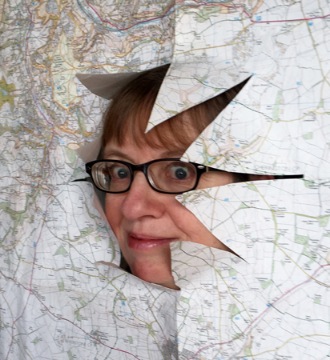
On paper – cartographical paper by preference – this is the sort of show that is the heart of fringe theatre. A quirky, solo performance with dozens of slightly Blue Peteresque props and a niche theme. The room was so busy that extra chairs had to be commandeered. Helen Woods stands, in functional fleece and rucksack, ready to provide the audience with Kendal Mint Cake and guide us on a virtual walk in the countryside. There is a buzz of expectation as she unveils a huge annotated map. I really like maps. I really like comedy. I really, truly, desperately wanted to love this show but what followed left me bemused and slightly bored. Woods uses a route on the map and photo props to tell disparate stories of her own life and love of maps alongside the history of the Ordnance Survey. She delivers earnestly, but awkwardly, and while she often attempts to involve the audience, many of the interactions fall flat and are swiftly abandoned. The narrative lacked purpose and there seemed to be no uniform style to the show. We had: demonically lit pseudo-horror, Jam and Jerusalem poetry, 70s suburban anecdotes and some unfortunately clumsy character skits in wigs. The main issue with the show is it is difficult to tell how self aware this all is. If it is intended as cringe comedy in the style of The Office it needs to be a lot sharper and to be delivered with more panache. If it is a straightforward celebration of cartography with some funny stories then the stories need to be funnier. There are moments to be enjoyed though, the poetry is rather good and I loved the final five minutes. What is there not to love about a giant paper crane made from a map?This is a well meaning ramble through an hour, with a lot of heart, but it drifts aimlessly and is in sore need of a compass to go with the map. You do get a free badge though so…

Sweet Dukebox • 14 May 2018 - 20 May 2018

Persuasion

As guilty pleasures go, a dose of Austen is probably as guilt free as they come. Frequently re-adapted and re-consumed she may be, but her works remain as comforting as a mug of tomato soup and a fleece dressing gown.Stephanie Dale’s adaptation of Persuasion works exceptionally well to trim the novel down to a manageable two-hour production, keeping the pace fairly sprightly but allowing space for the side characters to provide the gentle but much loved comedy typical of Austen. The heroine narrator, Anne Elliot, is the heart of this story and Ceri-Lynn Cissone plays her beautifully. Still and centered, she draws the eye without demanding it and leads us through Anne’s story of youthfully discarded love and its consequences as the years roll on. The suffocating circle of family and society that surround Anne are all played by a small but hugely impressive cast in multiple roles. This works very well to illustrate the claustrophobia of her life but also provides real moments of interest and showcases the strength of the cast. Most striking is the portrayal of both Wentworth, Anne’s erstwhile soulmate, and Mr. Elliot, her villainous potential suitor, by the same actor in the same coat. Jason Ryall’s realisation of these two characters is so authentically different in these roles that it gives an excellent reminder of what acting is actually all about. Lucinda Turner’s perpetually self-absorbed Mary is perfect and she pulls in the laughs although I feel her Lady Russell was a little under developed.In many ways this is a very straightforward and uncontroversial period play. Some might accuse it of being rather staid and traditionally presented but I would disagree. Under Kate McGregor’s direction it has some beautifully fresh elements. As Anne approaches her epiphany she breaks the fourth wall to plead for help from the cast who respond endearingly. Classical instruments are prominently hung around the set and the cast snatch them up to perform periodically. These pieces are both lovely in their own right and support the narrative throughout, often driving the story or providing the right atmosphere. It easily evokes the drawing rooms of parochial England. The colonnaded set itself by Charlotte Cooke is elegant and allows a dynamic freedom of movement.Theatre6’s Persuasion won't fit everyone’s idea of an edgy night out at a Fringe festival but for others it will be the absolute highlight. It's polished, relentlessly appealing and brimming with talent.

The Warren: The Hat • 8 May 2018 - 14 May 2018

Quiz Night: The Musical

There comes an awkward point in some friendships when going to the pub is no longer quite enough entertainment. The banter has run thin and the stories are recycled. Enter the pub quiz. That great British institution of using someone else's trivia to stimulate the conversation. Quiz Night:The Musical manages to simultaneously show us the story of a young pair of friends (with benefits) in just this situation while also being an actual quiz. It's also a Musical, rather a good one, in fact.Opening with a swingy theme song and a sequinned dance routine, we are introduced to our drag King host, Bruce Forsight, and to the almost-couple of Claire and Simon. It's fun, cheesy and punches above its genre musically. The backing band, Rage Against The Aubergine, provides us with classic Musical Theatre fodder early on but quickly explores styles to encompass some Ska and my favourite Google it (Don't Google it!). This drum and bass crowd-pleaser neatly summarised the pseudo-ethical dilemmas of modern quizzing. The strength of this show is the down time provided by the quiz rounds that punctuate the narrative. It gives tables a chance to chat, drink and argue over their questions. Traditional theatre isn't really all that sociable but this participatory event is somewhere between a show and night out with friends. The singing is good and the story of Claire and Simon, while not being the most developed script you have seen, is engaging enough. It doesn't exactly pull on the heart strings but it does draw you in and the characters are entirely believable. It's a clever concept, nicely executed and one that I would happily return to.

Latest Music Bar • 4 May 2018 - 30 May 2018

Google Drive

When choosing the most appropriate art form to explain statistical significance, Dan Attfield settled on hip-hop as having the most educational value. He cites his main point of evidence as the success of Hamilton -The Musical. His one man musical comedy show might be aiming too high in this comparison, but it certainly has it's educational moments. Starting off with entry level maths and the use of “mother flipping data”, he explains the concept of Google Correlate. This is a function that can be used to discover relationships between internet search terms. There is for example, a 97.7% correlation between searching for Winnie the Pooh and illegal street racing - leading to the pun “Pooh fast, Pooh furious”. The show is full of witty little moments that come out of nowhere like that. The songs are extremely funny and the clever; a filthy ode to love on the London Underground was one of the best received comedy songs I've seen performed.Attfield's quest is to use search data to predict the apocalypse. It's a funny concept and started well, with audience members being assigned as the four hobby horses of the apocalypse. I really struggled to see how this theme developed though. Usually that would be the death knell of a show, but I'm not sure it mattered too much here. It's an enjoyable hour, just not really about what we were told it was going to be about as he meandered through Google Analytics and mathematical puns. His audience involvement was excellent and I was seriously disappointed not to go home with a hobby horse as the chosen horsemen all looked as if they were having a great time. The final horseman, Death, was covered through Pingu's Lament, which recalled the dark periods in our favourite little penguin’s life. The show could have been just this song and I think people would have left happy. Attfield has produced a slick, well put together show here. He uses his Gibson SG and loop pedal to good effect, giving the show a quality veneer. Too often performers can be tripped up by the details of a show, despite having good material. It's pleasing to see someone who has clearly put a lot of thought and work into something and managed to pull off a show to be proud of.

The Warren: Theatre Box • 1 Jun 2017 - 3 Jun 2017

Kids with Beards: Fandango!

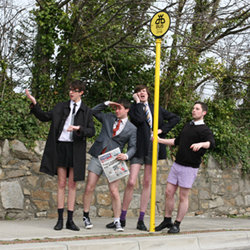
Fandango, the Kids with Beards allege, means party. I don't think it does actually, it's a type of dance, nonetheless their show certainly is a pretty good party. It's a fast paced sketch show performed by six confident, well timed, engaging performers. Although often situational, the sketches tend towards the screwball end of the spectrum with plenty of silly characterisations and daft dances. An early Eurovision sketch by the two bearded girls of the troupe is one of the most memorable. Hailing from the proud Eastern European country of Recordia they have perfected the art of nasal recorder playing and present a tightly performed double act of national stereotyping and audience harassment. I did wonder if the women they attacked with an inflatable globe suffered from asphyxiation at any point. The best of the sketches were often the shortest: an awkward bus stop encounter with a feckless mother and her baby named Ibiza and a micro sketch involving a little harmless childhood incest both drew huge laughs from the room. Kids with Beards don't take themselves too seriously and there were some funny, industry-aware sketches that had me laughing. The subject of bad reviews worked itself into a nice little piece and the hit and miss nature of improv also came under fire. Not all of the sketches did it for me, some, such as the shadow puppeteer war veteran might have been good if shorter and tighter scripted but ended up being over-laboured. Some, such as the Prime Minister's son and the Shark family just didn't seem to hit the mark. Such is the nature of sketch shows, some are funny, some are only funny to the creator's pen. With a more thoughtful curation of sketches this group has the performance skills to be very good. They bounce off each other well and are very likeable. Fandango is a fun night out, you might not be bowled over by it but you won't regret going.

The Warren: Theatre Box • 29 May 2017 - 31 May 2017

Des Kapital: Never Mind the Cossacks!

Some people might think that setting the Battle of Stalingrad to Britney Spears’ Baby One More Time is somewhat trivialising the matter. On the other hand, who's to say that the most appropriate tribute to two million deaths isn't a super catchy pop song?Andy Thomas is a History teacher. I imagine that he sat down one day and thought that people didn't know enough about the history of the Soviet Union. So he put a show together to remedy this and he made it a musical. I feel that this was a good choice. Bursting on to the stage in red dungarees and red wig, proudly sporting the flag of the Soviet Union, he launches straight into a detailed chronology, set to songs with a supporting slide show. After all, it wouldn't be a lesson without a PowerPoint. We are treated to Britney twice as Leon Trotsky is described in Toxic. Plenty of nice little snippets cover the politics of the 1920s and the agricultural policy is sung by the audience to Madonna's Like A Virgin before being contrasted to Mao's agricultural policy with the dreary Smith's Heaven Knows I'm Miserable Now. My favourite song of the night closed the proceedings with another all party sing-song of Robbie Williams' Angels. If you can hum the tune now and insert the words “and through it all he offers Marx direction, spelling and correction, whether he's right or wrong. I'm reading Engel's instead”.This is a brilliantly conceived and cleverly written show that is sneakily educational. Perhaps it could be described as a little too niche but the audience joyfully joined in and if they weren't comrades to start with they certainly left both more informed and more radicalised. 

Sweet Waterfront 2 • 29 May 2017 - 4 Jun 2017

BADD

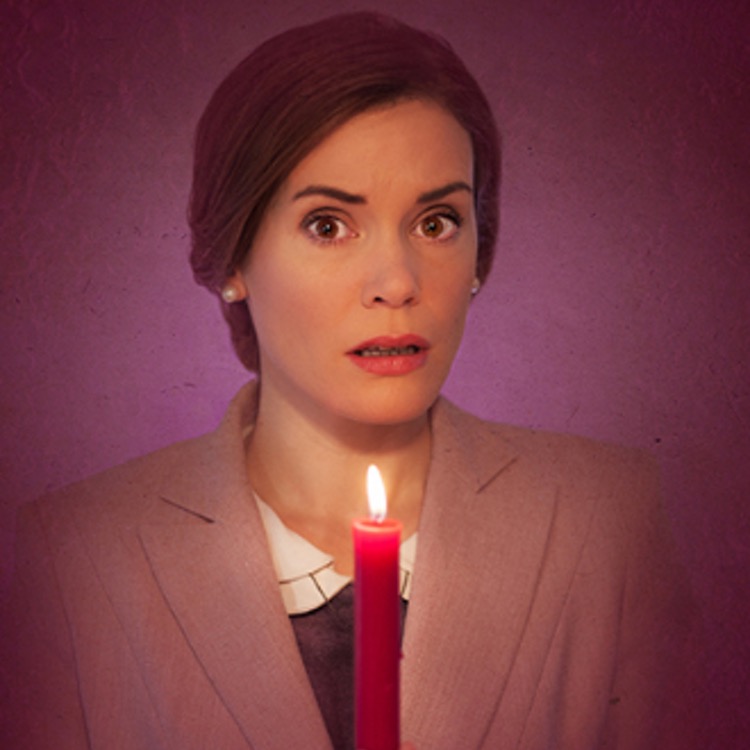
to know how to recognise the occult in your child? How to be vigilant for signs of Satan? Hoping for practical tips to drive the Devil out? This is the educational lecture for you.Pam, perfectly tailored in a pink pant suit and pearl earrings, is ready to help all those parents and concerned citizens out there who are 'Bothered by Dungeons and Dragons' (BADD), by sharing her research and advice. It is going to have to be slightly rushed though, as the Prairie Pentecostal Ping Pong team have been double booked into the church tonight.Pam, played by Carrie Marx, is incredibly well realised. An ardent supporter of family values and Cherryade, she tenaciously battles her discomfort and inexperience with public speaking to present the message so important to her. That being how to help teenagers in occultic trouble. Did you know that our children's brains are all soft and squishy and ready to be moulded to Satan's will? Or that most role players have difficulty distinguishing between fiction and reality? Pam dishes out saccharine judgement and psuedo-statistics in her scaremongering attempts to find support. Is there any more banal prefix to a forcible opinion then 'As a mother...' As the show progresses, Marx also draws out from Pam the tragic fear that underpins all prejudice. Her earnest fragility never wavers and perhaps what is most surprising about her is just how likeable she is. Most of us will have gone there hoping to have a good laugh at mid-west parochialism and the nature of moral panic. It's slightly off script to end up pitying our lecturer. Pam is a fully fleshed person. At no point is your attention drawn to the acting behind the role, and she is one of the Fringe's more memorable creations.Pam's story gradually turns down a dark path. With no Paladin to save her or Cleric to heal her, we know it isn't going to end well. The show could do with tidying up towards the end in terms of narrative and although the rushed nature of the piece is intentional, it feels forced at times. Despite this, it works well and Marx herself is a compelling actress and accomplished writer. A performer to look out for.

Sweet Waterfront 2 • 29 May 2017 - 4 Jun 2017

Sleeping Trees: SCI-FI?

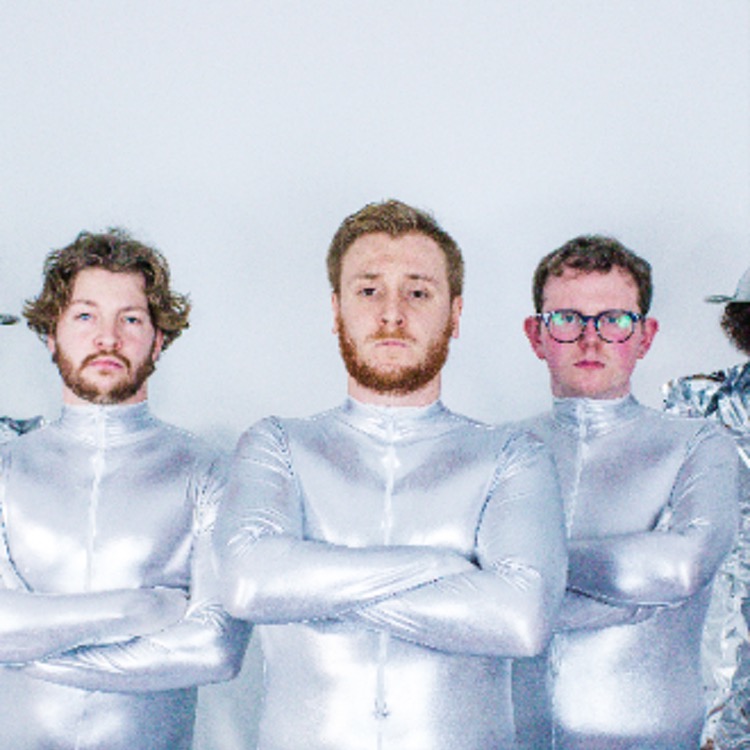
'Where are we going Admiral Ox?' asks the starry eyed, young space farmer who is really the secret son of an evil galactic overlord with special powers. 'PLUTOPIA' replies the self styled space explorer Admiral Ox. So off it is to Plutopia to battle the evil Galactatron and stop his plans for Project Galaxy Boom Boom.This silly piece of escapism is ridiculously good fun. It's also sneakily well plotted and develops into a story that you want to see the end of rather than it just being a mere comedy piece. There are the good guys, the bad guys, the random side project guys and a pig. They are all played by the same trio; John Woodbury, Joshua George-Smith and James Dunnell - Smith, decked out in Tron-style leggings.They keep their multiple characters expertly distinct in this fast paced adventure, swiftly shifting from being a beautifully synchronised high galactic council, to the bombastic space guard in the blink of an eye. The android side kick, Guns for Hands, is an absolute treat who despite sounding a lot like Stephen Hawking, quickly became the audience favourite. His karaoke turn with Nothing Compares to You is one of those perfect moments of Fringe Theatre nonsense. The Sleeping Trees all have excellent voices, singing or projecting the differences in their roles and the onstage one man band of Ben Hale gives brilliant support to the story with a soundtrack reminiscent of A Hitchhiker's Guide to the Galaxy. The look and feel of the show, sound and lighting included, is of a quality above what you would expect of a parody genre.The physical skill of the cast is evident and goes a long way to giving this production that quality feel. Their simple embodiment of the space ships, aliens and cannons required for the narrative is nothing short of impressive and the scenes changes are seamless. At times it feels like they are just having so much fun that they don't need the audience there at all to carry on. That being said, their attempts at female characters are weaker and a right shame, as they just don’t quite manage to realise them very memorably.If you go to this expecting to enjoy some jokes and Sci-Fi references, you will, but you will also probably be surprised by just how complete a play this excellent little show is. 

The Old Market • 26 May 2017

Donal Coonan: Mr Grebe Is Taking Your Class Today

Sometimes you stumble on a stand-up so freshly funny that you remember why you started liking unknown comedy shows in the first place. Mr Grebe turns up with a register one day in a bright, badly fitting jacket and explains that the usual teacher is sick. Possibly with something serious. As he is unsure of what subject the class has been learning, or maybe does not really care, he promises to teach us “everything” instead. What follows is as close to everything as can be managed. Donal Coonan's dry, sardonic delivery is perfectly matched to his material. He rattles through English and Chemistry. He reassures us that he is DBS checked as he acts out magnetic attraction with an audience member, and covers P.E. and Art. The latter sees an introspective tango to Hernando's Hideaway, with an easel playing the part of his ex-wife. It's charming physical comedy. Biology teaches us the life cycle of a butterfly. As Mr Grebe struggles out of his terry towelling chrysalis to the sound of The Snowman's Walking in the Air, it's difficult to tell if he is struggling into or out of existential crises. Unexpectedly, the audience are desperate to play the role of the class. People are falling over themselves to correctly answer questions and write lines when they are naughty by turning into a gas instead of a solid. I'm not sure if role-playing comedy is even a genre, but by the feel of tonight, it ought to be.The genius of this show is its universality. We all remember that one day when that supply teacher turned up who was completely out of his or her tree. The one who smelt of cigarettes or booze and whose eye twitched. It's a cliche that easily lends itself to comedy and Mr Grebe is a hugely enjoyable character to explore. Some of the funniest comedy acts transcend the material, you just start laughing and can't put your finger on why and then you just carry on laughing every time they say something else or don't say something. This is exactly what happened here tonight.There is still work that could be done on this show. I think Coonan could work the pauses with a little more confidence. His facial expression while he is waiting for the class to quieten down is humorously counterproductive and this joke could run on longer and more frequently. I really enjoyed this hilarious character comedy and look forward to taking Mr Grebe's advance class next year.

Lamb @ Nowhere Man • 25 May 2017 - 27 May 2017

A Ship Of Fools Theatre Company: Welcome to Paradise

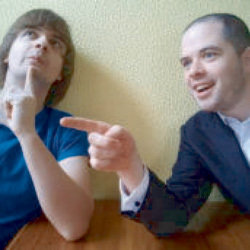
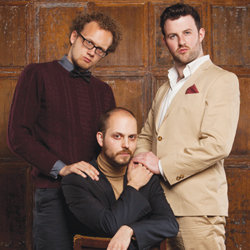
Have you been more naughty or more nice this year? Are you sure?A company of gentlemanly vagabonds introduce themselves with a reminder to relax before the “Art” starts. Immensely likeable in the first manifestations of their multi-layered characters, the Captain and Raoul are charming clowns, who quickly engage the audience with their warm ups that leave everyone with a smile on their face. It's barmy, bounding buffoonery. Mark Winstanley (who plays Raoul) is swiftly sent off to transform into a grubby, comically creepy Father Christmas who wants to know just how nice you have been. If you are lucky, you might get to sit on his knee and get a present. A showering of sweets gets all the boys and girls excited, as their chanting is rewarded with candy canes and love hearts. Even if clowning and audience harassment isn't usually your thing, this is a great deal of fun. The watershed of the show is the appearance of our emaciated, turban wearing, tinsel shackled elf. The show falls of a cliff at this point and we all fall with it.Santa, it turns out, is a complete and utter git!The Captain, played by Charles Shetcliffe, as one of Santa's little helpers, embodies every economic slave everywhere and plays the role beautifully for laughs with a haunted eye on the leftover sweets. The horrific lynchpin of the piece is that everyone carries on laughing. Everyone carries on playing and carries on having a great time as we throw crumbs and beat our elven worker. It only gets darker as it moves forward. The final scene felt a bit anti-climactic though and lacked the impact of the rest of the show. This is an expertly written and constructed show. The sudden change in tone is completely unexpected and yet the piece follows seamlessly through in it's theme and story. It takes a lot of skill to engineer such a change in mood. The fact that a secular Christmas is held so dear to so many, makes it the perfect target for some really inclusive shaming.Instead of a love letter to the most wonderful time of the year, what we get is a searingly clever pile of hate mail. Many shows use entertainment to illuminate the dark patches in humanity. Welcome to Paradise does it exceptionally well. 
Komedia Studio • 25 May 2017 - 26 May 2017

Any Suggestions, Doctor?: An Improvised Adventure in Space & Time

Taking a much loved pop culture reference point is always a sure fire way to fill seats. It also carries with it the weight of expectation and so can easily be a sure fire way to disappoint.While the audience waits outside, everyone is asked to contribute a suggestion for a new Doctor Who episode title. It was good fun. In fact, it was perhaps the most energetic the audience appeared for the whole evening. Once in, we meet our eager, impossibly earnest cast of Whovian's as they bound across the room with immense energy. They all have the smiles and over enunciating tendencies of children's TVs presenters. The problem is that this wasn't described as a children's show; family friendly for sure, but although there were a fair number of young people in the room, by far the majority of the audience were the adults who have taken Doctor Who to cult levels of popularity. With this being the case, the show needed to deliver at a level to please all. After calling for suggestions for a setting, they ignored the only pre-teen's suggestion (with I would personally have gone for, it was a good one and he seemed to lose interest after that) and set it all in present day Brighton. Not exactly an adventure in space and time. There is a reason that scripts are written and actors are directed. Improvisation can work brilliantly, but only with excellent acting and clever, quick thinking. The cast are clearly fans. Their references are very pleasing indeed, detailed and even witty at times. Unfortunately, what they delivered today was not at all gripping. There were some ideas for characters and some enjoyably hammy running around with sonic screwdrivers. The best line of the show involves the unveiling of the villainous professor’s name as Michael Aster - as in, the Master. For large parts of the show though, there is interminable, unoriginal dialogue and next to no excitement. It reminded me a lot of overly rigid, make-believe games played during one’s childhood and abandoned when everyone got bored or ran out of things to say.There is nothing at all wrong with the spirit of this show. The cast are keen and are gamely trying to share their enthusiasm. I just think they haven't quite managed to get us all in the Tardis with them, despite it being bigger on the inside. 

Sweet Waterfront 1 • 25 May 2017 - 28 May 2017

The Elephant Girls

Forget lovable rogues and artful dodgers, this uncomfortable monologue tells the true story of a London awash with criminal gangs in the interwar years. The Bermondsey boys, Battersea boys, City Road boys, Goose Green boys; the list goes on, but with only one girl gang- The Elephant Girls. Described as the 'cleverest of thieves' they ransacked the department stores of the West End, fenced the goods and lived it up in style back at home in Elephant and Castle. 'Everything you could ever want under one roof, all for the taking' says Maggie.Maggie Hale, ex-enforcer for the girls is painfully proud of this now faded glamour. For the price of a few pints she spills her tales. She would probably do it for free; so desperate is she to re-live the glory days. So far, so nice. A few cutesy stories of harmless criminality and sisterhood under their Queen Alice or Annie Diamond, doing just as well as the boys at being bad. As the nights wear on though, the true nature of Maggie tumbles out, realised in all its grimy horror; the baseness and violence of gang life is made apparent. You cannot take your eyes off Margo MacDonald as Maggie. There is something gruesomely compelling about her performance as she swaggers and deliberately show boats her way through the piece. 70 minutes of stage time evaporates without pause for thought. This level of immersion in a solo show is rarely achieved and the naturalistic storytelling transports you firmly elsewhere. Having also written the play, she can take credit for the pacey narrative and lyrical use of cockney slang which binds it all together. The stand out part was the 'show within a show', where Maggie physically and poetically educates her listener on the gangs of London. Her action scenes are expertly crafted and genuinely exciting. Her sex scenes; deliciously sordid.It doesn't all work though. Maggie is in love with Queen Alice. She describes a woman so formidable and so vibrant that it is frustrating to only know her through MacDonald’s poorly chosen vocalisation. Better to have left her out entirely than to voice her in such a shrill, nasal throwaway.Maggie is not a sympathetic character. Despite revealing a great deal of vulnerability you will be waiting a long time for the redemption of this villain. You will be waiting though, hooked all the way through. You will probably go home and Google the Elephant Girls. You will probably tell their story to a few people. It's that sort a play. 

Rialto Theatre • 20 May 2017 - 26 May 2017

Jonny & The Baptists: Eat The Poor

There is going to be a lot of trouble for everyone when the Swan Liberation Army finally achieve emancipation and turn the United Kingdom into an totalitarian Swan state.Jonny Donahoe and Paddy Gervers, as Jonny and the, inexplicably plural, Baptists, take two guitars and explore this idea, along with many others in a couple of hours of random, riotous republicanism. It's an awful lot of fun.The show does take a while to warm up. They start off with some fairly standard jokes on the state of the nation whilst trying to sniff out any Tories, before throwing in a few delightfully daft songs about Libraries, the Queen killing Trump and, of course, the Swans. Their theme is inequality, with a focus on homelessness. Blending sincerity with vitriol and song with stand up, the outcome is not unlike a hybridisation of Mark Thomas and Bill Bailey. It's full of witty one liners and hilariously astute lyrics. The word play in a song on Brexit is delightful and their dissection of a letter to the Telegraph is achingly funny. The duo call on an obliging audience to join in with songs that teeter between musical satire and straightforward protest chants. The second half changes tactics somewhat and develops into a play, imagining a future where Jonny has made it to the top of society, leaving Paddy living on the street. It includes a disturbing amount of Andrew Lloyd Webber and manages to be both sobering and entertaining. This is really where the show hits its stride and the narrative coalesces around the framework set up in the first half, before ending rather abruptly, back with the Swans.Every few years someone claims we need satire 'now, more than ever'. In reality, we need satire all the time to hold ourselves, as well as our government, to account and it has been presented here in its most delicious format; intelligently nonsensical and set to some well written songs to drum your feet to. 

The Old Market • 15 May 2017

Shit-faced Shakespeare: Romeo and Juliet

“Swear not by the moon, the inconstant moon, Lest that thy love prove likewise variable.”The Shit-faced formula has been reliably churning out popular shows since 2010 and has become a much loved staple of the Fringe. It's daft, it's rude, it's often witty and it's usually riotously good fun. Re-working Romeo and Juliet down to an hour, this production gives us swords, swoons and feathered hats in abundance. It holds on to enough of the iconic dialogue to feel like a serious abridgement at times and playfully tugs the rest of the play to bits. Then it arranges for one member of the cast to get absolutely shredded, wasted, smashed… in short: Shit-faced. Tonight it's Maryam Grace's endearingly filthy Juliet that ends up tanked up, half naked and covered in banana. It makes you wonder how serious a mishap or injury would have to occur before the audience stopped laughing at our poor inebriate. Incidentally, if she isn't as drunk as we are led to believe, she gives a brilliant performance of being so.It would be easy to get slightly po-faced about Magnificent Bastards' bastardisation of the Bard's tales, but the atmosphere is exactly as I imagine The Globe in 1599. Shouting, laughing, drinking and harassing the cast, the crowd is living and loving the story. Love can prove variable though and that is the inherent strength and weakness of this format. The outcome tonight was just rather disappointing. There was a slight flatness to the performance and Juliet's disruptions were expected and accepted with amused resignation rather than delight or horror. There were only a few moments of uncontrollable laughter and little freshness. It was inevitable that dead, drunk Juliet wasn't going to be as corpse-like as required by the time we got to the Capulet tomb. As we left the theatre, some were bemused, some were glowing. There is still a huge amount to enjoy about this production and it fills the entertainment niche it was originally intended to be - a good night out. 

The Warren: Main House • 14 May 2017 - 25 May 2017

The Empress and Me

Imperial China, with its exotic riches and intrigues, remains as compelling to audiences today as it did in the early part of the 20th century, when the Princess Der Ling toured her tales of courtly opulence across suburban America. Born as Lizzie Yu and raised in a western looking household, this solo piece is much more her story than that of the Empress. On first stepping out from behind a Chinese lacquer screen, Michelle Yim, as Lizzie, is everything you would hope for from a period piece. Gorgeously costumed by Laura Bosely, she sparkles in gold and silk under a magnificently impractical headdress and propped up on traditional Manchu platform shoes. The first part of her tale is therefore subtly disappointing. She gives a very studied and precise delivery to convey to us a fairly turgid lecture, describing life at the Forbidden Palace as a lady in waiting to the Dowager Empress Cixi. We get to hear a lot about the pictures and the porcelain. It is hugely relieving to see her shortly stripping off her robes as we understand that this was her performance persona for her 1920s American Lecture tour. From here on in, we are treated to an engaging manifestation of a fascinating woman who was clearly mistress of her own destiny in defiance of her times and culture. Yim is extremely appealing to watch and to listen to. Despite the fact that this is, essentially, an hour long lesson on Chinese History, she wrings some big emotional moments from it as she shows us the human relationships in her grand setting. Light in romantic love, but heavily laden with the ties and trials of love for one's sisters and parents, the piece skilfully blends the domestic with the headline events of the day. Ross Ericson's writing has produced a voice that feels authentic but there are no surprises at any point. The humour is easily foreseen and the descriptions of Lotus flowers and doll-like faces are well worn. It is only when you get to the end that you realise you have been waiting for a story to develop that never quite does. I would very happily have watched Yim for another hour, but perhaps it is the limitation of biography to lack neat resolutions. An immersive snapshot of period theatre well delivered.

Rialto Theatre • 6 May 2017 - 26 May 2017

Drunk With a Pen

Being read to by another person is one of life's great pleasures, doubly so when it is the author doing the reading. The work on offer here, themed around alcohol, is complicit, quirky and cunningly constructed.Joseph J Clark is an endearing and earnest Poet who attempts to explore our relationship with the demon drink as a meandering journey through thirteen and a half poems. Many of them were good enough to make me smile and remember for some time afterwards. Taking inspiration from the elegantly soulful lyrics of the Southern Rock scene, Clark cites Hayes Carll, Townes Van Zandt and Steve Earle as his muses but modestly claims to have found all his poems at the bottom of a bottle.Clark is an extremely watchable reader and although it takes a while for the stylus to hit the groove we are treated to some thoughtful and thought provoking pieces. The portentous truisms of Hanging by a Thread and Sometimes the Whisky Wins nearly prompted me to forego my next drink and are written with a simple, modern use of language. This is performance poetry at its most accessible and is a bit like being in the pub with a more interesting raconteur then you can usually rustle up. The more lightweight offering of Sin and Tonic sneaks in to the second half to provide a more upbeat tone but it's rhyming frothiness, reminiscent of P.G.Wodehouse, lacks the personal resonance of the rest of the narrative. Towards the end we return to form and Maybe this Beer and A Eulogy of Empty Words usher the dark in with a heartfelt and emotive delivery.The music in the show is a welcome introduction to some of his references, setting the mood nicely and could play a greater supporting role in the future. Clark's performance in the intimate space of the Artista needs a little more polish but his few stumbles are more likeable than distracting. Drunk with a Pen is a pretty good way to spend an hour; preferably with a beer in hand. It's a quietly enjoyable show, full of feeling, and I was glad to have stopped by.

Artista Studio (Artista@Electric) Photography & Film Studio • 24 Mar 2017 - 30 Mar 2017

Mawaan Rizwan: Gender Neutral Concubine Pirate

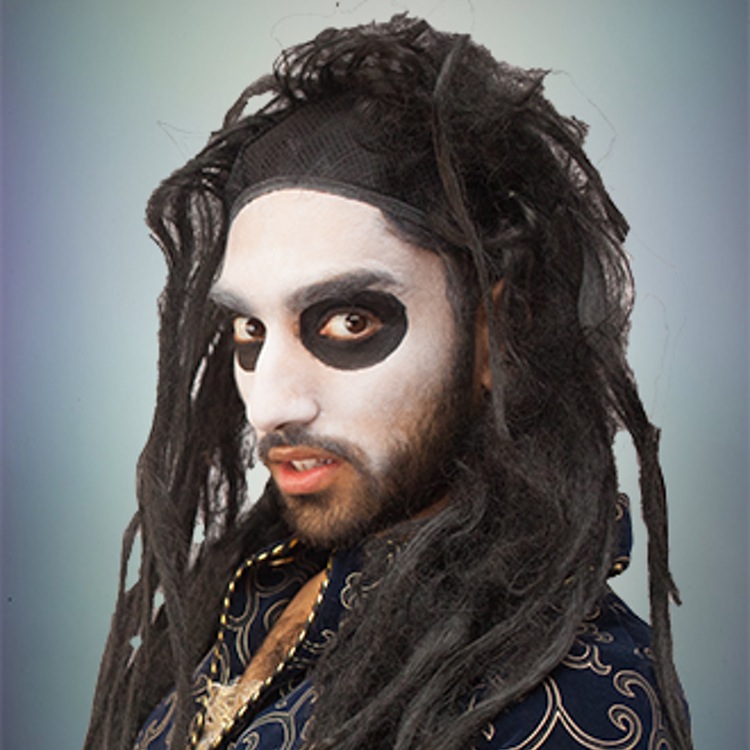
Quite why Mawaan Rizwan describes himself as a Gender Neutral Concubine Pirate remains a bit of a mystery throughout the show. He prances about the stage and over the audience in a brocade frock coat and skinny jeans with a distinctly piratical air, but there is no actual piracy to see. Frequently referring to his outfit as a dress, which it isn't, might be a hint to some gender neutrality, but it isn't exactly cutting edge gender blurring stuff.Concubine? Available for our pleasure perhaps. I'm not at all sure. The show seems based on an assumption that the audience will need no more than to be able to look at Rizwan in order to have a good time.It is 50 minutes of absurdist, physical, unlinked episodes. We are treated to him repeating the word falafel twenty times or more (it feels like more), a treasure hunt for some baby wipes and then a song of praise for the baby wipes. A story about naked cycling through London is 6 years out of date and turns out to be just a description of cycling naked through London...He is appealing to look at though, with a Jack Sparrowesque wig and make up, he owns the space around him and is at his best when getting up close and making audience members feel uncomfortable. There is a cheeky invitation in his smile and sideways eyelash flutters that keep you watching him, despite wondering when the hell it is all going to come together to make a show. A couple of funny visual jokes, physically mimicking a trampoline for example, raise a chuckle. A couple, such as the contactless debit card handshake, are also truly unfunny, The highlight though was a genuinely hilarious sketch of him playing a reluctant gas stove ignition switch to the direction of R Kelly's various versions of 'remix to ignition'. Trust me on this, it's one of the few moments that actually works start to finish.Rizwan has created a brilliant stage presence and is a skilled physical clown, but the material just isn't good enough to match and this offering is a very hit and miss affair.

The Warren: Theatre Box • 27 May 2016 - 29 May 2016

Waiting for Gandalf

Being bustled and barged out of the way on entering the theatre was a novel experience as a bucket hat, backpack and zip up hoody darted past the queue to desperately claim his space at the front. He turned out to be our chatty companion for the evening, Kevin Brooks. Kevin is just like us, a die hard fan of The Lord of the Rings and we are all in the queue for Gandalf - in the form of Ian McKellen - to sign the latest film companion guide. Whilst waiting, Kevin likes to tell us things. He clearly doesn't usually find other people easy, but is keen to connect with us over our shared love of all things Tolkien. He asks us how long we have been fans: he got hooked at school on the books as 'reading a good book takes your mind off the unpleasant things in life'. References to Middle Earth raise some laughs as he drinks his beer cans from his Boy Scout rucksack, but soon more sombre anecdotes begin to drift into the conversation. Tales of his bullying 'not friend' at work and the doomed love affair with his Arwen, a lady actually called Jo.Played by Chris Neville-Smith, Kevin is a superb portrayal of 'that guy'. The social misfit, the anxious inoffensive one that no one can really be bothered to get to know. The victim. Since The Big Bang Theory, it’s been fashionable to play the awkward geek and it can sometimes fall far into the blunt mockery of stereotype. However, this is a nuanced, sympathetic performance of a lost soul that really tugs at the heart strings. The play, written by Adrian Marks, has a rather simplistic approach – that there must be something wrong with someone so obsessed by a fictional world. There is indeed something wrong with Kevin, or at least something has gone wrong for him, and as the show progresses it gradually slips out of him, as the reason he is so desperate to see Gandalf is not what you might expect. Subtly lit to suggest the dawn and with snippets of the films' soundtracks to add atmosphere, this is a bare stage and all focus is solely on Neville-Smith's engrossing monologue. Waiting for Gandalf is not a happy show and there are not a lot of Hobbits. Be prepared for a challenging hour with a dark ending, but expect to leave feeling it was an hour well spent.

Sweet Waterfront 2 • 23 May 2016 - 29 May 2016

Come Fly With Me...

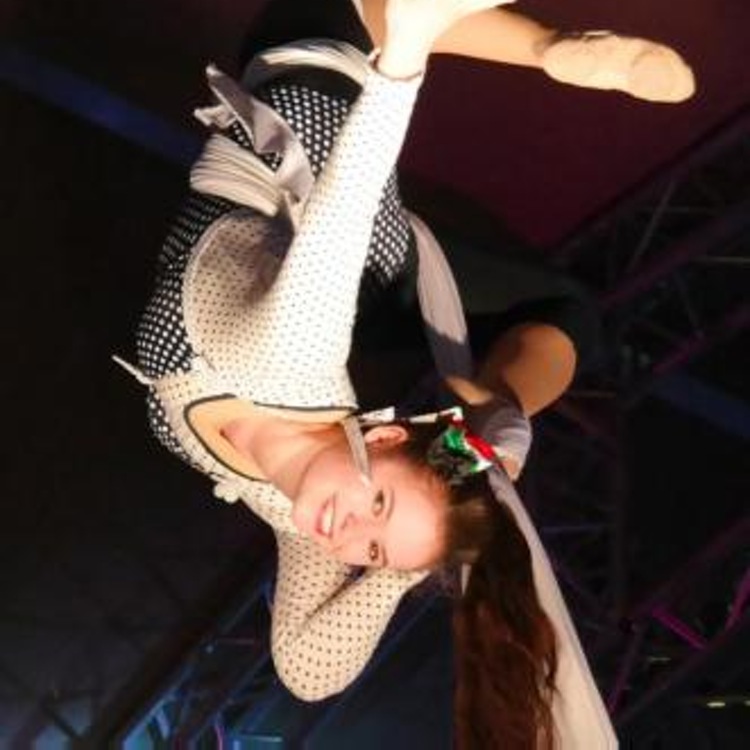
Playful pink lighting, red velvet drapes, glittery fixtures and wooden circus seats - entering the Brighton Spiegeltent screams ‘Showtime!’ Come Fly With Me is a charming, cheeky dose of spectacle hosted by Brighton's Les Femmes Circus. To start with, 'gentleman juggler' Ian Marchant warms the audience up with some well-worn applause rehearsal. He has the sort of face and mannerisms that bring Hugh Laurie's Bertie Wooster to mind. His gentle, wobbly juggling tricks wear a little thin after a while but he is a likeable host nonetheless. The stars of the show though, are the acts he introduces. Nathalie Layton, is first up on pole with a superbly athletic, polished routine that kicks off rather adorably with her prepping her pole on stage. Pulling her poses with expert timing and confidence, this is a very sexy routine. It's the act that pushed the show to the raunchy side of family circus and there was a lot appreciation for her in the room. She later demonstrated her versatility on aerial hoop. A very different performance, for me this was the stand out act. Elegant, thrilling and mesmerizing.Kevin Aaron on rope and Charlotte Dawson on aerial straps vied for most thrilling 'heart in mouth' moments as they spun and plummeted high up in the tent roof to gasps and whoops from below. Less death-defying was Thalia the hula hooper. A sequinned minx with plenty of saucy winks for the front row, even if she wasn't always in control of her hoops. We finished with a brilliant pair of Australian male acrobats. Head First have got bucket loads of stage presence and with knowing grins treat us to a display of strength, balance and naked muscles.Not all the acts are quite faultless but what a thrilling, fabulous evening of old time show girls and boys.

Brighton Spiegeltent • 22 May 2016

Athena Kugblenu: Reality Check

Bubbling with energy and wit, Athena Kugblenu shares with us her opinions and musings on just about every topic you might need to navigate life as a British millennial. Her material gallops through Indian wedding preparations; dating with dreadlocks; gross misconduct at work and the price of sperm. You might think that you have heard enough sketches about styling black hair or your mother wanting grandchildren for her birthday. You are wrong. Until you have seen Kugblenu's hilariously astute take on it, you haven't heard it done well enough. It's authentic, observational comedy presented beautifully.She is very funny and she knows it. Her timing, physical performance and topic transitions are all perfect. Kugblenu is hugely engaging on the mic and I genuinely found myself laughing at every single thing she said. This confidence in her delivery and material allows her a platform for some real bite underneath the jokes. Her instructions to laugh at her 'black' jokes because 'that is the point' but not too hard if you are white, captures the mood perfectly. Laugh, she is saying, but make sure you listen and learn as well. She is gentle with her audience but holds them to account. Reality Check develops beyond a domestic set into politically aware and socially relevant commentary that feels pleasingly original. Casually throwing in references which span the last twenty years of popular culture alongside Greek epics and the use of pivot tables exposes the intelligent foundations of Kugblenu's writing. She has a few well aimed swipes for Iggy Azalea and Kim Kardashian to add a little sting towards the end and I suspect that there is a lot more acidity ready to be released if required. Described as a work in progress the set sadly tails off to a weak finish, a fact that she is very aware of. It's a real shame and I am looking forward to catching her when it's been polished off. 

Lamb @ Craft Beer Co. • 21 May 2016 - 4 Jun 2016

Simon & Garfunkel: Through The Years

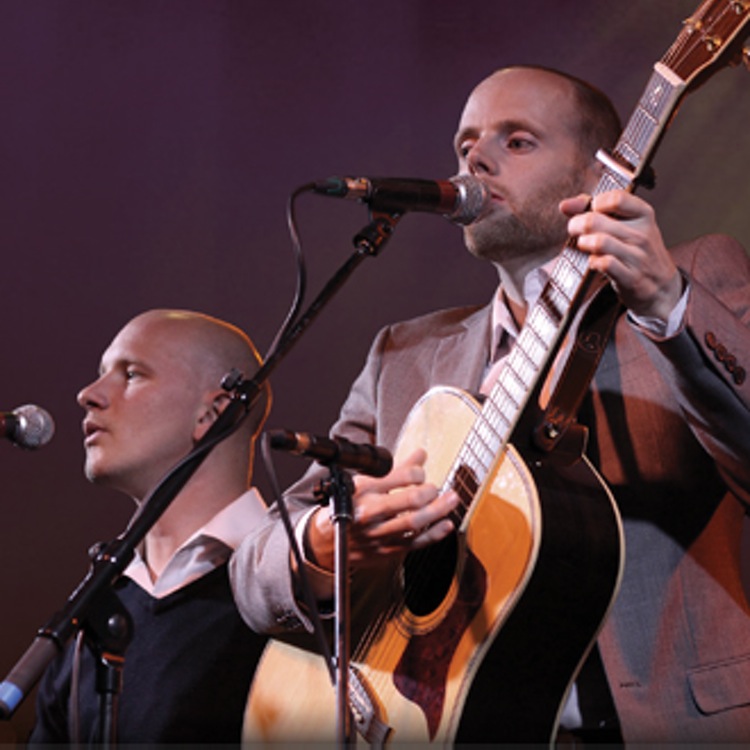
Pulling up a stool in front of the intimate, softly lit stage down in the basement of Komedia, reminiscent of so many NYC music venues, the audience and I settled in to enjoy the iconic songs of Simon & Garfunkel. However this was more than just a tribute act, what duo Bookends have done is just that little bit more special.Paul Simon and Art Garfunkel met at college, just like duo Dan Haynes and Pete Richards, who formed Bookends as a tribute to Simon & Garfunkel. I hesitate to guess at how many thousands of hours must have gone into honing their sound since, but the outcome is almost indistinguishable from the original. Harmonies are tight and from the early lines of I am a Rock a hushed surprise creeps across the room. The catalogue of Simon & Garfunkel is both vast and beloved allowing Haynes and Richards to create a set guaranteed to please. They even throw in a nod to Simon & Garfunkel’s early work with Hey Schoolgirl, a teenage hit the duo had whilst playing under the name Tom and Jerry, before moving onto the soul-tugging folk that made their name with Kathy's Song, Sparrow and the wistful Homeward Bound. Playing in front of screens displaying original photos and voiceovers documenting the history of the act, the show narrates the journey of Simon & Garfunkel: Through The Years. The backing voiceovers have some interesting snippets in them but I preferred the more natural story telling of Haynes and Richards between their songs. With a warm and subtle stage presence, they would have done well to ditch the voiceovers and narrate the laid back, mini-music lectures themselves. All credit should be given to the duo for doing their homework and their were plenty of obscure facts on offer, such as the trivia that Homeward Bound was written in the concourse on Widnes train station. Whilst fans of Simon & Garfunkel might have wished deeper analysis, for an intimate gig atmosphere, this went down well.Bookends haven't attempted a look-a-like act and, eschewing questionable wigs, they have opted to perform a tribute to the music they love, intelligently deciding what they can and can’t do. A lack of piano skills forced a re-arranged version of Bridge over Troubled Water, which sounds as though it should be all kinds of wrong, however it was a gorgeous achievement. Other highlights included Richard Corey, delivered with a pleasing amount of grit and particularly welcome as it often gets missed from sets, having never been released as a single. There was a lot of love in the room for the songs and two duos at the center of this show. It's a comforting, blissful way to spend an evening.

Komedia Main Space • 17 May 2016

Helen

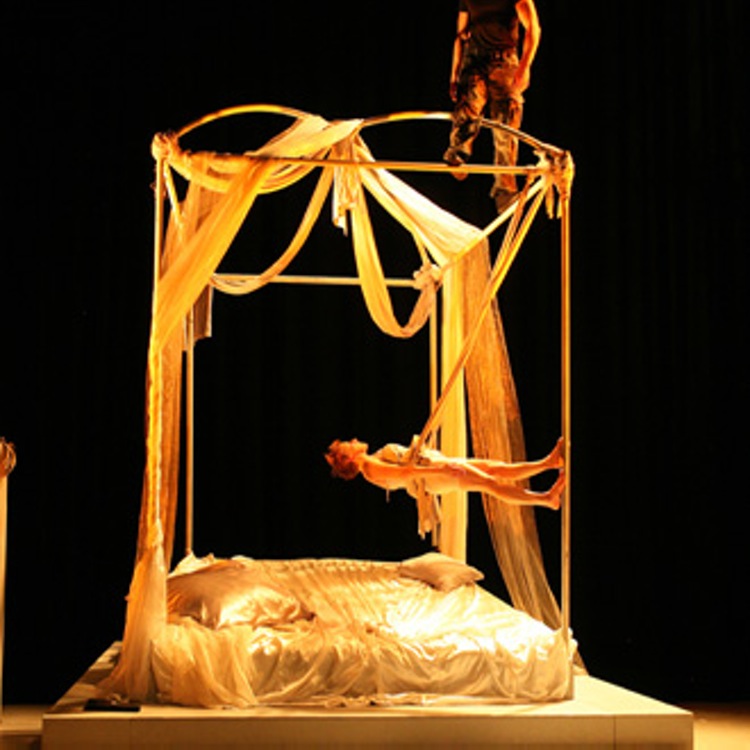
Although you may well have some early misgivings, Helen is a show to persevere with. Re-imagining the myth of Helen of Troy as an ageing beauty during the fall of her dictator husband's regime, it could depict any modern day insurgency although inevitably it draws parallels with Syria. Staged on a raised trapezoid bed and aerial rig, draped seductively in gauzy silks, this physical theatre offering looks good from every angle and there is something very appealing about positioning it in place of the altar of St Andrew's church.Our introduction to Helen (Tamsin Shasha) and her wordless companion is initially confusing, but later becomes more understandable. Helen is first shown in a surgical mask and pajamas, imprisoned by her cage like bed, whilst being guarded by a soldier-like figure (Tyler Fayose). This male character is intriguing as he is both subservient to and dominated by Helen. Flicking through TV channels, Helen launches into a somewhat forced frenzy of sexualised mania instigated by hearing Cyndi Lauper's Girls Just Wanna Have Fun. The whole sequence resembled a hellish night on the tiles for a middle aged female divorcée and bears no resemblance to the later, more subtle and powerfully touching, performances of both Shasha and her guard. Although trying to portray her dependency on, and nostalgia for, her diminishing sex appeal, the scene falls flat.Perhaps this would have been a less blunt representation in there had been more distance between the stage and audience. However close up, the intimate nature of the space exposed it uncomfortably at the beginning. Helen's character pulls together shortly afterwards eliciting some sympathy from the audience during a heartbreakingly desperate scene of her frantically trying on outfits in time for her husband's arrival and looking for approval from Fayose. As we progress through the fall of the regime, Helen seems to gain increasing lucidity and composure and I much preferred watching her in this guise. One mystery that remained was there seemed to be no clear explanation for her transformation from medicated hysteria to manipulative queen. The great beauty of this performance is the aerial aspect. Both Shasha and Fayose are superb aerialists and the choreography of Jami Reed Quarrell both delicate and sensual: suggesting at times the dependency between the two characters and the helplessness of Helen. Matt Eaton’s sound design was masterful and the growing theatre of civil unrest by approaching helicopters across the ceiling of St Andrew’s mesmerising. The physical performances were a triumph and showcased not only the skill of the performers but also the vision of the writers. This show develops into a stunning and hugely moving piece of theatre certainly worth watching.

Sweet St Andrew's • 16 May 2016 - 19 May 2016

Broken Glass by Arthur Miller

Written when he was nearly 70 years old, Arthur Miller's Broken Glass, had been in his mind's development ever since his marriage to Marilyn Monroe ended shortly before her death in 1962. His portrait of a troubled woman who is the subject of doctors' scrutiny may well have resonance. Instead of a Hollywood starlet, Broken Glass tells the story of Sylvia Gelberg, a very ordinary but deeply feeling Jewish woman from Brooklyn in 1938. Struck down by a mystery paralysis that confines her to bed and wheelchair, she has been obsessively following the events in Germany following the Kristallnacht. Pouring over the newspapers with elegant fragility, she rails against everyone's supposed indifference to the violent events happening a continent away.Her worried and adoring husband, Phillip, seeks the attentions of Dr Hyman, who concludes that the illness is psychosomatic.Despite having little knowledge of the field, he determines to treat her by delving into the cause, and the history of the Gelberg's marriage unfolds to Hyman's seductive and sympathetic ear. Miller's later work has not been judged kindly but Broken Glass is widely recognised as an exception and it showcases his beautifully mundane dialogue in a compellingly human story. New Venture Theatre have managed to capture an especially good atmosphere with this production. With a spare but effective set you are surprisingly quickly submerged in an authentic depiction of 1930s Brooklyn, the minutia rattled off by Sylvia's sister Harriet, played by Lyn Snowdon snippily and to a lot of laughs, contributes heavily to the connection with this community. The furniture, the lighting and sound all serve their part to settle you into the creation. To be transported from here into a detailed visualisation of the growing menace on the streets of Berlin merely by Sylvia's verbal description is impressive. Janice Jones's habitation of Sylvia is marvellous. She gives Sylvia's sense of confusion, anger and anxiety real depth and emotional pull. It makes Dr Hyman's fascination with his patient very understandable. Although this is a very good looking piece of theatre, some of the exchanges with Sylvia are set far to the right of the stage. This does limit the visual enjoyment for some seats and a small move inwards would have been appreciated. Bob Ryder's deliberate and peevish portrayal of Philip is one that builds as the play progresses and we examine his uneasy relationship with his own Jewishness and the crushing weight of long held hurts in his marriage. The final exchange with his vaguely anti-semitic boss is powerful and a clear reminder that the character came from the same pen as Willy Loman. Against the frigidity of the Gelberg's marriage, Dr Hyman and his wife are played by Olivier Maigniez and Jen Ley to be adorably warm and sexy - totally engaging both together and apart. This is a gripping and thought provoking evening with every member of the cast giving a compelling performance. To be enjoyed in a serious frame of mind.

New Venture Theatre • 12 May 2016 - 21 May 2016

HIP

Gathering the audience in the street and lining them up against a wall may be a slightly alarming start, but Jolie Booth proceeds to weave a visualisation so utterly convincing, that by the time she leads you up the stairs into the theatre you truly believe that you are creeping into her newly cracked squat. Hip tells Booth’s own story in parallel with, and focusing much more on, the life journey of a women called Ann Clarke. A brilliant blend of social history, self- reflection and biography, this show is the true story of the discovery of a woman’s life and what it meant to the finder. As Booth leads us into the space, explaining the importance of posting your section 6 notice on the door and ensuring that there is no evidence of a break in, she is recreating her introduction to the remnants of Ann’s life that she found in her first squat. She manages to create a sense of nostalgia for a time and place, when Brighton was rather rawer, that only some of the audience will be familiar with.The space is beautifully filled with the knick knacks and kitsch that had surrounded Ann during her counterculture existence from the sixties. The whole creation looks and feels gorgeously authentic. As the audience filters into the round, taking up position on seats and cushions, they are encouraged, but not bullied, into full engagement. This is a multi-sensory, immersive performance with strong audience participation that Booth is calling an “extra-live” event. She takes a conversational, workshop-like approach as she uses an overhead projector and record player to embellish her story telling. She is an exceptional story teller; her gymnastic use of language is interspersed with a significant amount of poetry and in a clever move she uses the audience to read some prepared letters and texts. This expands the range of voices available to her and creates a collaborative atmosphere.When Booth initiated a séance type scene, it was clear from the speed at which the audience joined hands that everyone was in a comfortable place. This comfort was enhanced by the addition of vegan party food, Handel on the record player, incense and Tequila. Yes, there was Tequila provided to toast the spirit of Ann. Any longstanding Brightonians will be continually delighted by the constant niche references and immensely strong sense of place and tribe created by this event, and I really hope this translates to non-natives just as well.Although this show is extremely funny for much of the time, the heart of this story is painfully and breathtakingly sad. The sum total of a life is examined and evaluated for worth. Having read Ann Clark’s letters and diaries, Jolie Booth wanted to say thank you to her: “Thank you for learning the lessons for me”. Which rather succinctly sums up a large part of why stories exist in the first place.

The Marlborough Pub & Theatre • 9 May 2016 - 11 May 2016

The Brighton Killers

'Brighton looks like a town helping the police with their enquiries' quotes our white-coated guide at the top of the stairs in Brighton Town hall and raises a laugh as she introduces us to our venue. Clearly in character, although it is not immediately clear what character, she leads us down into the bowels of the building and the original police cells that have not been functional for the best part of a century. This site specific, story-telling event is extremely well delivered. We are introduced, in turn, to five notorious real life murderers with Brighton connections and hear their grisly sides of the story. Lit by candles with the audience huddled in dark corners, we are part of the performance space and the arresting attention of our killers is really quite disconcerting, even before we find out their deeds. An early appearance by an ethereal, white faced, white gowned women, who had murdered her son, briefly concerned me that the performance would rely on the iconography of the ghost story rather than the delivery. Happily this was not the case; we were instead treated to strong wordsmithery, acted out effectively.Having been split up to move through the cells we hear from the playwright Percy Lefroy as he tells how desperation led him to murder a man on a train in the Balcombe rail tunnel. He is portrayed by Edwin Flay in a deeply unflattering light: initially revelling in the attention as he recounts his tale, he descends into a somber reflection as his execution approaches. Flay manages to convey the full horror of facing his final moments in a surprisingly affecting role for such a short piece. Moving onwards to a gorgeously gothic, vaulted space that looks as though it could be the oldest or least altered cell in the building, we hear the next tale in its chill and dank rows of seats. This is another brilliant account from inside a murderer's mind. This time the chocolate murderess Cristiana Edmunds, who gleefully jumps between childlike infatuation with her supposed lover and imperious calculation as she undertakes to poison his wife with strychnine laced chocolate creams. An offer of chocolates to the audience was met with a significant number of polite but suspicious declines. Our last two accounts are both trunk murders, of the ilk that fixated the nation and are perhaps the most interesting as they seek to keep the audience on their toes with a few more twists and a little complexity. The infamous Tony Mancini stumbles over his own memory as he strips layers of lies away. Also to keep them on their toes, roughly half the show is spent standing up for many, although chairs are available for some. It's not onerous, just be prepared for it. The level of detail in the scripts will please fans of true crime and the props littering the cells draw the eye. A little time to poke around the cells after the show might have been a nice addition. The Brighton Killers could be summed up as a fun afternoon of tour style enactment but that would imply a rather more lightweight offering and would be doing the acting a disservice. Take the kids only if you want to toughen them up.This is a darkly enthralling immersive, immensely enjoyable theatre event.

Old Police Cells Museum • 7 May 2016 - 21 May 2016

Wake

Wake is an original new work written and directed by Kevin Wilson who has brought his company over from the Isle of Wight for their first ever Fringe and indeed first foray off the Island.Wake follows the story of Mel and her journey after the death of her father, while attempting to explore belief systems and the support networks we surround ourselves with in life. She seeks the insights of the people in her life to help her move on and find meaning in her experiences. These conversations move through different settings, from the funeral of her father, to a cruise holiday and a subsequent date night. They serve to showcase the diverse ways in which society finds happiness and resolution. One woman's salvation is the distraction and focus of yoga, a young man finds meaning in his pursuit of extrinsic achievement and the solace of religious belief is presented by its followers a framework for contentment.The show feels a little staid for the Brighton Fringe and the life lessons are well-worn adages but there is some gentle observational humour to be found. There are some nice witty lines for Pamela Stirling to deliver as Mel and the stage direction when using the whole cast to create a human cruise liner is brilliant. It's a very clever little device in an otherwise minimal stage. Beyond that though what is left has a couple of issues. It feels rushed and the story is not always clear, even the cast movement is frantic in pace which jars with the reflective tone of the story. There is clearly the heart of good story here but it simply hasn't communicated itself well on this occasion and doesn't feel especially compelling or emotive.The entire cast have got to be recognised for their spirit though; playing to an exceptionally small audience they held their nerve and delivered – but it clearly affected them. Kayleigh Bennet gave a sweet and engaging performance about faith and the standout was Peter Rafferty. He would undoubtedly have held the attention of a full house with his arresting and bombastic money-obsessed high-flyer. If he was hoping to channel Danny Dyer, it really worked.

Purple Playhouse Theatre • 7 May 2016 - 4 Jun 2016

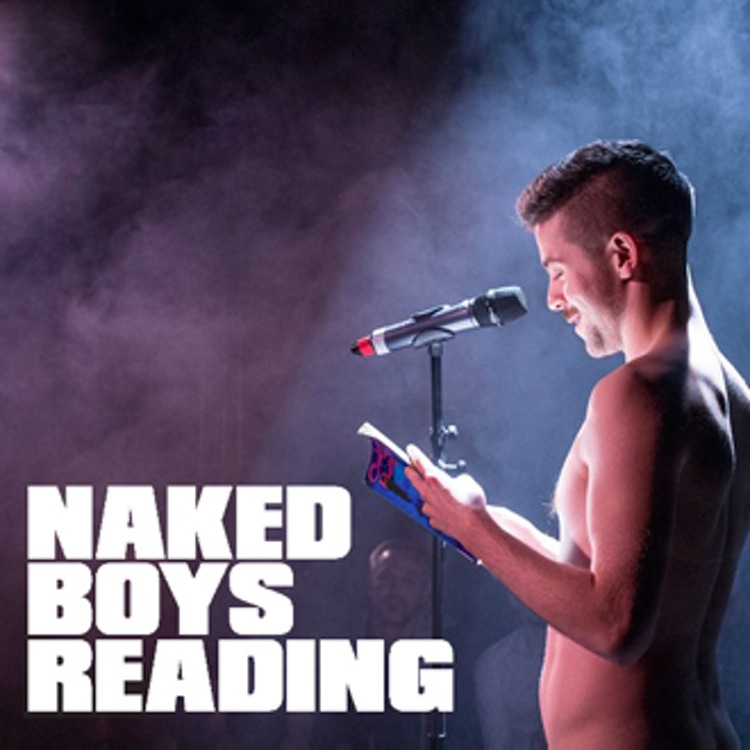
Naked Boys Reading: La Femme

Ascending the back stairs of the Marlborough to be greeted by the towering and magnificently coiffed Dr Sharon Husbands, doesn't quite give an accurate taste of what follows. Her light, breezy and gently dirty compering would sit well in any number of traditional cabaret, drag and glamour nights but what she actually introduces, and has produced, is a far more novel invention. Naked Boys Reading is exactly, as in the proverbial tin, that.Instead of boys, she presents an intimate line up of five “men next door”. Young and vintage, thicker and thinner, and somewhat bearded as you would expect from a show more normally at home in Dalston and on holiday in Brighton. Don't worry, they are not everyone's “men next door”. More the type of next door that push property prices up.It's quite possible that a proportion of the audience were expecting something rather more titillating than five thought provoking and heart tugging literary texts on the nature of femininity.They ought to have read the advert more carefully. This is a high brow literary salon that just happens to involve full frontal nudity and hosted by a drag queen in a dark and rather humid theatre.Naked Boy number three could have illuminated them on the difference between Nude and Naked with his reading of John Berger's Way of Seeing. This seminal text on Visual Culture provided the academic meat of the performance and was the only reading to stray into performance as he cheekily recreated the poses of women in the paintings of the 'Old Master's’.Intelligently curated by Adrienne Trouscott, no stranger to getting her kit off, you will definitely have seen her poster in the first five minutes of being at the Brighton Fringe this year. The selection of texts is a poignant journey. It punches far above its expected educational and emotional weight and ranges through Bernadette Peters, Leslie Feinberg's powerful Stone Butch Blues and the impossibly tragi-cute early portion of Justin Vivian Bond's My Childhood – backwards in heels. A little known work by Audre Lorde The Uses of the Erotic was an arresting call to connect ourselves on a more authentic level in the face of the anodyne, sex saturated culture we have created. All were read beautifully by readers well matched to their texts, both physically and in their delivery. This is a show to exercise your thoughts but without attempting to be over-challenging or falling into pretension. Be warned: despite being listed as an hour show this easily ran to 95 minutes. Although mostly engaging, at this time slot, an hour would have been perfect. Not a mistake to let happen again during a Fringe performance when listed timings are important to the audience.This is a lovely, soothing and indulgent piece of intellectual fun that would be perfect to get some conversations going later on in the evening.

Marlborough Theatre • 6 May 2016

Stamp

Stamp is a ridiculous, riotous ripping up of the rule book for examining gender binaries. Someone should really tell them that shows seeking to question the nature of men and women and then educate us on our own social constructs need to be a lot angrier, more self-satisfied and duller. This is none of that. Spun Glass Theatre have put together a really fresh, fun offering that demands extreme jollity from its audience. The standard rows of seats when you walk in are deceiving though; don't expect to sit down the whole time; do expect to get to know the people sitting near you. This is a full-on audience participation event where a good crowd curates their own entertainment, but I suspect many Brighton Fringe-goers are going to be safe bets. The set, lights and sound work closely together to recreate a hokey 1987-ish game show. Think Generation Game with exceptional team leaders. Utterly engaging, they are very funny and have perfected the art of getting people involved, pushing them just far enough and then popping them back in the box when they threaten to de-rail the narrative. Our Host, Helen White is gorgeously convincing and super confident in her material: it’s hard to know how much was intended and how much just improvised during the night. The answer doesn't matter, hardly anyone stopped laughing and she could clearly command attention on a much bigger stage. A couple of reminders from the tech booth may have indicated that things were unravelling slightly; perhaps more reflection on the theme of the show had been planned. It certainly felt as though the ideas behind the jokes could have been developed more. ‘What held women back from winning the bin bag tug of war?’ Poor footwear choices, apparently. You are invited to find the point of the jokes but not quite led there. In the battle of the sexes you are expected to play your part. Grab some friends, but choose useful people if you want to win, and sign up.

The Warren • 6 May 2016 - 5 Jun 2016

The Sessions

This live re-staging of The Beatles at Abbey Road Studios is a monumentally ambitious endeavor and musically, it achieves magnificently.Attempting to create a perfect “sound-a-like” experience of the recording process at the iconic Studios, the show documents the entire musical journey of the “fab four” from the Beatlemania of 1963, through the experimental years, to the bittersweet close down of Hey Jude.The most surprising aspect of the night was that this big-ticket production, based on the most over examined band in history, could possibly be one of the most original contributions to the nostalgia genre. In an effort to define such a show, Stig Edgren's term “Musical Docudrama” comes to mind, although it is difficult to pin it down. It's mostly a whistle stop concert, belting out the hits in chronological order, and linking the songs with micro segments of narration and dramatic representation.Sadly, these representations don't match the musical standards of the show and are at times a distinct irritation. The late George Martin is played by Jack Baldwin and does embody a fatherly dominance over proceedings but simply doesn't have the lines to provide any narrative structure. There ought to have been a lot more authenticity in the exchanges between him and the band members, as some of the dialogue was based on direct quotes from Geoff Emerick's memoirs 'Here, There and Everywhere: My life recording the music of The Beatles'.On this occasion the quotes simply didn’t translate well and what could have been a treat turned out to be just rushed and confusing. Emerick was the Beatles’ sound engineer for almost all of their albums, a legend in the industry and is creative consultant for The Sessions. It is undoubtedly his hand that has guided and helped deliver what matters most in this show and it was a mistake to have deviated from this.Then it comes to the sound. The full, technically breathtaking, sound of the Beatles in their workshop, as faithfully replicated as can feasibly be. This is as close as possible a millennial can get to experience the band that defined the sixties and, controversially perhaps, a good deal better than being there to see them live.They famously stopped touring in '66, disillusioned with their inability to recreate the sound they wanted to live on stage and unable to amplify enough to be heard over the screaming mania of their fans. With this show, Emerick has enabled the sound they wanted to be heard, to be heard, live. It just took a while.The comforting excellence of the vocal harmonies are first introduced in She Loves You and only continue to delight; yet, the introductory dramatisation of Ticket to Ride is slightly self-indulgent as “Paul” reminds the boys what they should sound like.There were a couple of unfortunate mistakes, an earlier segment was marred by some quite horrendous feedback; unforgivable for this level of set up but happily forgettable as it didn't continue.The visual impact of this show was extraordinary, with the real star being Studio 2, Abbey Road itself. The studio is beautifully recreated by Stufish Entertainment and cloaked in transparent screens displaying a constant multimedia projection by Luke Halls.From the beautiful Pop Art graphics accompanying Help, through the black and white video reels and images of original ticket stubs to the stunning iconography for Taxman, they absolutely transformed the performance into a show, rather than just a gig.It's easy to forget the sheer scale and quality of the catalogue available here and just when you think you have heard the “big ones”, along comes Eleanor Rigby or something else to remind you of just how enormous their musical output was. Be prepared, sixty Beatles songs take a lot of stamina even at breakneck speed; it's a long concert but thoroughly worthwhile.

The Brighton Centre • 6 Apr 2016

Made in Cumbria

Postlethwaite is a likeable stage presence whose manifestation of five deliciously dark women creates some very funny moments. She clearly has great fun bringing to life some fairly pitiable but relatable characters and this entirely self written solo show is neatly bookended to form an entertainingly worthwhile hour.Of the five Cumbrian characters she introduces us to (six if you consider our parochial, disembodied radio host who provides the cover for her quick and simple costume changes, also voiced by Postlethwaite) it is the middle appearances that amuse most. Joy Hope is a children's author and illustrator that you would keep well away from children but who has been instructed by her publisher to smile whilst reading from her latest tale of dysfunctional woodland animals. There is a distinctly chilling quality to her gaze as she enquires of one audience member whether they are afraid that while they are here their house is being burgled? With narrowed eyes and mouth the audience is suddenly rather afraid but not for their houses. This physical habitation of her creations and in particular her facial expressions and subtle accent changes are the stand out strength of Postlethwaite and I suspect that she could fully convince without the costumes at all.Stella Nova, the first Northern female astronaut, is less of a character and more of a prop to illuminate the dismal hilarity to be found in society's view of women. During a radio 'Q and A phone in' she fields such inane questions as 'do you need a bra in space? 'What is your skin care regime? And 'your hair looks great'. Once again it is her mainly wordless facial reactions to these questions that trigger some of the biggest laugh out loud points of the show. Many of the rest of the moments are more of the prolonged smiles variety and it feels as though there are more jokes that could be had with further engineering to the script. Kirsty Bird is a nervous Falconer giving an educational talk. She has a seriously funny and topical starting point: being terrified of her own malevolent falcon, as well as the world in general, but this is not developed and it really could be a highlight section of the show. Aside from one or two funny observations on the topics of survival, murder and Kendle Mint Cake our first Cumbrian lass in the form of survival expert Karroll Kavannagh and our last in the form of Brie Fromage whose life has been turned around by a combination of Yoga and Kung fu are less memorable and whilst the tie the show together they take a back seat to the more original middle characters who are a lot more fresh and fun to get to know. This is a show that deserves a much stronger final character although the story arc is perfect.This is a well timed and brilliantly delivered performance that with a small venue, holds onto the treat like quality of being entertained by a very funny friend. Worth seeing before she perfects the script and starts filling bigger venues.

The Iron Duke Pub Guesthouse Kitchen & Theatre • 25 Mar 2016

The Perfect Murder

Any production of The Perfect Murder, Peter James' bestselling novella set in Brighton, was always going to generate interest in its hometown. Throw in one of popular cultures most beloved TV couples, Shane Richie and Jessie Wallace, and it would have required a severe weather warning to whittle down the crowds at the door. Thankfully this is a production that delivers almost everything that could be asked of a modern murder story, with a humorous twist.Victor and Joan Smiley have lived on the Sussex coast for the past twenty years and are thoroughly bored and irritated by each other; Joan with his snoring, and Victor with her spending. Shaun Mckenna’s bickering dialogue is sharp and, whilst not highly original, very amusing. Channeling a good deal of Basil and Sybil Fawlty, Wallace adopts a distinctly Prunella Scales-like laugh, as both she and Richie keep the comedy rolling. Joan is engagingly annoying, picking at her husband to gain his attention, and it is a keenly observed depiction of the everyday nastiness that goes on in couples out of love. Ultimately, they just don't want to have sex with each other any more and are successfully exploring alternatives. Victor has fallen for the Croatian prostitute he visits three times a week and decides that the only way he can be with her is to cash in Joan’s life insurance policy. As a long-standing student of the great murder mystery genre he starts hatching a murder plan, keeping in mind the great question… what would Sherlock do? Suffice to say, all does not proceed as planned.Simona Armstrong is superbly cast and revels in her role as a psychic Croatian prostitute. Her humorous pauses and facial physicality were the highlight of many scenes. With a dolls house style set by Michael Holt making efficient use of the space, the interior decor contributes to the crushingly mundane atmosphere that the main protagonists inhabit. As expected from an adaptation of a number one bestseller, the plot is tight; with enough twists to keep everything moving forward, although the pacing of the second half began to drag before we reached the final scene. If you enjoy suburban horror stories, then this is a comedy crime caper that will delight.

Theatre Royal Brighton • 7 Mar 2016 - 12 Mar 2016

King Charles III

Mike Bartlett's beautifully worded imagining of a constitutional crisis without a constitution invites us to witness the starkness of the Royal Family stripped bare whilst presenting them as pseudo Shakespearean characters in this outstanding production.Robert Powell's delicately perplexed Prince of Wales stumbles from the death of his mother into his role as King Charles III. Trying immediately to validate his crown with inconveniently intellectual ethics, he comes into conflict with his Labour Prime Minister who is attempting to pass a Bill limiting the intrusions of the press. As you would hope, Powell delivers some laughs from Bartlett's one line references to the real Prince Charles' well documented idiosyncrasies but also perfectly settles into tragedy later in the play. His unravelling as he understands the impotency of his own position and his simple, but heartbroken, conversations with his sons engender real sympathy for a man who only moments before had been trying to install a tank in front of Buckingham Palace. Princes William and Harry, alongside Kate Middleton, provide a semi comedic subplot involving Prince Harry, as his namesake Hal, tearing off to nightclubs and kebab shops before failing in love with a girl in biker boots. Richard Glaves demonstrates the power of the play’s iambic verse in Harry’s finest scene as he passionately declares his love. Jessica Bryden is superb as – a Lady Macbeth inspired – Kate Middleton opposite Ben Righton’s Prince William, intent on betraying his father. Even the play’s weaknesses come across as purposeful winks to Shakespeare, with the odd pacing necessitated by a late interval and with a mad rush, building to an acrophobic climatic final scene. The set is simple, atmospheric, and satisfyingly medieval conveying the cold reality of the Royal Family. With understated staging countered by some stunning set-pieces involving Jocelyn Pook's solemn choral singing, these musical scenes can seem somewhat out of place, although they add vigour to what is otherwise fairly sedate but effective direction. A thoroughly enjoyable endeavour, engineered to elicit a few tears, laughs and a little thought. 

Theatre Royal Brighton • 10 Feb 2016 - 13 Feb 2016

The Trojan Women

The plethora of shows promising a ‘fresh take’ on a much lauded classic has reached fever pitch and it wouldn’t be surprising if a new Adaptation category was inserted into the Fringe guide to house them. How does Syracuse University’s The Trojan Women fare in amongst the Shakespeare, Sophocles, and Stoppard? Not well.Following in the tradition of Greek tragedy, the Roman Seneca’s most renowned work is laden with death and vengeance, charting the plight of the Trojan women in the wake of their city’s destruction. With source material this rich in dramatic potential, you have to wonder where it all went wrong. There’s a patent respect for the text on display here, but this works against a show that feels like a half-baked academic exercise. Banal motifs straight out of a GCSE Drama textbook are thrown in at every opportunity; discordant ensemble wailing gives way to the drudgery of a rhythmic ‘heartbeat’ effect. By the time you realise they’re using the colour red as a blood metaphor, you’ll start to wonder whether they’re doing it on purpose.Emotional range is an alien concept to a cast doing their best ‘angry’ or ‘sad’ impression at all times, both of which come across as a sort of irksome whinge. The delivery is so stilted that characters blend into each other, functioning as a drab ensemble that will hardly leave you gushing with empathy. Moreover, the young actor portraying Agamemnon completely lacks gravitas, perpetually shifting his weight from foot to foot, every inch the nervous student desperate for his scene to end. He does, however, alongside others, display an admirable command of verse; we must be thankful for small mercies.The company’s approach to staging does nothing to elevate this production; an optimist would declare it simple, forgetting that in skilled hands, simplicity is not synonymous with dreary. The stage is bare but for a box in the centre that serves no purpose other than providing a surface for various actors to slam their fists upon incessantly, in a feeble bid to appear intimidating. Curiously, most of the male performers are sporting Mafioso suits, while a couple are in jeans and a hoodie. The reason behind this choice is something the show never bothers to address, but you get the disquieting sense that it’s some ham-fisted attempt at establishing contemporary relevance. It’s doubtful that this tripe would have been relevant in Grecian amphitheatres, let alone today.

Unknown • 3 Aug 2013 - 8 Aug 2013

Man Feelings

Comedy duo James Cottle and Kevin Kennedy take their audience through a series of hilarious scenarios verging on the absurd in this sketch show. At times the show lives up to its promise, exposing parts of the male psyche in a brutally candid way. At other times, it merely divulges the bizarre, if not worrying, imagination of two comedians.The commentary and expansion on themes are fresh, fun and giggle-inducing. Just when the audience is lulled into a sense of gag closure, the duo step it up a gear to pack in an extra, gloriously unexpected laugh with great timing, as well as unassuming one-liners. Particular highlights include: Scotland’s independence from England likened to a couple’s break up; the complex agreement to a duel between two gentlemen; and the stark aftermath of a Primark sale.Admittedly, not all of their material is groundbreaking. The sketch about the band with unrealistic dreams of changing the world with their music has been done before. Equally, the confident idiot who teaches the insecure idiot to pick up girls by insulting them is not terribly innovative. Yet these exceptions do nothing to detract from the overall originality of the sketches, which on the whole are comprised of unique characters and imaginative plots.Man Feelings is bound to tickle its audience throughout, unless the audience feels a special loyalty to injury lawyers4you (Cottle’s spoof is brilliant), which is unlikely. As it’s free, what better way to spend an hour than embracing male naivety and ridiculousness? If Cottle and Kennedy have shown what it truly is to be a man with feelings, then dose me up on testosterone and break my heart because it feels good.

Unknown • 2 Aug 2013 - 17 Aug 2013

Afternoon Delight

Afternoon Delight pitches itself as a good way to sample some of the comedy flavours going on at the Fringe. It’s a savvy move for anyone prone to commitment phobia when faced with entertainment; who falls into this category, I’m not sure. Think of it as Comedy Speed Dating, except less sweating because you’re not the one being judged. You judge them. Marvellous. Compere Paul Sweeny, who looks like Freddy Mercury in a big way if he were to be resurrected and work on a pirate ship, does a great job at warming the crowd up. His brand of weird, slightly creepy humour sets the tone of the afternoon, which is odd yet very enjoyable. Seven acts grace the stage including magician and comedian Alan Hudson, whose brand of thimble magic can only be described as visionary, as well as Matt Ewin’s character Bruce Hammers, who, if he were a plate of canapés, would have been what I circled round most of the evening. His act is inspired and thoroughly good fun.Anthony King’s songs, such as ‘Have you ever pushed someone off a cliff and blamed it on the wind?’, are hilariously morbid, and Carl Hutchinson’s stand up is another highlight. While performance style and theme varies, when it comes to the quality of the acts, nothing falls below par. Afternoon Delight is a perfect way to have a taster of some of the talent showing at the Fringe this year and it leaves you hungry for more.

Unknown • 1 Aug 2013 - 25 Aug 2013

BEASTS

It’s bordering on trite to make the ‘performance is like marmite’ analogy, but there is no better way to describe the slick, surreal and wonderfully unique sketch show that is BEASTS. Comic trio Owen Roberts, James McNicholas and Ciaran Dowd have cooked up something deliciously divisive. If you like the bizarre brand of comedy, one brimming with elongated pauses and grotesque facial expressions, it cannot be missed.Hilarity is not so much derived from what is said; the sketch conceits are clever and reasonably fresh, but it’s the undeniably the delivery that makes it. All have impeccable timing, effortlessly milking every beat for all its worth. It’s a testament to their comic precision that something as simplistic as repeated utterances of the word ‘biscuits’ brought the house down. Indeed, one skit consists of nothing more than James McNicholas reading ‘Spot the Dog’ aloud. Such is the level of physical sophistication on display here that each turn of a page is a catalyst for laughter.The show reaches its zenith, however, with a delectably dark piece in which an oddball children’s author, played to perfection by McNicholas, attempts to sell his Billy the Elephant stories to publishers. To say more would spoil the effect, but you’ll sit there in fierce anticipation of every line, and every gesture. It’s perhaps disingenuous to call McNicholas the strongest of the three (all are staggeringly brilliant) but he takes the erratic weirdness to the next level whilst somehow remaining unnervingly naturalistic.Possibly the strongest indication of the sheer talent at work here is the final montage, in which every character from the past hour is involved. Not only does this coda provide massive laughs, it’s tinged with an unexpected poignancy; that the trio manage to elicit empathy from their bizarre comic creations is simply astonishing. It may not be to everyone’s taste, but for those who crave all things crazy BEASTS is worth every second.

Unknown • 31 Jul 2013 - 26 Aug 2013

The Unbearable Sh*teness of Being

Leaving the production, two men were overheard saying ‘Well that was a bit mad, wasn’t it?’ winning them the prize for understatement of the year. Mad doesn’t even begin to cover the 35-minute show which promised to be a mixture of Mark. E. Smith, Kafka and the Beat poets. Distorting the title of Milan Kundra’s novel - The Unbearable Lightness of Being - gave false hope that there would be moments of genuine angst and questioning simmering beneath the would-be existential humour.The show begins with an electro-reggae-rap hybrid as the lights dim over a make-shift set. Strings of fairy lights overlap hand-drawn illustrations pinned to a festival-like booth. So far, so DIY. Usually DIY ventures greatly appeal to me but this production feels lazy at times, as pictures don’t fit the screen properly and costumes consist of a Devo-esque all-black ensemble with differing hats.You are definitely entering the head-space of Modal Roberts which sometimes boils over into self-indulgent stage time. Once the Bob-Marley-cum-Kraftwerk noise dies down Roberts reappears wearing a flat Chinese hat an reads from a book; this brought the show to an interesting level as the voice dropped from manic shrillness to something reminiscent of Stanley Unwin’s introduction to the Small Faces or a kindly BBC veteran commencing a Mr Benn story.Settling to a lower tempo allowed the flashes of genuinely funny material a chance to gleam out from the over-arching catch words of ‘wacky’ and ‘kooky’. An electric guitar led exploration into John Peel’s favourite song (‘Teenage Kicks’ by the Undertones) aptly caught the mood of surreal humour. Other highlights included a rant about QWERTY keyboards and the amount of fat needed to incur man-boobs, which consist of seven inches of flesh pulled taunt if you’re interested. The character of the poor vice-manager and his sinister guide were the basis of the only cohesive and recurring sketch. As they plumbed the depths of Purgatory and dead frogs the dialogue took tones of Stephen Law’s ‘The Philosophy Files’ meeting Douglas Adams for a quiet pint to hash out the finer points of the Universe.With a slicker finish and less yelling this is a show which could make use of its legitimately funny moments to concoct cabaret-style musings on the random connections between life’s little moments and the big questions. As it is, amusement becomes lost beneath the layers of faux-surrealism.

Unknown • 1 Jan 1970

Be My Baby

This all-female cast often talk of their men, the ones who knocked them up or cast them out, and yet not much depends on them and no responsibility is placed at their feet. These are the stories of the young women, wrapped up in period costumes and with a great soundtrack. Much of the richness of the play comes from the music, as could be felt as the floor shook with foot-tappers. The girl-groups of the 1960s had about as much autonomy as the pregnant girls residing inside St. Saviours and yet, ironically, they are held up as beacons of freedom by Queenie and the others. This adds a layer of poignancy to the lyrics of the Ronnettes and Dixie Cups and they take on a new meaning as four girls wait to be proposed to, to give up their babies, to return to a ‘normal’ world without stigma. The play explores a clash of generations; from the shrill voice of Mary’s mother and the clipped RP of Matron- the Holy Cow - to the gleeful naivety of Dolores to the dawning understanding of Mary. The young must navigate and carve out their own paths into maturity, despite being hindered by the rules of society. Standing out from the group is Queenie, played by Julie McNicholls. Cynical and worldly, she takes the other girls by the scruff of the neck with tough love wrapped up in Northern vowels. As each pregnant girl develops we see each story is run through with a thread of sadness and the poignancy of having to give up their children for adoption. As youthful exuberance flickers out from their gloomy predicament there are moments of both tears and laughter. Even funny moments such as the girls trying to figure out just where a baby actually does come out from are marred with the realisation that 1960s sex-ed was lacking for most women. This is a play for all ages and one which runs through the emotional spectrum as it builds up the audience’s expectations only to dash them with revelations, twists and turns set to the soundtrack of the Phil Spector generation.

Unknown • 1 Jan 1970

Superbard and the Sexy Quantum Stories

Jumping aboard Superbard’s storytelling train is a bit like riding shotgun in Doc’s Deloreon; you’re going to suspend your disbelief and hope he doesn’t crash. This is clever storytelling, diverting away from traditional inroads to create a new kind of folklore. Namely one which is preoccupied with the sexual prowess of big, blue aliens, the inner monologue of a busty blonde porn star and wondering ‘Is this a cone?’. The answer is yes, it is. The stories link up to explain the life of Steve, a boy who has troubles with masturbation and meets the love of his life on Chat Roulette. The question asked is this: what would have happened to Steve if he had taken the change to sleep with a prostitute alien instead of refusing this kind, if surreal, offer? What follows are a series of stories, sometimes sad and often hilarious, which chart the progress of Steve’s existence. It is only when a giant floating head appears that he is offered a ‘do-over’ to change the decisions made. From tales of poetic porn to mental breakdowns the narrative twists and turns at break-neck speed with the last story settling the pulse to explore a more moving side of the character. Plus, the love of Steve’s life knows the plot to the best movie ever written and when this teaser eventually is revealed the audience are not disappointed as a cleverly produced video montage ends the show. Superbard’s mixture of story and song are held together with a big dollop of self-confidence, which luckily doesn’t blur into the lines of arrogance. This might not be humour to suit everyone’s taste. There is a dash of ‘the Inbetweeners’ style awkwardness, with the delivery of Superbard sometimes turning into a Simon Bird impression, and the comic aspects often run parallel between clever and crude. Despite this, Superbard is a unique raconteur managing to hold together each thread of the story and pulling them together neatly at the end.

Unknown • 1 Jan 1970

Spring Awakening (After Wedekind)

When the original version of Spring Awakening by Frank Wedekind was shown in New York City in 1917 it was closed down, on the grounds that it was too pornographic. It wasn’t until 2006 that Spring Awakening was reworked for Broadway and it became an award-winning musical. It was this version that intrigued writer and director William Sherriff Hammond. It inspired him to adapt Wedekind’s original and make it relevant today. Considering Wedekind’s nationality and Spring Awakening’s dealing with the oppression of our surroundings, it was an understandable move of Hammond to set his version in East Berlin,1989 under the repressive Soviet regime. Yet, unfortunately, a modern day audience will not be shocked by this performance.His adaptation sustains the elements of the original; it’s dark, sexy and is an interesting commentary on the damage sexual suppression can do physically and emotionally. The brilliant performances convince us of this. There is no denying the acting ability of the Upstaged Theatre Company. Kasia Chodurek is fantastic, so too is Hannah Barker who is an incredibly comfortable stage actor with impressive talent. Dominic Price deserves recognition for lightening the sombre mood with his fantastic portrayal of Reverend Kahlbauch with his speech impediment. Some comic relief is important when dealing with such intense themes such as sexuality, suicide and repression, which has been fully understood by Hammond who has written a balanced and impressive script. Set alongside a cracking soundtrack too, there is plenty of entertainment potential in this show.It does need some serious sharpening though; with tighter direction this could be more powerful than it is. Not all the acting is spot on and at times it was hard to hear the dialogue of Jack McGinn due to his position on stage. Generally the actors take a while to slip into their characters and it was not until halfway in that I felt fully engrossed. The weakest part of this production however is their attempt at physical theatre: sadly, it felt a bit lacklustre at times. More dynamic physical acting could have been what set this play apart to truly make it a more inspiring and contemporary version of Spring Awakening.

Unknown • 1 Jan 1970

Künt's on Daytime TV - Free

Kunt’s on Daytime TV warns that it’s not for the easily offended. Granted, you leave hopes of hearing any kind of respectable or refined comedy at the door as you walk into Espionage. Come on, he calls himself Kunt... Geddit? Therefore I let the crass misogyny go over my head, aware that it was getting some guffaws round the room. What I was offended by, however, was the lack of skill with which Kunt gave his performance. Here is a man who is rather notorious on the the Edinburgh Festival Fringe scene. I expected a certain calibre of comedy, by which I mean, a performer who didn’t awkwardly read their show from prompts and did not stumble over their words.Kunt spends the first few moments explaining the catalyst behind his new show he is running alongside Kunt and the Gang this year. Apparently, last year, reviewers accused him of having no original material. In an attempt to prove us wrong Kunt decided to do a new show, about daytime TV. Except, instead of putting in the hours and crafting a quality show with commentary about Daytime TV, he apparently spent his time on Facebook. It shows, or it is a poor excuse for presenting punters with a bit of a disappointing act.The basic premise of the show is going through different Daytime TV favourites and suggesting how he would improve them, interspersed with a lot of talk about minges and a conspiracy theory about Mr Blobby, which incidentally involves minges. His bit on Femfresh as a product and the sections on Jeremy Kyle and This Morning are pretty funny. However, let’s be clear, anyone could have recorded funny segments of Jeremy Kyle’s show, played them and got a laugh. At least the Femfresh bit he was presenting us with was actually original material.Yet his other original material, such as a sleazy song about wanting a blowjob from Countdown’s Rachel Wiley, were just uncomfortable and depressing. The audience looked on with shock and discomfort searching for an element of irony in his delivery. Hiding behind the tagline ‘not for the easily offended’ misleads the audience to believe that what they will see is something wonderfully gritty and controversial. In fact, they watch someone who appears nervous and unnatural reading out under practised material, which is what offends the most.

Unknown • 1 Jan 1970

Otto Kuhnle: Ich Bin Ein Berliner

Some things will always be a mystery. It will always be a mystery how Otto Kuhnle woke up one day and thought a show about his life in Berlin, interspersed with not quite magic tricks involving newspapers and plastic bags could constitute entertainment. It follows then that it is a mystery how his show has gone on to entertain many an audience and even win awards.Consider Kuhnle a jack-of-all trades with the confidence of a master. He can yodel, he can play flute, he can play the accordion, he can dress up as an angel and throw towels at his audience. He does these things well but surprisingly it was none of these things that won him his award last year at the Fringe, nor are they why he won an award in Berlin. What did involves ping pong balls and surprisingly it really was the giggle-inducing highlight of the show.He certainly has the over the top cabaret style nailed, almost as if he knows his jokes are rubbish, like his props (his props are actually bits of rubbish). However, Kuhnle is proof that air punching, toothy grins and a raise of the eyebrows means no audience can resist, apparently. The jokes may not deserve a laugh but they do get gimmicky cheers for their unashamedly gimmicky style.I wonder if balancing gnomes on tight ropes and making ripped up newspapers fly are harder tricks than they look. They must be, otherwise we’d all be making a show out of it, surely. At moments he has the audience enthralled, thoroughly entertained by tricks that are, admittedly, quite fun. Yet, in other moments, he splits the audience, half guffawing, the other half scratching their heads. How has this qualified as real entertainment? I guess some things will remain a mystery.

Unknown • 1 Jan 1970

East of the Sun, West of the Moon

‘There’s something for everyone,’ insists Homespun Theatre of their children’s yarn, East of the Sun, West of the Moon. However if you are looking for a fresh take on the well-worn fairy tale genre you might want to look elsewhere.Fusing an eclectic mix of folk song, pantomime routines and simulated wind sound effects, the cast of four enact the tale of a girl’s plight to save a bear from a troll-queen’s pesky curse. The quartet themselves are charming and engaging, they’ve clearly spent much of their lives immersed in children’s fiction. Paul Tonkin, in particular is a hoot as the polar bear, his physical comedy skits elicited the loudest laughs from the audiences younger members.Lamentably, these moments are few and far between as the running time is dominated by a sequence of tedious and redundant narration sequences. Here the natural, breezy performances wane, as the cast adopt the guise of bad Blue Peter presenters, relaying the simple plot to children whose enjoyment would be better served by more time with the exploding trolls.The obligatory ‘grown-up’ jokes fared better. One gets the impression that while the actors venerate children’s fantasy, they don’t fully share the sense of humour; they seemed more at ease with the sarcastic asides than anything else.Design consultant Anna Michaels skill is evident; the space is peppered with an array of curious objects and props, which were milked for all their worth by the cast. Endless paper snowflake flurries, however, can’t quell the nagging sensation that the show is lacking the sense of awe and wonderment that Homespun have set out to evoke. This isn’t a bad way to spend forty five minutes but aside from the odd glimmer of brilliance, it’s a fairly forgettable tale.

Unknown • 1 Jan 1970

Wrecked

It’s apparent from the opening moments of Wrecked that you’re watching a show unlikely to do anything startlingly original, or even interesting. Built very much in the mould of the successful This Is England series, this broken British tale is a formulaic affair that, whilst entertaining, doesn’t have anything to say that hasn’t been said before. The action takes place on the streets of Salford where teenage Toby and his mates run riot. However, his estranged father is unexpectedly released from prison, setting off a series of traumatic events that change everyone’s lives a little bit less than you’d expect.It’s not that Reuben Johnson’s script is bad; the dialogue is pitch perfect, a prime example of the stylised naturalism that’s come to define this genre. The play skillfully blends comedy with poignancy and it’s impossible not to be pulled into the tribulations facing these well drawn characters. Nevertheless, it does at times feel like a ‘greatest hits’ package of council estate realism; the obligatory absent, felonious father is joined by a whole host of other clichés including corner shop theft, shady drug dealers, and brutally violent assaults. There’s also the odd bit of questionable characterisation, including an Asian shopkeeper who’s little more than a crude stereotype, and an older sister for Toby that gets nothing to do apart from worry and fret.The play’s centrepiece family revelation doesn’t quite have the impact that it should, and smacks of shock value; the audacity of the father’s alleged crime seems a little unconvincing. After setting up a potentially explosive situation in the play’s final act, Johnson fails to follow through with the consequences, instead wrapping everything up in a neat, convenient bow. It’s a lamentably gutless decision, made all the worse by the knowledge of the countless alternative outcomes, each of which would have been considerably more satisfying than what we are ultimately given.Harder to fault, however, are the superb performances from an undeniably capable cast. Toby’s dad is the stand out, turning in a performance so arrestingly nuanced that you sympathise with the character in spite of yourself. Moreover, the actor playing Smalley is continually hilarious, capable of bringing the house down with the subtlest of gestures. Given the quality on display here, it’s regrettable that the soundtrack is often so intrusive as to drown out the dialogue. Wrecked has been created by a group of highly talented individuals; it’s a shame that the final creation doesn’t live up to their potential.

Unknown • 1 Jan 1970

Ladystache

To clarify, these ladies do not have facial hair. However, they do claim to push the boundaries of gender. They say they are ‘just funny. Period.’ By this they mean do not expect the usual topics that we might hear from female acts.From the instant these two begin, their knack for observational comedy and spot on impersonations is clear. Their sketches are fresh perspectives on the most day-to-day of scenarios, giving excellent comedic twists with genuinely funny one-liners, genius accents and hilarious facial expressions. The duo don’t shy away from involving the element of the ridiculous in their show with great success. Equally however, they have every confidence to keep their sketches simple relying on witty dialogue and convincing characters.What confirms their comedic ability and surprises any audience is that their show is predominantly improvised, which we all know can fall flat on its face. These girls don’t miss a beat - it’s almost as if they have telepathic skills. Even when one has clearly tickled the other, their enjoyment just make it even more of a pleasure to watch. At one point the pair ‘come out of character’ to argue over certain choices the other has made. Watching their ‘breakdown’ is every bit as funny as the other sketches. They have nailed the art of improvisation, understanding the importance of instant changes too. The audience are never waiting around for the next bit to start, it’s immediate entertainment.I was dead set on dishing out five stars, but then something happened. Considering how much was improvised, and how telepathic they seem to be, they should have judged their audience better and decided to scrap their finale. There was no need for the weird puppet sex show with the cameo from the freakishly lifelike dildo. Three full rows of ladies 50 plus looked on in stunned silence as it went on for an unnecessary amount of time. I had to watch awkwardly sandwiched between two old men. It took some of the quality out of the show and looked like a desperate attempt to ‘push boundaries’ and not be typecast as a female comedy act. That aside, I still highly recommend that you go see them in action.

Unknown • 1 Jan 1970

Anne Renshaw Sings!

The room in St Bride’s Acoustic Music centre is packed. Everyone is in high spirits awaiting Anne Renshaw to come on stage. Since the release of her critically-acclaimed album, the Edinburgh-based folk singer-songwriter has accrued more than a few diehard fans. Anne Renshaw Sings is a perfect opportunity to find out why as she plays songs from ‘Awakening’, accompanied by talented folk musicians Ian Main and Andrew Lyons.Of course, it is not necessary to be a hardcore fan in order to enjoy the evening (although jealousy might set in when the entire audience starts singing along without you). Her songs, inspired by her local surroundings and life growing up on the Borders, delight the audience with their melodic charm and sweet humour. Notable favourites include her composition inspired by the Isle of Arran, Edinburgh’s Number 37 bus and her father’s valiant sheep rescue on the Borders. Certainly, if you’re looking to immerse yourself in local Scottish culture, this show is a great way of doing so.Her songs all have a lovely, personal touch, which fits the atmosphere. Renshaw’s stories about the inspiration for her compositions certainly entertain and add to the friendly and relaxed atmosphere in the venue. All three musicians have an excellent rapport with the audience but most importantly the music is enjoyable. Renshaw’s more comedic songs are complemented nicely by Main and Lyons’ traditional Scottish airs, which date back to the 18th Century. All in all it is an enchanting evening.

Unknown • 1 Jan 1970

Jessie Cave: Bookworm

Jessie Cave is a genius. This is true whether we’re talking about her infuriating social recluse of an alter ego or if we’re talking about the actress behind the creation of the exasperatingly geeky Bookworm. The former too clever for her own good, the latter just clever for our own enjoyment. With adorable excitement Cave welcomes us to Bookworms United. During the next fifty minutes we are let in on the reasons behind her obsession with books, the fictional characters she most cherishes and the rules she wishes to impose upon our new club. Not only does the audience expand their vocabulary, but they gain invaluable insight into some of her favourite literature, such as the Barbar series, Narnia and Andre Agassi’s autobiography.Cave adopts character in such an utterly convincing way and delivers remarkably well-devised monologues, ensuring smiles on faces throughout and some moments of laugh out loud comedy. Her alter ego in fact shares the same life experiences as actress Cave, but when the bookworm takes us through her story it automatically becomes mirthsome. It’s never tedious and the inclusion of a couple of extra characters adds wonderful comedic depth. Her relationship with her younger sister is wickedly portrayed and the pair play out their dominator- dominated relationship with fantastic panache. The extent of Cave’s kooky sense of humour is revealed to us through special gems, notably, her song about The Girl with the Dragon Tattoo and a beautifully odd play about unrequited love and her subsequent despondency.

Unknown • 1 Jan 1970

Theatre Tasters - Free

The obvious, but often overlooked difficulty with one act plays is their length. Too long to rely on gimmicks as sketches often do, yet too short for a decent narrative arc; crafting an effective one act is all about balance. It’s fair to say that Theatre Tasters offerings demonstrate three different ways it can go slightly wrong without careering into abysmal territory. There’s a lot to like in this fun, diverse trio written by Australian, Scottish, and Norwegian artists, but none of them quite hit the mark.Writer Angus Algie’s soliloquy about a former convict who gives nocturnal tours of the prison in which he used to reside is without question the weakest link. His script is lyrical, and evidently has much to say about the nature of justice and corruption, but actor Mark Young’s Steve can’t measure up.Tutting inadvertently between every line, Young’s delivery is bereft of flair or comic timing.The industrial torch he uses as part of the routine is a great touch though, and in all honesty comes across as a better actor.By contrast, Torya Winters’ performance in the second piece, Lovely Burder, is great. Playing a care home worker whose negative attitude clashes with that of an optimistic colleague, Winters is dry and sardonic, clearly relishing her own cynicism. Heather Irvine’s script is loosely interesting, but in dire need of a good edit. The ideological argument is so overlong that the two actresses start inexplicably bouncing on trampolines half way through, one can only assume in a desperate bid to liven things up.Bringing up the rear, Oda Fiskum’s wonderful satire of Starbucks café culture is the strongest of the three. Kristofor Bate had the audience in hysterics as the applicant, plunged into a world of skinny decaf lattes and membership cards. Mercilessly attacking giant multinational corporations in a small, dingy basement is Fringe theatre at its purest. Ultimately, it doesn’t really go anywhere and would perhaps be better suited to a sketch show, but it’s still extremely effective.If you get some time, head over to the Phoenix pub and give Theatre Tasters a whirl. Three one act masterpieces it isn’t, but it is a pleasant enough way to spend an hour.

Unknown • 1 Jan 1970

Ivo Graham and Liam Williams

In a “botched attempt” to entertain his audience before the show two things became apparent: Ivo Graham is hilariously charming and if Liam Williams could match his calibre of comedy we would be in for a thoroughly entertaining show (Williams did. We were.).Graham’s set is full of hilarious coming of age stories complete with diagrams illustrating the trajectory of his love life. The witty narrative flows and each geeky confession endears the audience more to the man. It might sound like go-to material for a young, up-and-coming comedian, but Graham pulls it off so well, why criticise that? Plus he is not solely relying on his material. Graham has the wonderful ability of interacting and working off the audience. At two critical points of narrative Graham is interrupted by latecomers. He welcomes them, detours entirely from his set and still manages to keep everyone laughing. Or at least ‘smiling on the inside’ as the latecomer said. ‘Every stand up’s dream’ Graham replied not missing a beat, ‘warming the cockles of your heart’.Following Graham would be tough, but it is no challenge for Williams. His brand of dark, abstract stand up would perhaps not be the obvious choice to match Graham. Then again, ‘I’m insecure as well,’ Williams told us deadpan. The next half an hour was a delightfully morbid, wonderfully peculiar form of storytelling as Williams first articulately took us through his life story and then onto a surreal stream of consciousness from the darkest corners of his mind. His quirky punch lines and ability to adopt characters made this even more amusing. He even got away with delivering some of his set with his back to the audience.Really thinking about it, I am unsure whether I witnessed William’s having a breakdown or not. At the risk of sounding heartless, I don’t care, it was hugely comical. If Graham’s gift is his charm, William’s gift is his ability to paint with words.

Unknown • 1 Jan 1970

The Two Worlds of Charlie F

The Two Worlds of Charlie F is a rare example of a play in which fiction and reality collide to create something very special indeed. Coming to Edinburgh after a successful UK tour, Owen Sheers’ work is a powerfully stark yet strangely life affirming look at the lives of servicemen and women injured in Afghanistan, their lives altered irrevocably by the conflict. The horror and the camaraderie, the pain and the triumph are played out through choreographed movement, verbatim drama and enacted flashbacks.Whilst this alone has the potential for brilliance, what truly sets this production apart is that the cast is made up of genuine, former soldiers, wounded in battle and now recounting their stories. To glean such insight into the realities of life in the armed forces made for an incredibly affecting experience. Writer Sheers conducted detailed interviews before putting pen to paper and it shows; the play is coated in a sheen of authenticity of which most can only dream. The acutely observed dialogue is a joy, exquisitely reflecting the raucous nature of barrack room life. That Sheers has managed to capture something of the sense of walking in two worlds, never at peace in either is nothing short of genius.Stephen Rayne’s direction is also a triumph, featuring astonishingly ambitious sequences with a large ensemble cast when you consider that the majority of the cast were first time performers, four of them leg amputees. Rayne sets the stage for a electrifying two hours with a magnificent opening scene in which the titular Charlie F, a silhouette in a hospital bed behind a paper panel, hurls abuse at his carers, hallucinating that he’s been imprisoned by the Taliban. It’s a visually sumptuous moment, indicative of the bold, full blooded approach to lighting and sound design that’s been taken.The performers themselves deserve all the plaudits being heaped upon them. In lesser theatre, the often amateur delivery and occasional fumble over lines would be a source of derision, but here, they’re the beating heart of the show. You’re deeply aware that nobody on stage is truly acting, so faithful is this production to the veracity of their experience. Make time to see The Two Worlds of Charlie F, not only does this bleak, funny, beautiful play encapsulate the best and the worst of human nature, but it will stay with you forever.

Unknown • 1 Jan 1970

Pages from the Book of...

They stand huddled together in the corner of the dimly lit stage, faces blank, bodies motionless. In the ensuing moments these figures skilfully transcend onto the stage, transforming the minimalist set into life. What then unfolds over the next hour and a half is a stunning visual masterpiece.Pages from the book of… surpasses a show and becomes an experience, an unforgettable one. Anyone familiar with the Tadeusz Kantor’s Cricot 2 Company would expect nothing less. This visionary piece, devised alongside 50 Letters, is directed by Andrzej and Teresa Welminski, the two former performers of Cricot 2, which was renowned for its avant garde approach to theatre.Kantor himself was greatly influenced by Bruno Schulz, a celebrated polish writer and victim of the Nazi occupation. Somewhat appropriately this play pays tribute to the life and death of Schulz through innovative physical theatre inspired by Kantor’s earlier works. As 50 Letters morph into character, object, and emotion from the ordinary to the abstract, it becomes apparent you are watching something truly special. If not only for the skilful physicality of each actor, it is worth seeing.The intensity of the physical performance does distract from the insightful monologues of the narrator. The audio effects, though undeniably enjoyable and vital for the ambience, meant it was hard to hear some of the speech at times. Admittedly, even if I had heard, I doubt I would have been any less bewildered as to what exactly was happening before me.Then again, 50 Letters does not aim to deliver a standard theatrical show, it promises to explore the extremities of life and death (and a chorus of flapping birds), which is exactly what it does. An audience must put any expectations to one side and enjoy the piece for what it is, an impressive work of performative art.

Unknown • 1 Jan 1970

All My Friends

On the strength of All My Friends, Danny O’Brien’s first solo show at the fringe, the Irish born comedian is not one for those who like their comedy witty or sophisticated. He’s certainly amiable, to a point, but does the world really need another stand-up routine in which inebriation and faeces are the source of humour? Have we not, as a species, surpassed this juvenile stage? O’Brien evidently disagrees, as displayed in this disappointing hour of entertainment which lunges through a series of laddish anecdotes, each as unremarkable as the last. The loose conceit is that all the show’s material is derived from embarrassing things O’Brien’s friends have done, and that’s as exciting as it gets. It’s hard not to suspect that there’s been a bit of embellishment here and there for comic effect; almost everything that happens to him seems to end in a vaguely amusing one liners followed by the unwarranted excretion of a bodily fluid. Not to worry, the formula is occasionally broken by an account of a chum’s casual racism. What a treat!Admittedly, O’Brien’s delivery is one of confident exuberance; you get the impression that he wants to share his stories with you. A sentiment solidified by a photo montage at the conclusion, which visually depicts the puerile yarns that the audience has been subjected to. Moreover, amidst all the tripe, there is the odd moment of genuine hilarity, but not nearly as many as you’d expect from a show in which genuine hilarity is the aim. You’ll sit there wishing desperately that Danny O’Brien would grow up.

Unknown • 1 Jan 1970

Alfie Moore - I Predicted a Riot

After watching I Predicted a Riot, the debut show from policeman turned comic Alfie Moore, the conclusion must be that whilst he’s funny, perhaps it isn’t time to quit the day job just yet. More importantly, it’s clear he doesn’t want to. The Sheffield based copper’s set so clearly reflects his enthusiasm for the thin blue line that at times it feels less like stand up and more a lecture in riot history with some jokes thrown in. It should be a recipe for disaster but oddly enough the show makes for a reasonably amusing hour of entertainment.Moore himself comes across as warm and congenial but with a sprinkling of dry, Northern wit. Within minutes of arriving on stage he’d built up a fantastic rapport with the audience. It’s refreshing to see a comedian who seems to genuinely appreciate his fee paying crowd, not seeing them as mere targets for mockery.The material on display here is clearly aimed at a mature audience. Consisting of some reasonably pedestrian gags and a series of policing anecdotes, the humour is inoffensive. Poor Postman Pat skit aside, it all raises lots of laughs as Moore waxes lyrical about everything from handcuffs to petrol bomb safety visors. A lot of the funniest moments are derived from his fastidious deference to facts and it’s admirable that the funnyman is so willing to send himself up.More compelling than the comedy, however, are Moore’s considered musings on what caused the countrywide rioting last summer and his take on the police’s oft criticised response. As a socialist he has some controversial opinions and gives off the impression that the chance to air them is his true motivation for doing the show. Indeed, the stand up feels like an afterthought at times, it’s decorative where it should be integral.Nevertheless, Alfie Moore is worth a look; he’s an superb entertainer-educator and, though the jokes are spaced further apart than comedy aficionados might be used to, he’s so engaging that you’ll hardly notice.

Unknown • 1 Jan 1970

Jessica Pidsley's I Can Make You Thin(k)

Jessica Pidsley has given herself a challenge, one that she hopes will help her audience to change their attitudes towards their body. It is no secret that society has a body image crisis. Why else would we have allowed Gok Wan on our screens for so long?Our relationships with our bodies and the role of the media are the bases covered by Pidsley through the story of her relationship with her body and Paul McKenna illustrated with the help of audio-visuals. Looking for confirmation that other people were equally worried about their size and shape? You’ll leave feeling assuredly full. Looking for witty, observational stand up about the state of today’s body image? Be sure to eat beforehand, or you’ll leave intellectually malnourished.Her observations are perfectly correct and her story is heartfelt with some fun humour thrown in. However, her commentary on body image and diets is nothing new. If anything it’s really old. Yes, we are bombarded with images of perfection, yes, tabloid magazines are callous, yes, some diets are nonsensical. However, it is safe to say that we’ve been discussing body image and the detrimental effects of our unrealistic standards for so long it has become tedious. So, if that is going to be the chosen topic of stand up, there better be some insightful jokes cracked or it won’t make its audience think. Unfortunately, this show did not live up to its title.Although she is a great comedic actress, an ability that definitely shines through in her amusing spoofs of adverts she plays us, Pidsley’s stand up style patronises the audience. The jokes seem forced in parts and, by and large, the show is obvious and rather safe, which no amount of fun audio-visuals can change. There is no doubt that Pidsley is lovely and trying to do a good thing through comedy, sending a positive message out to her audience - her heart of gold is a given. Her funny bones, however, are not quite so certain.

Unknown • 1 Jan 1970

Bobby Carroll: Low Voltage - Free

Bobby Carroll has perhaps been doing stand up so long that he’s become a bit bitter. On the other hand, Carroll would probably admit he was always bitter; he is a self-confessed misanthrope. Carroll’s material seems natural and his musings are entertaining. Yet, every now and then he slots in jokes that fall below par. Then, instead of rolling with the punches and swiftly moving on, he pulled out what I can only describe as a defence mechanism, a defence mechanism that is detrimental to the entertainment of his set. He assured us that we were not going to enjoy the rest of his material and that maybe we should leave. Later he let us sit in silence while he took an awkward swig from his pint. This was funny only once after he admitted he likes to do it just to make us think about what we have done; the other times he did it, it looked genuinely awkward.The audience did enjoy a large part of his set but these constant mutterings made them very conscious of themselves and the show. It disrupted the flow of his stand up as he openly racked his brain for the next section and commented on how we might react to it. His bitterness and misanthropic side, rather than adding value and material, undermined his show. A shame, as he is capable of chatting his way through some quite amusing stories and observations. In fact I had the feeling he is, secretly, a very nice guy, as much as he pretends otherwise.

Unknown • 1 Jan 1970

No Pants Thursday: T'il Death Do Us Party

Irish sketch group No Pants Thursday have come up with a fairly creative way of making their sketch show stand out from the rest, though it’s not the way their name suggests. (Don’t be put off, they mean ‘Pants’ like the Americans, but do be prepared for four charming lads walking around in tastelessly colourful underwear as you enter the venue.)The majority of sketch shows that have been brought up to the Fringe this year have had to prove themselves and carry an extra punch. No Pants Thursday’s show is different because their sketches, although funny as individual pieces, all contribute to a main plot that takes place on a plane. This plot essentially revolves around the transportation of the Mona Lisa to ‘air it out’ in mid air. Meanwhile, a Spanish counterfeiter, Jonathan Rhys Myers and the Barber Shop Terrorist group (to name but a few) have different plans for the fate of the legendary painting. Sound ridiculously silly and random? That’s because it is, but it is totally entertaining.It would be a lie to say that No Pants Thursday had its audience enthralled from the very beginning. Initially there are a few weak links. However, once the audience understood what the four guys are doing and how it all fits together the show instantly became more engaging. The twists and turns of the plot are wacky and reminded me of the fun humour of the 80s spoof Airplane! As long as you don’t mind grown men running around in pants and the occasional lunge and thrust, go see them in action.

Unknown • 1 Jan 1970

Tagged

Tagged is a very timely plays showing in terms of relevance to a modern day audience. This is an impressive piece of writing from Craig Macdonald, who also stars in the play, following the lives of three young people on Facebook and also in real life. It is a clever commentary on the state of our society and the effect social networking sites have on the way we interact with one another. Furthermore, it’s a stark reminder of the fact that we pass judgement without thinking, which detaches us from reality or lulls us into a false sense of security. ‘I know the names of people I’ve never even met before’ confesses Kimberley Joyce’s character - this false sense of personal connection is further underlined as we never find out the names of the three characters, but only their thoughts and the way in which they present themselves on Facebook.The fact that parts of this play happen ‘online’ while others in real life could make the distinction between them difficult to pull off, but Director Amy Gilmartin has managed to convey this convincingly to the audience. The use of a screen behind the characters is a clever and humorous way of making the distinction obvious. The three person cast work exceptionally well with each other, giving heartfelt and convincing character portrayals. Special mention should go to Kizzy Lindsay, however, who moved me to tears during her monologue and also provided the comic relief during the production. Tagged is an example of young, up-and-coming talent in writing, production, and acting.

Unknown • 1 Jan 1970

Flea Circus Open Slam

Reviewing Flea Circus Open Slam is rendered problematic by the ever fluctuating line up of performers; each night sees five fresh poets do lexical battle for a spot in August the fourteenth’s final. It therefore goes without saying that the level of poetic prowess on display across the ten night run will vary significantly; any one show could be amazing or abysmal.The evening I attended fell somewhere in the middle. Lucy Ayrton was on compere duties, and kicked things off with what was arguably one of the best pieces of the show, it’s almost a shame that she wasn’t competing. Nevertheless, Ayrton gave the atmosphere a convivial, informal edge and her relaxed approach was infectious. In this vein, you have to question a scoring system which leant towards the convoluted. Penalties for going over length by ten seconds were enforced, and the less said about the audience judged scoring system the better. Granted, there’s nothing wrong with competition, but given how breezily the fact that winner Matthew West couldn’t make the final was dealt with, it does seem disproportionate.West himself was a deserving winner, given the stunning delivery of his animal alphabet piece. That the man had the audience in stiches over something which was essentially an exercise in vocabulary confirms his status as a wordsmith. The best of the rest was Henry Raby, whose rhythmic, punchy energy was put to good use with Letter from the Man to the Boy. Regrettably the other hopefuls were anything but memorable; their respective efforts were adequate, but unlikely to stay with you in the long term.Headliner, Richard Tyrone-Jones was mixed bag in himself. Something of a legend, in poetry circles at least, his droll, off kilter sense of humour was utilized to full effect, jokes occasionally fell flat, but this was the exception and not the rule. The artist was at his weakest when opting for more disturbing material, and whilst a worthy post slam act, he couldn’t hold a candle up to the mighty West.All things considered, the Flea Circus Open Slam is a classic example of preaching to the choir; if spoken word isn’t your tipple, there’s little in the way of innovation here to change your mind, a show for the converted only.

Unknown • 1 Jan 1970

Petya and the Wolf

When Sergei Prokofiev first composed Petya and the Wolf, the intent was to cultivate ‘musical tastes in children from the first years of school.’ More than seventy years later, Theatre La Pushkin’s superlative reimagining of the classic story achieves this and much more. Depicting the titular Petya and his animal chum’s canine confrontation, this is an avant garde feast for children which although flawed, cannot be criticised for sheer innovation.Thankfully, Prokofiev’s stunning original composition and accompanying narration remain intact. A shrewd move, as these elements perfectly compliment the peculiar but captivating combination of corporeal mime and shadow play with which the company have opted to tell their tale. The lighting design in this show is beautiful; four lamps operated by two actors evoke a bewitching, whimsical atmosphere throughout, broken only by moments of taut suspense. It’s impossible not to be transfixed when you first glimpse the leering wolf, bathed in shades of deep red.The performers themselves flitted seamlessly between the various characters, each with their own distinctive idiosyncrasies. Though Oleg Zhukovskiy’s bird - with a beak fashioned from two plastic strips- was a marvel to watch, the standout characterisation is Petya’s Grandfather, sporting a fifteen inch moustache destined to become the envy of hipsters everywhere. With facial expressions often simultaneously comical and disconcerting, you’re drawn in without feeling completely at ease. However, on occasion, the mime lacked precision and clarity, coming off a little clumsy, but the quality on display here is still ahead of the average Lecoq aspirant. Aficionados will know that the composition is twenty five minutes long in its entirety. The running time in this version, however, is padded out to forty five by way of an arbitrary movement sequence carelessly plonked onto the end. Aesthetically, this segment was as good as anything else in the show, but being entirely abstract, it reeked of indulgence, and detracted from the experience rather than enhancing it. Put simply, it’s a shame, given the level of thought that has clearly gone into the production, that it descends into tedium in the final minutes.Dodgy ending aside, this is fringe theatre at its most inventive and infectious no matter what your age or familiarity with the source material. Go for the enchanting story, suffer the pretentious drivel.

Unknown • 1 Jan 1970

The Man Who

Everything’s absurdist these days. The word is bandied around the Fringe with such alarming frequency that nobody quite knows what it means anymore. Fortuitously, in the case of Seamus Collins’ latest offering The Man Who, it means a fun, frenetic comedy that achieves the near impossible feat of being thought-provoking in between the zinging one-liners. Chronicling the escapades of ‘The Man,’ ‘The Woman’ and ‘The Younger Man,’ the show catapults us from squabble to squabble as its characters grapple with inventing the wheel and the peculiar love triangle it invokes.Collins’s script is at its most impressive during these spousal sparring matches; the dialogue is utterly absurd yet completely familiar to anyone who’s ever had an argument. The language gags are also funny; you can almost smell the writer’s glee when the characters discover names for the first time. Amidst the rising hysteria, the writer is skilfully, subtly highlighting the inherent curiosity of words and questioning the nature of invention. It’s stirring stuff, acutely reflected in the work of artistic director Eilise McNicholas whose bright, clinical lighting and stark, bare staging serve to enhance the lunacy. Even teething problems with the projector seemed oddly fitting when in a lesser show they would merely highlight poor production values.Also impressive are the cast, all of whom gave spirited performances with flawless comic timing. Admittedly, the script doesn’t really allow them to develop beyond one note caricatures, but whilst this is faintly disappointing, it is clearly intentional and consistent with the thematic flavour of the play. The Man, deftly played by Seamus O’Hara was the performance’s standout; his studied eccentricity and terse, strained delivery were effective, for the most part, and left the audience in no doubt about the character’s struggle against insanity.It is perhaps the only significant flaw of The Man Who that the madness never really boils over; despite a carefully crafted build up, there isn’t much in the way of a climax. What we are presented with in the show’s final quarter feels like a rehash of earlier scenes; it’s comparatively tired and hollow when compared with the sublime forty five minutes which precede it.Nevertheless, this is a cracking piece of new writing, comfortably straddling the line between outright absurdity, and shrewd observation. If the words ‘abstract theatre’ usually fill you with dread, make an exception with this, you won’t be disappointed.

Unknown • 1 Jan 1970

Jim Smallman: Let's Be Friends

Having recently lost his best friend to unforeseen circumstances, Jim Smallman is on a mission to find a new number one pal. Those who remember his gritty Tatooligan show of last year will perhaps be surprised. Smallman is being nice, heck kind, giving out sweets to the audience as they filter in. Gone are the dark confessions of his past, now he has turned a new leaf; he wants us all to be mates.Let’s Be Friends takes its audience through the important characters of Smallman’s life, including a budget flip chart presentation of all those he wishes were still his friends. In the hour we learn of his obsession with Lana del Rey and Dean Gaffney and why he hates London. He celebrates the greatness of humankind through his stories of a policeman, a doctor, a vicar and Tom. He even reveals the true difference between men and women, which is shocking. It’s doubtful everyone could get away with this topic. It’s quite refreshing to watch stand up that makes no attempt to pick on the audience or be outlandishly controversial. Watching Smallman is like hanging out with a mate, the kind we might meet up with because it involves minimal effort on our parts but is always entertaining.It’s funny - there are some moments of great comedy, especially the emotional finale. As suspected, however, this new ‘nice’ approach doesn’t make us wet ourselves with laughter. I left wanting to be his pal, sure. I also left wanting to give him more stars just because I liked him as a person. However, I would have preferred leaving with an embarrassing situation on my hands because I had laughed harder.

Unknown • 1 Jan 1970

Foreigner Go Home (With Me)

Stephanie Chan is a walking, talking, poetry writing and performing contradiction.On one hand her mannerisms as she talks to her audience in between poems reveal the inescapable insecurity of youth. Still compelled to add the redundant ‘like’ during her narrative, still unable to execute the delivery of funny anecdotes properly, at times sounding akin to an awkward teenager. The performance could be tightened, but as this was her first show she will undoubtedly become more confident in her delivery. Furthermore, the content of these stories could not contradict this perception of her more. Chan, originally from Singapore, has experienced more and travelled further than some people will in a lifetime and when she performs her poetry, the intriguing insights and compelling opinions she has formed become more evident.Chan is an activist and also a very privileged woman. In trying to set herself apart she unintentionally fits into a different stereotype. Struggling to come to terms with her own hypocrisy and the more dangerous ones that exist around her she has found an admirable skill in writing. Her ability to admit her own contradictions inadvertently makes her wiser than people twice her age. It’s this self-awareness that gives her poems a humorous edge but also allows her to question the paradoxical situations around her. What it is to be a foreigner in Britain, what it is to look western in her home country? What is it to live in a democracy and what is it to be truly accepted? What this has resulted in is an hour of thought-provoking poetry by a very clever lady.

Unknown • 1 Jan 1970

Marvellous Medicine

Staging a children’s entertainment show with an educational bent is often something of a risk. Too much teaching, you’ll bore them rigid, but amp up the fun and the will to learn falls by the wayside. It’s a precarious balancing act, which Marvellous Medicine, on the whole, manages to achieve in a fun, breezy hour of rudimentary science.Perhaps it should come as no surprise that doctor double act Alistair Linsell and Kate Cross have opted to produce it as ‘wacky lessons’ are very much in vogue. That’s certainly the mould here; zany gags and clownish buffoonery are used with varying degrees of success to explain the wonders of the nervous system and antibiotics. There’s audience interaction a’ plenty, and it’s a joy to see children on stage playing at penicillin (with foam baseball bats), beating back bacteria (a puppet crocodile). It’s hardly an imaginative or original set, but you did get the sense that the target audience were learning without realising it, which is ultimately the point.The performers themselves are an affable, if not particularly charismatic pair, adept at conjuring up enthusiasm to a point. Award winning science communicator Linsell gets all the best lines, but it’s newcomer Cross’ quietly withering reactions to his bumbling is the real gem, hinting at a level of sophistication you wish the show would have made more of. There is an undercurrent of reticence, however, towards the sillier material; it’s clearly not a natural fit for either of them, a shame considering that it’s one of the fundamental characteristics of the genre, and can make for terrific entertainment.Take Marvellous Medicine for what it is, a light biology lesson with some frothy amusement thrown in. Whilst it isn’t likely to inspire the next generation of healthcare heavyweights, you’ll come away with a greater understanding of pain, and hopefully get to hit a puppet crocodile in the process.

Unknown • 1 Jan 1970

Animal Songs: Bestiaries in English, French, and German

In this show, Stephen Swanson and David Gompper present a classical recital of 25 songs from a fine selection of composers and lyricists, including Gompper himself. The pair are both highly esteemed and accomplished musicians: Swanson is a concert and opera singer and Gompper is a pianist, conductor and composer. The technical brilliance with which they perform each song is evident in the intimate and fitting venue.Fans of Ravel and Reger and the old comedy duo Flanders and Swann will be thoroughly entertained by the elegance with which Gompper plays and the emotive beauty of Swanson’s vocals. Even those unfamiliar with the works of these figures can find charm in the performance; it is difficult not to crack a small smile as Swanson sings passionately about warthogs and other such creatures. For some it will be a pleasant and peaceful way to spend an hour and fifteen minutes, chuckling along to lighthearted songs that anthropomorphise our furry and feathered friends. However, as it contains mainly classical music and comedy about animals, this show will not appeal to all.Considering the calibre of acts that perform at the Edinburgh Festival Fringe, this recital seems a little dated. Though their talent is undeniable, the niche they have chosen means they should have perhaps shortened it. As Swanson has to take an interval after an hour in order to continue the second section of the show, this might have been a wise move. Especially as the second section only lasts fifteen minutes more, which ruins the flow of their performance.

Unknown • 1 Jan 1970

The BIG Sing-a-long!

The Big Project’s children’s choir returns for its third year at the Fringe, and if you’ve got children who love nothing more than to sing-a-long to chart toppers this is the show for them. Katy Perry, Jessie J and the Scottish national anthem all feature in an hour of musical fun led by pianist Kim Edgar.What makes The Big Sing-a-long so enjoyable is that it plays on children’s love of joining in; Kim Edgar was a delight, managing to keep the fifty plus audience engaged and excited throughout. Yes, the four verse JLS, Mariah Carey and McFly mash up is enough to offend the ears of the most tolerant music lover, but it’s here that these bouncy pop anthems are at home, parents and grandparents alike belted out the twee lyrics with as much enthusiasm as their offspring. Given their age, the children’s choir made for an impressive ensemble, and although there were no individual voices worthy distinction, that’s not what this show is really about.It would be too easy to sneer at The Big Sing-a-long; many might question whether it is better suited to a school hall than the festival fringe. They’d have a point, certainly the event had a distinctive community vibe; on more than one occasion teachers from a local primary school joined the choir. That said, the Big Project is an excellent cause, and if you don’t suffer from acute self-consciousness, this is an hour of solid fun.

Unknown • 1 Jan 1970

Thin Ice

The blistering cold of the Arctic is a suitably atmospheric setting for Thin Ice, the latest offering from scribe Jonathan Young. This multifaceted thriller is set against the backdrop of the Second World War and proves to be a rich, ambitious piece of entertainment that will hold you captivated throughout.Opening with the discovery of Austrian glaciologist Daniel Steinburg’s frozen body by young colleagues Laura and Richard, the show gradually chips away at the mystery of his death through a series of flashbacks. Unrequited love, political tensions, and the brute force of nature compete for running time as this increasingly busy play nears its climax.There’s a palpably cinematic flavour to Thin Ice, the ferociously non sequential storytelling and crisp, evocative technical design set it apart from conventional theatre. Fortunately, Young’s taut script is so masterfully constructed that this rarely becomes as disorienting as the premise sounds. The fraught, tangled dynamic between the three characters is explored through a series of confrontations. These excellent scenes demonstrate the playwright’s laudable ability to write an intriguing relationship drama with emotional integrity in the midst of a plot that’s bursting at the seams. It doesn’t hurt that Nick Underwood delivers a stunning performance as the aforementioned Professor Steinberg. His layered, nuanced portrayal of a man torn apart by conflict, both internal and external is fascinating to watch. Esther McAuley and Calum Witney are also great; both have a commanding stage presence and imbue their characters with a certain amount of pathos. Ultimately though, it’s Underwood who’s the star, and the tragic demise of this fusty academic is what will stay with you once the curtains close.Unfortunately, there just isn’t time in this ninety minute piece for all the various plot strands to be given the attention they demand. A sub plot about colonised Inuits amounts to nothing, and Daniel’s obsession with ice, which you’re led to believe will be significant, is relegated to the second half. Consequently, Thin Ice is a play that you’ll leave feeling both satisfied and disappointed; whilst strikingly realised, it never quite lives up to its potential.

Unknown • 1 Jan 1970

Angus and Cameron: Village Idiots - Free

Angus and Cameron have clearly worked hard putting this sketch show together but the results are far from entertaining. Suspicions were first aroused upon sight of the duo’s garish clown costumes, worn without the merest hint of irony. It was downhill from there, as the pair careered through a series of pun based anecdotes, each more painful to watch than the last. Perhaps their routine would have raised a smile fifty years ago but squirting the audience with water pistols just doesn’t cut it anymore and even the children seemed bemused by their juvenile efforts.Worse still was the choice of subject matter; the show hit a new low with a confusing skit in which various audience members were goaded into acting out the interaction between electrons and protons. As lovely as it was to have my knowledge of subatomic particles refreshed, the actual humour was somewhat hazy. By the end they were wheeling out ancient doctor, doctor jokes.The cherries on this proverbial cake, however, were the all too frequent instances of thinly disguised Jimmy Carr and Two Ronnies material; Angus and Cameron clearly watch their comedy, they just shouldn’t be doing it. If you want the perfect demonstration of how not to do a sketch show go along and take note, otherwise steer clear of these village idiots.

Unknown • 1 Jan 1970

Andrew Bird's Global Village Fete

Much like the villages that Andrew Bird has made the subject of his latest stand up offering, not much of note happens during Global Village Fete. It’s a loosely funny set delivered by a reasonably engaging comedian that isn’t particularly concerned with offering anything new.Perhaps this is to be expected given the relatively thin premise; Bird recounts anecdotes of his disastrous attempt to tour UK village halls. It’s quite fascinating the amount of material he manages to squeeze out of the concept that villages are small and everyone knows each other. Nevertheless, this doesn’t make for a scintillating show; so formulaic are the stories that it’s often more fun to guess the punch line than to listen.Bird’s persona certainly fares better than his jokes, playing to a crowd clearly comes naturally to this comic and he’s nothing but welcoming to an audience. Indeed he almost tripped over his words at the start to reassure the room that nobody would be picked on or made to feel uncomfortable. It’s all very cuddly but for anyone who’s not fond of the Michael McIntyre approach to stand up, be prepared to wince here.Bland is a tad harsh as summations go but it’s undeniable that Global Village Fete is a show which skirts the edge of dullsville. It’s doubtful that even die-hard fans of rural British cultural quirks would be in stitches over this, but they’re at least likely to enjoy it more than the rest.

Unknown • 1 Jan 1970

Daniel Simonsen - Champions

Norwegian funnyman Daniel Simonsen is one of several Scandinavian comics making waves at this year’s festival fringe. After a year that’s included slots on Russell Howard’s Good News and Simon Amstell’s tour, it seems hard to believe that this last time year Simonsen was on the free fringe circuit. Champions, his new solo show, lives up to the hype, cementing his reputation as a talented observational gag man with an offbeat delivery.Simonsen opens the evening in genius fashion - I won’t spoil his party trick here, but it had audience in stitches and very much set the tone for what was to follow. If you like your comedians droll, this is the man for you; he’s drier than a sunburnt prune, but with enough quirkiness to quell the edge. He’s patently thought about his appeal to a British audience; a good chunk of the set is devoted to observations on the way of life and culture in the UK. Look out for the benefits stuff, it’s a riot! By contrast he’s not afraid to play the outsider and does so with a surly irritation that works wonders. With mannerisms this infectious, you’re likely to have assimilated them by the end of the show.It’s a shame that the adroit material is blighted by a sprinkling of sillier stuff, a cat impression being the most prominent. In the hands of a different comedian this could have worked a lot better, but here it feels like Simonsen is out of his comfort zone; in time, he may hone these elements, but perhaps it would be more fruitful to concentrate on what he does best.Overall, though Champions is an superb hour of stand up from a rising star, it’s not out and out hilarious. However,you’ll leave feeling satisfied and certain that Simonsen has a lot more to offer and is only just starting out on the path to comic supremacy.

Unknown • 1 Jan 1970

Once Upon A...

If you’ve been scouring the festival fringe for sheer, unadulterated fun, then make sure you catch the fantastic Once Upon A... The brainchild of Pipe Up, and New Celts Productions is a camp, bombastic and giddily entertaining forty five minutes of interactive storytelling featuring fairies, trolls and a gargantuan beach ball.Taking place on Imagination Street, this show thrives on participation, how each stage of this auspicious adventure progresses is aided by bellowed suggestions from the audience sitting not on chairs, but clouds. Children lapped up the opportunity to incorporate flying tigers and magical cheese and tomato sandwiches into the narrative almost as much as the cast enjoyed performing with them.All five actors were on top form; warming up the crowd with ease. Their quiksilver improvisation was impressive despite younger members of the audience who were prone to shouting over lines and providing the villainous troll with useful information when they were supposed to be booing and hissing. The troll was played with aplomb by an actor so hysterical you end up rooting for him instead.Other humorous highlights included the signature keyboard music, seamlessly accentuating every gag, and a sublimely silly slow motion skit, set to the chariots of fire theme. This is a show that revels in its own lack of sophistication, and outside of the occasional cringe worthy song, is all the better for it. Ultimately Once Upon A... is lightweight fluff, it won’t stay with you beyond the exit like the best children’s fiction, but while you’re there, it’s absolute magic.

Unknown • 1 Jan 1970

Lust in Translation

‘Lust in Translation’ is certainly not the most groundbreaking of devised pieces we’ll see at the Fringe, but this doesn’t mean it should be written off just yet. It follows the no strings attached romance between uni students Tom Selleck and Sarah. Tom is a sweet, somewhat geeky looking guy. After deciding it’s virtually impossible to meet girls after university, he sets himself the challenge of finding a girlfriend in his final year. Here enters the cool and aloof Sarah. The last thing Sarah wants though is a relationship. Her heart has been broken and she has weird hang ups about ‘control’. Their ‘fling’ situation seems to be swimming along nicely until seeing each other becomes unavoidable. I know what you’re thinking; it sounds cheesy and pretty run-of-the-mill. Surprisingly, it isn’t either of these things. And if weren’t thinking that, you definitely will appreciate this little gem. Firstly, Lust in Translation avoids the cheese factor because the actors of the Queen Mary Theatre Company are good. They know how to deliver lines in a wholly believable way. The cast gel well together and there appears to be real chemistry between Tom and Sarah. Secondly, each member of the cast adds excellent comical perspective to an otherwise boring plot. Finally, this play sets itself apart because, although the story lacks creativity, the extra touches make it more original, such as the quirky voice over narration and the genuinely funny supporting characters.Nevertheless, this play is clearly created by students for students. The audience may even feel slight frustration at the meagre investment into props, such as glasses, which could have improved the overall viewing experience. As much talent as the actors have, the story between characters Tom and Sarah starts to grate a little because nothing much really happens and it starts going back and forth with no end in sight. Additionally, the whole Tom Selleck gag seemed a bit pointless: all it resulted in were bad gags about films the 80s star has been in, which actually brought nothing to the play. The saving grace of Lust in Translation was that it ends after 45 minutes and doesn’t have an entirely predictable ending. These are two reasons I was able to leave with a more positive spin on what I had seen.

Unknown • 1 Jan 1970

Alistair Barrie: Urban Fogey

The most remarkable thing about Alistair Barrie’s latest stand up set, Urban Fogey, is just how unremarkable it is. If you were to look up mediocre in the dictionary, there’d be a flyer for this show stapled over the definition. Less urban and more suburban, at least Fogey seems a suitable description of the safest hour of entertainment this side of a heavily cushioned children’s party.There’s a wacky, screwball flavour to Barrie’s delivery, which in itself is always good and often better. Managing to convey genuine warmth whilst still keeping the audience on its collective toes is something he carries off with aplomb; this is a comedian who clearly revels in his job. It can’t, however, make up for the show’s significant failings.Right from the opening material, some vaguely amusing gags about empty Olympic seats, through to the climactic grumblings about how awful the Tories are, it’s something of a snorefest. Calling David Cameron a swearword is the antithesis of edgy originality and is there a person alive, comedian or otherwise, who hasn’t done the whole ‘Britain has a hosepipe ban when there’s flood warnings’ shtick? At times it feels like Barrie has just skim read a copy of the Daily Mail and written down all their favourite topics of complaint.In between all the tedious ‘jokes’ came some much needed audience interaction. Here the comedian fares a lot better; he evidently loves to play a crowd and practically everyone in the audience featured in the set at some point. It’s boisterous and far funnier than anything pre planned, a demonstration of how good Barrie is off the cuff.Unless you’ve got a particular enthusiasm for tired quips already peddled by a hundred middle of the road comedians, perhaps its best to give Urban Fogey a miss. Whilst there’s a few nuggets of funny nestled in here and there, it hardly makes for hilarity. Barrie has the potential to be great, but here he’s just that man in the pub, boring you to death with what everyone else has been saying for months.

Unknown • 1 Jan 1970