Reviews by Fiona Russell

The Mikado

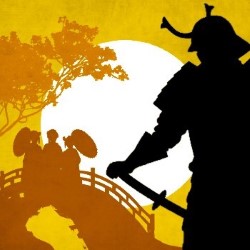
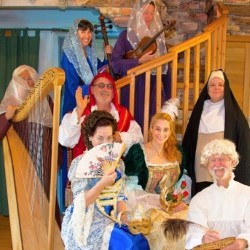
Gilbert and Sullivan’s The Mikado is a work that is in many ways very problematic, due to its fetishising and cultural stereotyping of the Japanese, written at the height of the British Empire. Performing it tastefully without being reduced to mere exaggerated stereotypes is therefore incredibly difficult, and few performances do this particularly successfully, as it is written through such an English lens of Japan, down to the very names Nanki-Poo and Yum Yum. For the most part, Edinburgh-based Gilbert and Sullivan Company ‘Cat-Like Tread’ manage to avoid many of the racial slurs other productions fall into, but it is always difficult to watch something like The Mikado, which presents Japan (or its fantasy parallel) in such a farcical light, performed by an all-white cast and not squirm a little, even if it is largely the text’s fault. Whilst originally written to satirise the failings of the British Government, no modern parallel is created, putting glaring focus on the Japonaise aspect of the work instead.Political-correctness aside, there really is some very good quality singing, especially for an amateur company whose sole purpose is to perform at the Fringe. The cast is very young, and there are some very talented individuals: Pooh-Bah does a smashing job as the pompously power-hungry Lord High Chief Justice Minister Archbishop of Everything Ever; Pitti-Sing is also particularly strong in this performance, with a particular aptitude for acting. Yum-Yum performs beautifully, doing her solos plenty of justice. Ko-Ko and Nanki-Poo sing very well, but are a little more wooden in some of their scenes. Katisha is exquisite in her portrayal of the beautifully shouldered crone, but again could have greater emotional variety in some of her singing; she simply isn’t terrifying enough.Stylistically speaking, the music does Gilbert and Sullivan justice, capturing all the wit and wordplay the work merits. The music surpasses the acting, and some of the early blocking is a little vague and inaccurate. Space is ill-defined throughout, with little done to establish location and space. Furthermore, the round layout of the room means that people sat on the sides of the stage are likely to miss much of the action, as the blocking is very much directed downstage. Some of the scenes contain some fantastic comedic moments, and there are a few very impressive scenes that stood out, such as the Tae Kwon Do Three Little Girls from School are We, or the scene where Katisha first appears, which is beautifully blocked. Some of the diction is occasionally lost through lack of enunciation or due to the acoustical implications of the blocking, but for an amateur production, The Mikado is in very many ways an absolute delight. 

SpaceTriplex • 22 Aug 2016 - 27 Aug 2016

The HandleBards: Richard III

The Handlebards are a unique group, reinventing the concept of the company of travelling players. This summer they cycled the length of the country, carting around their bicycle-themed set and occasionally pitching up for performances before arriving at the Edinburgh Fringe. Their two companies, one male, the other female, each comprise of four fully-trained young actors, and each one puts up two different Shakespeare plays. In Richard III, a tiny cast of four, made up of Liam Mansfield, Matt Maltby, Paul Hilliar and Stanton Plummer-Cambridge, bring to life Shakespeare’s best loved History play, under the direction of Emma Sampson.The acting is terrific, but this is not Shakespeare at its most serious. Clad in knee-length shorts, braces and shirts, with bike bells as rings to mark the rapid makeshift costume changes, Richard III is a fun and action-packed drama, performed in front of what looks like a colourful children’s den. Cheap gags come in their hundreds, and there is never a moment when the audience is not laughing. This is Shakespeare with water pistols, fake hands, and Python-esque coconut shell ‘horses’. There is also a ton of audience participation, with members being lured in when they least expect it. Richard III, just like the other Handlebards productions, is full of energy and action; the most trivial of scenes becomes an opportunity for jokes and gags. The costume changes and swapping of characters on stage are also something to be marvelled at; Matt Maltby, Paul Hilliar and Stanton Plummer-Cambridge go to remarkable lengths not to cut any character out, using ingenious methods to make sure all the characters are represented, including by suspending a hat on a fishing rod to represent a person on stage. It seems that every production is entirely fresh, with plenty of improvised gags from the cast. In this particular show, the cast managed to get a case of the giggles, exacerbated by the audience’s laughter, as they performed in a scorching hot tent. They did their best to restrain it however, and disaster was averted. The characters are all utterly unique, and Liam Mansfield does a magnificent job as the Machiavellian King Richard III, playing evil in its most slimy form. The use of music also added a lot of character to the production. Some of the scenes are utterly ingenious in their staging, especially the dream scene at the end of the play, where the inexplicably (but comically) French Richmond (Stanton Plummer-Cambridge) and Richard are in their beds.Having seen both of the highly talented female company’s performances on the Dell at Stratford-upon-Avon this summer (The Taming of the Shrew and Romeo and Juliet), I was very much looking forward to seeing their male counterparts in action, and I was not disappointed. For fresh, energetic theatre, either as newbies to Shakespeare or aficionados, The Handlebards provide something for everyone, embodying the entire ethos of the Edinburgh Festival Fringe. This is Fringe theatre at its best and most ingenious. 

Assembly George Square Theatre • 22 Aug 2016 - 28 Aug 2016

Shakespeare Tonight

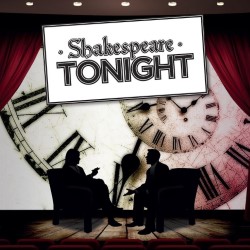
In Shakespeare Tonight, the famous playwright gives his first ever television performance on a talk show with host Martina, only to be confronted by his so-called ‘enemy’, humanist writer Francis Bacon. The idea in itself is a bit gimmicky, and it is so poorly executed that it is just unconvincing.The presenter Martina (Priscilla Fere) definitely looks the part, glammed up in a shimmering red dress with perfectly coiffed blonde hair; yet she fails to play the Diva she is portrayed as physically, seeming just too nice and just too timid to tackle the roll head on. It’s all very tentative. Shakespeare has been comically contemporised, complete with hipster topknot and frilly shirt. He is certainly an eccentric, but he is just altogether too unlikeable and smarmy. The entire spectacle is a little cringe-worthy, leaving one wondering who the target audience is, as the host cross-examines Shakespeare on aspects of his life. The fake rivalry between the smug and inexplicably silly Francis Bacon (Garry Voss) and Shakespeare is rather trite, fuelling the plot with very little drama. The plot is mediocre at best, with very low stakes and a real lack of intensity. The majority of the jokes fall flat due to poor delivery, and to not being that funny in the first place. Lines, meanwhile are clumsily recited, lacking any of the spontaneity that creates authenticity. Shakespeare Tonight was an astoundingly amateur production for a professional company. The play itself is extraordinarily dull and insignificant, with no clear aim – and this is coming from someone who cares about the subject. If the objective was to amuse, it fails to do so; if it is supposed to educate, it does this in a confusing and often inaccurate way, so this too fails. Of the Shakespeare-related shows at the Edinburgh Fringe this year, I would suggest that Shakespeare Tonight ought to be avoided.

Paradise in Augustines • 22 Aug 2016 - 27 Aug 2016

Solo Shakespeare, Macbeth: Hecate's Poison

Hecate’s Poison is a one-woman version of Macbeth, performed by Players Tokyo’s T. Sato. Through use of physicality and clever costume indications, Sato manages to create a mystical and atmospheric take on the Scottish play. Her voice, which is almost hypnotic in quality, manages to captivate the audience.The performanceemphasises themes of dignity and honour, fusing Japanese culture and the clan culture of Scotland together in a seamless and mesmerising manner. Her portrayal of the Weird Sisters and Lady Macbeth are particularly evocative, the former sending chills down the spine, and the latter’s descent into madness is entirely convincing. The portrayal of the entire play by a single individual also helps accentuate the feeling of isolation and solitude that is so pertinent to the play. Use of props, like the chessboard, also contributes to a sense of fate and works very well as an allegory for the play, where every character is little more than a pawn on a board.Certain aspects of the performance are more limited: Sato’s tone, whilst hypnotic in quality, feels slightly monotonous. Many of the characters are portrayed rather similarly, making it hard to differentiate between some of the male characters. A very serious performance, the comic intermission with the ‘devil’s porter’, in the form of a hand puppet, also falls flat: it seems disconnected from the audience, in addition to lacking commitment and believability. Furthermore, the link into the puppet section, which breaks the fourth wall, is not obvious enough. The puppet’s mouth doesn’t coordinate with what it is supposed to be saying, and the jokes fail to cause a reaction. Sato’s enunciation, at times, is a little hard to discern, especially during highly impassioned moments, making it difficult for people who are unfamiliar with the play to follow. More physicality and movement to illustrate what is being said would help too, although this is done incredibly effectively when present. Hecate’s Poison was an interesting and atmospheric performance, a classical, yet new approach to Macbeth. Its mystical element, would, in moderation, be incredibly effective; however, the use of this for the whole duration means that the performance is rather placid and occasionally too introspective. It lacks relief and connection, one of the limitations of a solo performance. 

Quaker Meeting House • 16 Aug 2016 - 20 Aug 2016

Vivaldi, Handel and Bach

Presented by The Bach Ensemble of Edinburgh, the programme for this concert comprised of lesser-known and hugely underappreciated works by the three baroque greats: Antonio Vivaldi’s L’Estro Armonico Nos. 10, 11 and 12, George Friedrich Handel’s Silete Venti, and Johann Sebastian Bach’s Orchestral Suite No. 4.Vivaldi’s three concerti for violin, L’Estro Armonico No.10, 11 and 12, which translates roughly as something between ‘The Harmonic Fancy’ or ‘The Musical Flush’, were performed by a range of soloists: No.10, written for 4 violins, featured Robert Dick, Sheena Jardine, Kate Miguda and Simon Graham, with direction at the harpsichord from John Cameron. No. 11 featured two violin soloists, Simon Graham and Kate Miguda; the single violin solo part in No. 12 was played by Claire Docherty. The concerti highlighted the warmth and precision of the ensemble’s very tasteful and stylish playing, adhering very nicely to the conventions of the period on principally modern instruments. The soloists and ensemble in general did a remarkable job of capturing the flavour and fire of Vivaldi, as well as the passion and liveliness of his volatile writing. Occasionally small subtleties of articulation were lost due to the church’s acoustic, which was a little echoey. A very musical and vivacious rendition of a lesser known and much undervalued pieces, with all the vigour and fire required in Vivaldi.The following piece, written in London by German composer G.F. Handel, was the Latin motet for soprano (Electra Lochhead), Silete Venti. This was an absolute delight of a piece, previously unknown to me, containing all the pomp and grace of Handel. The addition of double reeds added texture and grandiosity to the lively and almost frenzied overture, which ends with an unexpected and powerful soprano entry out of nowhere. Her voice is superb, with a real openness and freedom in her high notes, which soar above all other textures. Her phrasing is incredibly musical, at times she appears to hold back a little too much, and consonants are frequently lost in the difficult acoustic, making the text hard to comprehend on occasion. The Date Certa has a renewed power, with extremely good vocal support, and moments of genuine flair. The last movement, Alleluja, is the most enjoyable and joyful, with obvious enjoyment from Lochhead in this beautiful final movement. A very pleasing and controlled, if rather conservative, interpretation of a gorgeous piece.J.S. Bach’s Orchestral Suite No. 4, comprising a full baroque orchestra with the addition of oboes, trumpets and timpani, was stately and occasionally quite playful. The individual movements, all very different in character, comprised different baroque dances, before cumulating in a wonderfully lively and forward-moving Réjouissance, with increased prominence of timpani and trumpets. The concert exposed the audience to more esoteric repertoire by three of the most famed baroque composers, delivering a very beautiful and stylised performance from all parties. A very enjoyable concert.

Canongate Kirk • 15 Aug 2016

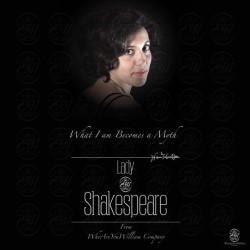
Lady Shakespeare

This one-woman show by playwright Lois Blanco involves Spanish actress Paula Blanco alternately playing William Shakespeare, a range of Shakespeare’s individual female characters and Queen Elizabeth I, exploring issues surrounding womanhood and femininity in Elizabethan England and within the Bard’s plays.The results are often very disturbing, with a complexity that is often extremely hard to follow. Programmes are for purchase only after the show, and without a clear knowledge of the plays, what to expect and an awareness of how it is structured, Lady Shakespeare may be one of the most confusing and frustrating performances you will see at the Edinburgh Fringe this year. Distinction between characters, meanwhile, is often difficult to discern: although the commedia dell’arte masked and villainous Shakespeare is easily identified, as is Queen Elizabeth with her robes and allusions to monarchy, the distinction between the Shakespearean play characters is often less clear. The text, too, proved difficult and incredibly dense, making it a very hard piece to follow and grasp fully. Blanco disorientates and intimidates the audience, confronting them directly so as to make them uneasy, leading to a walk-out in the already small audience. Lady Shakespeare is theatre at its most challenging.Thematically, Lady Shakespeare tackles some interesting aspects of gender identity, but it does so in a manner so convoluted and alienating that it is very hard to sit back and enjoy. Blanco is clearly a very talented actress, dealing with complex material in a way that displays a whole range of emotions and passions, truly getting to the crux of Elizabeth I, as well as Shakespearean characters such as Lady Macbeth and Isabella from Measure for Measure. However, this is not enough to guide the audience through what is going on. Emotionally, aspects of women’s life and suffering are made very clear. The text, however, with its endless allusions to historical events and plays, is simply too inaccessible to enjoy on first viewing. Its attempts to be clever make it impenetrable and unsettling.

Paradise in The Vault • 15 Aug 2016 - 28 Aug 2016

Into the Shadows of Shakespeare – Free

The Tempest, retold by children whose first language isn’t even English. Into the Shadows of Shakespeare is a short performance of Shakespeare’s much-loved final play, with the addition of a frame story about Chloe, a young girl with a crush, and her disapproving mother. She ends up transported into the magical world of Shakespeare’s island, taking the place of the magical Ariel.We are told at the end that these children have never acted before, and they are doing so in their second language. This in its own right is incredibly impressive, with a strong level of English tackling a simplified but still fairly challenging script. The young actress playing Chloe is charming and full of energy, giving a delightful portrayal of the airy spirit Ariel. Prospero, meanwhile, is played in a commanding and authoritarian manner. Caliban is bent over and very monster-like. Ferdinand is possibly one of the most charismatic versions portrayed. The cast, all of whom are very young to be embracing such a challenging play, give the production their all and have clearly put in a lot of work. Diction is occasionally weak, and the blocking ensures they’re often upstaging each other, making passages fairly hard to hear. The use of shadows adds a magical and incredibly inventive quality, very suitable for the play. However, a bit of backstage rustling occasionally interrupts the illusion. Entrances are a little rushed or mistimed so that the tech is a bit out of sync. The music, a mix of Chopin, 1940s big bands, and a significant portion of the Amelie soundtrack and a curious song about coconuts, is consistently too loud, drowning out a lot of the actors on stage. The scene where Chloe appears as a harpy is also spoiled by the excessively loud Requiem music and problems with lighting.Being familiar with at least the synopsis of the play definitely helps, as certain plot points are a little glazed over, making it potentially bit hard to follow. Furthermore, a bit more time could be taken and additional deliberation in blocking and physicality would go a long way. The show has a very lovely quality. The child actors do a fantastic job, and I cannot commend them enough for putting on such a complicated play in not their first, but their second language! The entire performance is very endearing, but could benefit with more technical organisation. For a short free show, this is a real treat.As a cultural project, Into the Shadows of Shakespeare is a very fitting show to put on. In the 400th year of Shakespeare’s death, he is the most performed playwright worldwide, and it is very heart-warming to see children travel thousands of miles to put on his show on his island of origin. 

theSpace on the Mile • 12 Aug 2016 - 14 Aug 2016

Daniela Nardi's Espresso Manifesto

Tucked away in the intimate and comfortable setting of the Scottish Arts Club, Canadian singer Daniela Nardi and her group Espresso Manifesto, comprising Ron Davis (piano), Chris Jennings (double bass), Neil Paton (drums) and Kevin Barrett (guitar/ musical director) treated us to an hour of smooth jazz, originating from the undervalued but rich repertoire of the Italian songbook. The songs were a mix of covers of Paolo Conte and his contemporaries, Caterina Valente, in addition to some of Nardi’s own material.The programme was interspersed with insightful commentary from Nardi. She drew the audience’s attention to different aspects of the songs and the ideas behind them, framing and linking the set in a way that made it even more enjoyable and helping to transcend language barriers. Nardi’s performance was personable, intimate, humorous and passionate. Her voice maintains some of the rustiness of Paolo Conte, whilst somehow managing to maintain a soft, velvety quality, with a softness of tone so characteristic of Canadians, yet with the fieriness and dedication of an Italian, making for a worldly and incredible raw human performance that transcended culture.The intimate atmosphere of the room made this a very special and heartfelt performance, full of life and spontaneity, and yet incredibly laid back at the same time. The band communicated very well throughout, seeming very synchronised. Solos were energetic and vibrant, with some great playing from all of the individuals throughout. The playfulness of the ensemble helped communicate a music that is simultaneously passionate and cheeky, such as in Enzo Ionacci’s Giovanni telegrafista and in the finale, Conte’s Via Con Me. More soulful numbers, such as Nardi’s own song, Hands, made for a very balanced and enjoyable programme that showcased Nardi’s impressive emotional and vocal range, with its numerous colours and subtleties.Every musician seemed to live and breathe the music, and Nardi is a woman who appears to passionately feel what she sings, all whilst bringing the audience with her along the way. Daniela Nardi’s Espresso Manifesto was a very playful, poised, vivacious, sexy and suave performance. A fantastic introduction to Italian jazz, or for existing fans.

Scottish Arts Club • 11 Aug 2016 - 19 Aug 2016

Piaf and Brel: The Impossible Concert

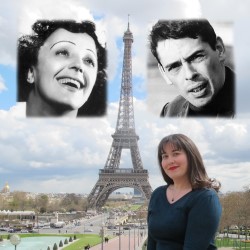
Classically-trained Canadian singer Melanie Gall presents this one hour recital of the music of legendary Francophone singers Edith Piaf and Jacques Brel, with songs presented thematically to capture the different themes of their lives.Gall does a wonderful job rousing her audience with her contagious enthusiasm for her subject matter and her evident passion, both when speaking and singing. She creates a lovely rapport right from the start, endearing herself hugely to her audience, who were mostly middle aged and above. Her personalised anecdotes as to how she became interested in performing the works of these two revered singers was incredibly entertaining, and her storytelling is very captivating and amusing throughout. As a performer, it is clear that Gall knows exactly what she was doing.The songs were performed with real spirit, characterful Amsterdam by Brel, or in her own operatic rendition of La vie en Rose. Her voice is at once passionate and powerful, but a softer, more intimate side is unveiled in Brel’s Ne me quitte pas. Gall would have hugely benefitted from live accompaniment and the microphone was occasionally a bit loud for such a small room, but Gall’s voice is very enjoyable and prolific in its range. Her French pronunciation is fairly strong, although some of her phrasing could be a little bit more coherent, as linguistic emphasis is occasionally lost. Diction is occasionally unclear, especially in the (admittedly, very challenging) Vesoul. In Piaf and Brel: The Impossible Concert, Gall does a fantastic job of capturing the live raw passion of these two legendary singers, showing her own huge personality and flair in the process. She engages her audience well, getting them to sing along to Je Ne Regrette Rien at the end, and creates a wonderful atmosphere throughout. This was a very lively performance from a woman with flair and character. Gall is a born performer, a real star in the making.

theSpace @ Surgeons Hall • 11 Aug 2016 - 27 Aug 2016

Music of Dowland, Purcell and the Stuarts

Countertenor James Laing, theorbo player James Akers and bass violist Susanna Pell’s hour long feast of Dowland was one of the most spectacular concerts I have attended in a while. Set in the intimate and soothing venue of St. Andrew’s and St. George’s West Church on George Street, the programme comprised exclusively of music by Stuart composer and lutenist John Dowland. From the opening falling fourths of the hauntingly stunning Flow my Tears, it was obvious that this was going to be a concert that would glue you to your seats. Laing’s interpretation of this iconic Dowland song was one of the most touching, controlled and heartfelt renditions I’ve ever heard. The second piece, Come Again, further showcases the rich sweetness of Laing’s voice.The majority of the programme comprised songs from Dowland’s The First Booke of Songes and his Second Booke of Songes or Ayres, including Laing and Akers, with Pell adding rich texture on the bass viol in a few pieces at the beginning and end. The programme was balanced out with some solo pieces by Akers on the theorbo, an instrument in the same family as the lute. Dowland’s Preludium and Bataille’s C’est un amant exhibited his own delicate and profound musicality and virtuosity.A contemporary of Shakespeare’s, the programme was very fitting with the 400th anniversary of the writer’s death. Much of what Shakespeare wrote about music, from the famous ‘If music be the food of love’ opening of Twelfth Night to the elegy made to music at the end of The Merchant of Venice, makes complete sense when listening to Laing and Akers performing together. You are invited to bask in the sweet melancholy of the music from song to song, all lamenting unrequited and painful love in a way that is somehow simultaneously melancholic and uplifting. Flow my Tears reappears in its other form, the lute solo Galliard to Lachrimae, which takes the original melody, with its falling teardrop, or ‘lachrimae’ motif, and elaborates on it to show off the instrument’s versatility and range, simultaneously rounding the programme out nicely. After a few final songs, Laing performed an encore of Time Stand Still, which he had recently performed at his sister’s wedding. The entire audience seemed to silently tremor with approval once he had finished, before erupting into thunderous applause. An absolute delight of a concert, with some of the finest talent in period music today. 

St Andrew's and St George's West, George St • 10 Aug 2016 - 11 Aug 2016

The Female Question

Here is a play with an interesting premise: what would Shakespeare’s female characters say if they had the chance to address their playwright? Would they be unhappy with the treatment—dead, mad, married off—that they get through the bard’s work?This is potentially a hard premise to live up to, but by and large Juno Evans and the Z Theatre Company pull it off. There’s some good stuff in here, even if it lacks polish in places. We are confronted with two versions of Shakespeare coinciding on Shakespeare’s birth/deathday, one despondent about the failings of his plays and with an extra four hundred or so years of experience on his younger self, who is still alive, still writing plays, and much more puffed up with importance. It’s not really clear where we are (in some kind of limbo?) or how, but it’s used as a fun gimmick pretty effectively.We hear from Juliette, Lady MacBeth, Katherine, and Ophelia, all of whom have something to say to their creator. Shakespeare feels like he’s failed them, and as we go through the list, that certainly seems to be the case. The most complex case is Katherine, whose appearance in The Taming of the Shrew both opened up the largest platform for female power and intelligence, and most categorically shut it down. Katherine’s fate, it seems, was not only to be an independent woman, but to have that taken away from her, and she is presented here as a wife who suffers domestic abuse. Seeing her and the others discuss both his failings and theirs with Shakespeare is a great piece of wish-fulfilment.To treat the fate of these characters as literal is to change the context in which we evaluate them. Seeing Juliette’s death as symbolic and considering how you would really treat a thirteen year old girl that you knew are two different things. This sort of consideration could have been played with more, but overall this shift in context does throw some interesting things to light even if it glosses over the aesthetics of Shakespeare’s original plays. The play itself at times seems a little unsure of its context—the ladies’ entrances, for example, are initially planned but then become a bit random. Also, the whole reason for these confrontations—the fact that Shakespeare made his characters realistic, and now they are real—could have been built into the play’s fabric more, because it’s an important point that only surfaces halfway through. So with a bit of a restructuring and with more polished transitions, it could be even stronger. Nonetheless it is an interesting piece of speculative theatre that is fresh enough to help us think about women in Shakespeare’s plays in a new light.  

theSpace @ Surgeons Hall • 8 Aug 2016 - 18 Aug 2016

Kieran Hodgson: Maestro

Simultaneously one of the funniest and most heart-warming acts at this year’s Edinburgh Fringe, Kieran Hodgson is not to be missed. In Maestro, he tells of his ten-year effort to write a symphony, starting at the tender and precocious age of 13, after being inspired by his musical hero, the Austrian composer Gustav Mahler. Mahler famously said that “the symphony must contain the world”, and Hodgson’s set is symphonic in its universality, encompassing a full breadth of emotions as he recounts his life story through the lens of his attempt to complete his own composition.A self-proclaimed ‘young, idealistic snob’, the young Hodgson talks of his romantic hopes and dreams being raised and then dashed, with four different loves each inspiring a different movement of the symphony, which he helpfully and hilariously illustrates on his violin. His anecdotes are hilariously relatable and astute, describing the follies of others and of the self in the blundering world of adolescence and young adulthood. Hodgson, who is a fantastic storyteller, fills his show with hilarious one-liners, in addition to fantastic impersonations of the people, living and dead, from his story. He’s confidently self-deprecating, leaving the audience in stitches as he speaks of using Sprechgesang (operatically alternating between song and speech) as a seduction technique, and at his absolute fear of ever being a rule breaker. His endearing Englishness, with all the quaintness and repression that comes along with it, is turned into a comedy weapon that engaged the audience’s pathos. Hodgson transports the crowd along with him, resulting on this night in a well-deserved standing ovation at the end of the show.Maestro is fantastic coming-of-age show that will be relatable for anyone who was a bit of a misfit growing up. Hodgson has just made himself the pioneering figurehead for all of those young classical music geeks. Hodgson is an intelligent, versatile and achingly funny talent to watch out for.

Voodoo Rooms • 6 Aug 2016 - 28 Aug 2016

A Fool’s Paradise: 30 Shakespeare Scenes in 60 Minutes

For a fast-paced, fun show filled with audience interaction, A Fool’s Paradise might be for you. This talented troupe of five women set themselves the terrifying task of performing 30 scenes from Shakespeare in an hour, having the audience shout out numbers and filling in bingo sheets provided, making it a rapidly paced, competitive and fun show to spectate.The idea - which I imagine derives from the Neo-futurists’ Too Much Light Makes the Baby Go Blind, another past Fringe favourite where players attempt to perform 30 plays in the same time constraint - is dynamic and fun, great for people familiar and unfamiliar with Shakespeare’s work alike. Alongside some of the most renowned scenes from Shakespeare, including the Romeo and Juliet balcony scene, Pyramus and Thisbe from A Midsummer Night’s Dream and Hamlet’s ‘To be or not to be’ with a twist, other scenes are thrown in from a variety of plays, with a variety of delivery styles. If you’ve ever fancied watching Pericles being summarised in two minutes, or wondered what Timon of Athens was like performed by sock puppets, then A Fool’s Paradise is for you. Audience shout-outs dictate which scene is performed when, with everyone in competition with each other to complete their Bingo sheet. On the day I attended, the audience was made up of all ages, and everyone laughed a great deal throughout, myself included. Some of the scenes were surprisingly intense and moving with an impressive range of repertoire being exhibited in such a short space of time. The awesome foursome Baltimore-based Logan Davidson, Lisa Hodsoll, Jenna Rossman and Sabrina Thornton do a wonderful job of performing a plethora of roles under quite strict time constraints.The variety of A Fool’s Paradise means that it is impossible to get bored and the ladies clearly enjoy what they do. A fun one for the family, and for something a bit light and very upbeat. 

Venue 13 • 6 Aug 2016 - 12 Aug 2016

Dead Wright

Here is all the chaos of a Fringe-like show turned into a Fringe show: a farce about two plays being performed by one cast while their unreasonable and definitely shady writer/director adds in new scenes and characters willy-nilly. The pandemonium created here is impressive, not least because most of it happens offstage where only distant crashes and our imaginations can conjure up the worst of disasters.Amongst all the confusion the cast do a relatively good job of pacing it all and juggling the various elements of the story, which is actually about a missing Dave, a criminal plan and mysterious briefcase. We meet Lucas who once tried to write his own play, the leading not at all vain lady Sam, the harassed theatre owner Danielle, Lawrence who’s desperate to prove himself, his wife Nikki and of course the tyrannical “creative genius” Al. Then there’s the interlopers, an acting company called LOADs, whose intentions can’t be good. We are privy to the comings and goings of the actors as they try and keep two plays sailing along at once, dropping amusing hints to their storylines. Screaming Stormy Winter involves a king, a queen, a throne covered in superglue and a fiery finale while Cunning Runts involves nuns, a gin fountain and a very poorly rehearsed love scene. There’s also a sousaphone that blares out every now and then to keep us on our toes.What’s really going on here? Ghosts, evil twins, a gang of criminals posing as actors, insurance fraud - it’s all possible. This is energetic, riotous farce that for the most part hits its targets. Occasionally a line misses its moment or the dialogue could have been smoother, and sometimes the confusion created is a bit too effective to keep up with what’s going on. But it’s tied together nicely and for those who appreciate a bit of clever farce this is a commendable show.  

Greenside @ Infirmary Street • 6 Aug 2016 - 24 Aug 2016

Men With Coconuts: Improvised Bond

Edinburgh-based improv group Men with Coconuts present an entirely improvised Bond film, based on suggestions from the audience and using many familiar tropes and improvisation games to create an entertaining new adventure starring the world’s most famous spy and his colleagues at MI6.After introductions, the Men with Coconuts went on to ask the audience for a suggested title. After an audience ‘clap-off’, the winning name was “The Only Way is Up”, which became the theme of the play. This was the only audience input for the entire show, before embarking on a fluid and frequently very funny improvised ‘film’, complete with theme song with the visuals one would expect of a Bond movie. The villains, playing to the now outdated Bond stereotype, were two Russian brothers with a questionable relationship; the Bond girl meanwhile was a Valley girl, reminiscent of the older Bond films before women became empowered and independent thinkers, of the same tradition as Pussy Galore, Bambi and Thumper. These peculiar choices were effectively turned into recurring jokes, in addition to the questionable geography, where it was proclaimed that London was coastal. The level of improvisation was high and the group had a strong rapport; however, the initial choices were limiting and didn’t fully manage to fit into the tropes of Bond as much as could have been hoped. The live jazz accompaniment throughout, whilst effective at times, seemed to encourage a cloying sentimentality that just doesn’t exist in the films. Most unconventional was the final song about the power of friendship between Bond, M, Q and the previously unseen Moneypenny. Final moments of Spectre aside, this is probably the most unlikely thing to occur in a Bond movie. It was just a bit tacky. Improvised Bond did contain some very humorous moments: the improvised gadgets Bond acquires when visiting Q were very entertaining, with some very imaginative and clever ideas, and the two Russian villains were particularly comical together, especially when quoting ‘familiar’ Russian proverbs. The Bond girl choice was a little feeble and ill-fitting with the genre; the over-sentimental M was initially amusing, but also a bit repetitive by the end. As a whole, Men with Coconuts communicated well and produced a funny and inventive show that pleased the crowd and covered many of the much-loved and mocked qualities of the films. The opening dance and song were excellent, and the word games and plot were very fun. More audience input might have been beneficial, as it at times felt a little too formulaic, but overall this was a very entertaining and well-devised show, and one of the best shows I have seen at the Free Fringe this year.The hall was packed, with visibility very difficult at the back due to raised seating, so get there early to guarantee a good view!

La Belle Angèle • 6 Aug 2016 - 28 Aug 2016

Lest We Forget

Lest We Forget is a play centered on the human cost of World War One directly in its aftermath. Well-scripted by writer/director James Beagon, this is a sensitive and thought-provoking play. It focuses on the drama unfolding around the Ashwood family, who have a lot of big questions to ask and to answer for following the events of the war.At the heart of the play is a battle between the Imperial War Graves Commission, represented by a determined Miss Parker (Heather Daniel), and the no-nonsense Edith Ashwood (Sophie Harris), whose eldest son, Harry, died serving abroad. Their discussions are all tea, ginger snaps and ‘quite so my dear’ one moment, and then in the next they’re locked in a fierce clash of ideologies (with the cast bringing out some of the comic elements here). They disagree most fervently over the treatment of the war’s fallen heroes. Some interesting questions are explored here: is it fair to allow certain families with the necessary means to bury their beloved dead, or should all the casualties be buried together as equals in mass graves? With the addition of the remaining members of the Ashwood family—daughter Helen (Grace Gilbert), and younger son Tom (Andrew Weir)— as well with Martin O’Reilly (Rob Younger), an Irish soldier who fought alongside Harry, there are more questions to consider. Does only death allow you recognition for duty? Should deeds like these even be remembered, let alone honoured? Do the dead even need our respect? What makes them so special?Gradually these questions give way to the family’s personal dramas, as it reveals what the war meant to Helen and Tom. There’s also more to learn about the relationship they had with their older brother, and O’Reilly is able to shed more light on Harry’s nature. This portion of the play arguably detracts from some of the questions that the first half raises, because we’re now talking about what’s right for a very specific soldier and his family; but that’s not really a problem, since by now we’ve become invested in the Ashwoods, and their story unfolds in a well-measured and interesting manner. For all involved, the past won’t release its suffocating grip on their futures, no matter how hard they struggle.For the most part we watch these characters interact in the Ashwood’s drawing room, which is decked out with antique furniture; but a particular highlight is when they move away from here and to the surrealism of the sleepless night scene. They each discuss what’s been preventing their sleep, locked in their own isolation, but at the same time there’s an interesting sense that they are all connected, that their night-thoughts run along similar lines. This scene provided a welcome bit of change just as the play was beginning to lag. The actors all do a good job of bringing to life these ordinary people and their personal suffering. The play is a quiet but provoking look at the Great War and its repercussions.

Paradise in Augustines • 6 Aug 2016 - 28 Aug 2016

Shakespeare on Love

Shakespeare on Love offers a heartwarming performance given by a group of Milwaukee high school students: the brainchild of their two English teachers. To call it a play, as the programme chooses to, is perhaps a misnomer: the show is a variety performance that showcases the students’ Shakespearean scene work and musical aptitude, all under the blanket theme of ‘Love’, which is interpreted broadly and occasionally somewhat indirectly.For a high school performance, it was generally an impressive show: students had clearly explored a variety of texts and had adapted them pretty loyally. The scenes themselves derived from Much Ado About Nothing, Romeo and Juliet, The Taming of the Shrew and A Midsummer Night’s Dream, and showcased some real talent: the mechanicals’ play from A Midsummer Night’s Dream was one of the funniest I’ve witnessed in a while, and the energy and commitment to the famous “Kiss Me Kate” scene from The Taming of the Shrew between Kate (Livia Quinn) and Petruchio (Rylan McNally) was astounding and very funny - both would be very well suited to playing the roles in full. It was disappointing that they chose to cut the scene from Henry IV Part One between Hotspur and Lady Percy, one of the most romantic scenes in Shakespeare, however, and the “Rhythmic Interlude” seemed to be more of a way of killing time on tour and in the show than anything else, bearing no mind to the subject matter, amusing though it was. Although a lovely way of showcasing the hard work clearly done at school, with a great deal of emerging talent from the students, Shakespeare on Love falls short in its overall structure. A soundwall with twenty monologues going on simultaneously might be a nice way of saving time and giving everyone an equal opportunity, but the effect is incoherent. The scenes were tenuously linked together with no strong narrative or argument throughout, resulting in dips in time and energy. The musical numbers were a nice way of getting students to engage directly with the songs from the plays, composing their own melodies, but again seemed awkwardly plonked into the whole hotchpotch performance. There were many moments that shone, but the lack of an overall arc to weave the patchwork together meant that there were moments of confusion where energy and focus dipped.A lot of work and effort clearly went into making this show a reality, from the fantastic costumes to the incredibly well-choreographed fight scene between Romeo, Mercutio and Tybalt in the scene from Romeo and Juliet. Amongst the cast were many who showed incredible potential and who will hopefully carry on acting. The students are clearly fortunate to have such an attentive English department, who are introducing them to the author’s work in the best way possible. The performance has merit, and those wanting a bit of light relief in a busy Fringe schedule should definitely consider Shakespeare on Love as a nice introduction to some of the Bard’s best plays. 

SpaceTriplex • 6 Aug 2016 - 10 Aug 2016

The Shakespeare Club

In the programme, The Shakespeare Club promises to be a somewhat cheesy, yet harmless play about finding oneself through Shakespeare’s characters. Instead, it’s a poorly-cooked mess of ideas.The hour-long show – which two people wisely used as an opportunity to doze off – includes an underwhelming performance of the whole first act of The Tempest, with Ariel (Vianna Mabanag) as the only character who’s even mildly credible. This is followed by a dry factfile about Shakespeare which any audience could look up on Wikipedia. Next comes a poorly articulated rap battle of Shakespearean insults, concluded with what was effectively a transcription of the ending of The Breakfast Club. The jokes fall flat and it’s painfully obvious that the actors are merely regurgitating their lines instead of truly connecting with their fellow actors in the moment. This resulted in a real lack of integrity in their performances and a sense of having rote-learnt their lines just before the show. Ferdinand especially stumbled on his lines. Why they reattributed the lyrics of Full Fathom Five to him instead of Ariel, nonsensical decision that it was, will forever be a mystery. The Shakespeare Club has far too much air in between words, resulting in a painful awareness of metre that should be seamless and of the incredibly slow passage of time. The company seem too self-absorbed to withstand a hardy Fringe audience. They make far too many appeals to pathos, aiming to win their audience’s sympathy with a generic appreciation of theatre, one which “allows them to be themselves”. The effect is rather cloying and disproves the programme’s claim that we automatically “love hearing everyone else’s story.” Clearly, making it to the Edinburgh Fringe is a big deal for the group, but it would have been more interesting if they had come up with something more original and coherent, rather than simply playing off the fact that they were attending, and using the clichéd concept of spending their whole show pretending they were deciding what they were going to perform for their Fringe show. The show was very underwhelming, and so an idea with plenty of potential was subsequently wasted. 

theSpace @ Venue45 • 5 Aug 2016 - 10 Aug 2016

Ladies in Waiting: The Judgement of Henry VIII

Ladies in Waiting, written by and starring James Cougar Canfield as the lascivious and misogynistic King Henry VIII, is a steamy, feminist critique of the most notorious of England’s kings. This hellish drama reappraises King Henry VIII by evaluating him from the points of view of his wives after he has died, and it’s not that flattering.Set in Purgatory after the death of the fat, gout-riddled old king, Henry VIII finds himself young again. He’s made to face his judgement, conducted by his six wives. No longer are the wives reduced to the simple ‘divorced, beheaded, died, divorced, beheaded, survived’; Instead, each wife is given her own voice, to make Henry reflect upon the wrongs done to them by a man so filled with hubris and double standards that he refuses to take responsibility for any of his actions. The voices of the wives put together as testimony against the king so strong, that it is impossible to exit without seeing them as the victims of a misogynistic sot. The play is very intense, helping recreate the cut-throat nature of the court under Henry’s reign. Each of the six wives is given a voice so strong and so unique, with six phenomenal actresses bringing them and their stories to life. The rapport between them and Henry is incredibly different for each character. The play grows in intensity, culminating in the climactic showdowns with Anne Boleyn, by far the most manipulative wife, and his first wife, Catherine of Aragon. We are made to feel their indignation and suffering in a way that no other play or film about the Tudors has so far managed, insofar as each character is given equal voice, and engages the audience’s pathos. The quality of the acting and the electric connection between king and wives in each scene enhances this, creating a gripping and intense drama that goes from strength to strength as the judgement proceeds to a conclusion.For an evening of Tudor intrigue with all the intensity and sexiness of a show like The Tudors, and for a vivid retelling of history, Ladies in Waiting is an excellent show, depicting events of history from the long silent female point of view. Get there early though, because visibility beyond the front row is limited. 

theSpace on the Mile • 5 Aug 2016 - 27 Aug 2016

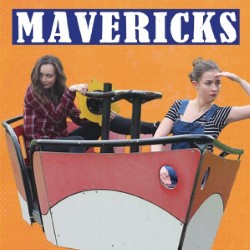
Mavericks: A Sketch Show (Of Sorts)

Mavericks: A Sketch Show (of Sorts) is the product of talented comedy duo and Cambridge Footlights members Ruby Keane and Luisa Callander. In their show, which consists of their rather unique brand of absurdist comedy, they perform a mixed bag of sketches, interspersed with their own peculiar banter, to varying degrees of success.The show possesses something of a minimalist quality, starting off very slowly with comically low energy and rather a lot of largely pointless, but occasionally amusing chatter between the two of them. Once they embarked on sketches however, they began to redeem themselves and create more and more energy in the room, with imaginative and often very comical and promising material. The absurdist, low energy comedy occasionally was incredibly funny, with the slow, deliberate delivery showing some very good comedic timing, such as in their excellent ‘GCSE English language’ sketch, which was one of the show’s highlights. At times however, this delivery fell flat, partly due to overuse.Their awareness of their own typecast positions, and the deliberate attempt to reverse this in their two old men sketch also proved successful and very funny. The show possessed some moments of comedic genius, but sadly this was not consistent throughout, with a lot of filler time in between. It was incredibly encouraging to see a female comedy duo, as there seems to be a bit of a gap in the market for such a double act; if they worked on a greater consistency in quality, Keane and Callander could potentially be very successful in the sadly rarified field of female comic duos. They clearly have an excellent rapport and work very well together, complimenting each other’s styles very nicely, without an inkling of the Simon and Garfunkel predicament of one overshadowing the other hanger on. With their own unique and often hilarious brand of slow, absurd comedy, these two could go far.

theSpace @ Jury's Inn • 5 Aug 2016 - 27 Aug 2016

Bad Shakespeare

Something of a misnomer, Bad Shakespeare does not reflect the quality of the acting or of the performance. Instead, it explores and illustrates different aspects of the playwright’s villains from a number of plays and a variety of angles, showcasing the critical and performative talent of the group from the BFA Acting company at Oklahoma City University, under the direction of D. Lance Marsh.Smartly accoutered in fantastically villainous period outfits, the group present an hour-long show that illustrates, through the medium of a lecture or verbal-essay with a twist, some of the greatest villains ever invented, delving into the complexities of these characters. The show is laid out in five parts, or ‘acts’, each of which examining a particular aspect before drawing to an unsettling conclusion. The concept is unique and rather inventive, educational in nature, and very entertainingly illustrated with a real clarity and sense of purpose throughout. For people with an existing knowledge of Shakespeare and with an interest in the academic study of the Bard, this show might be of interest. There are well-known villains, including Lady Macbeth and Iago, in addition to less household names, including Aaron the Moor and Tamora (Kally Duncan) from the gut-wrenching bloodbath of a play, Titus Andronicus, and the self-righteous Angelo (Franciscan Harms, Haileigh Tomlinson and Gage Rancich) from Measure for Measure. Some of the monologues presented were particularly blood chilling, with an intensity and commitment admirable in such young actors. Particularly outstanding performances came from Keziah Williamson, who had a remarkable stage presence as Macbeth and Tyra Bullock as Aaron, whose speech had the audience holding their breath at the calm yet intense and gripping delivery. Some of the speeches could have gone slightly further in enhancing the believability of the scenario, perhaps by using a little more physicality, but the majority of the performances were very strong and engaging, with clear character development and thought. Furthermore, the performers pointed out particular aspects to watch out for, and linked the sections in a mellifluous and entertaining way, maintaining audience attention throughout and providing some variety and light-relief to the subject matter.Bad Shakespeare is a fantastic way of whetting the critical faculties and engaging with the darker aspect of the world’s most performed playwright, with the help of an extremely talented group of students who handle the material very proficiently in a fresh and chillingly captivating manner.

Greenside @ Infirmary Street • 5 Aug 2016 - 10 Aug 2016

Nicholas Parsons' Happy Hour

It was immediately evident upon walking into the jam-packed Cabaret Bar that I was significantly changing the demographic awaiting the arrival of radio and television legend and national treasure, Nicholas Parsons. With the exception of five year old Maria in the front row, happily occupied with consuming the smarties Parsons gave her, my 21 year old self was the youngest person by at least a decade, with the average audience member having reached the happy age of retirement.Nicholas Parsons, slightly wobbly on his legs but his wit as firm as ever, entered to uproarious applause: the audience clearly comprised of people who, like me, had been listening to his Radio 4 comedy show Just A Minute (which he first piloted 50 years ago, and has never missed a show of since) for years. The Happy Hour, now in its 16th sell-out year, is a nice and civilised way of spending an evening, listening to Parsons talk about his own experience and deliver charming jokes, interspersed with interviews with other comics, who were given the opportunity to plug their own shows. The line up changes every evening, but tonight featured improvisers Suki Webster and Richard Vranch, musical comedian Adam Kay, and stand-up comedian Patrick Monahan. Suki and Richard chatted about their shows at the Edinburgh Fringe, and about the improv shows they do weekly at London’s Comedy Store. Adam Kay, a former doctor turned musical comedian, played some of his own medical material, staying safely clear from his iconic London Underground song, due to the fact that the audience ‘was not his usual demographic’ (he’s a bit sweary), and performed some adaptations of Tom Lehrer’s songs instead, including one about nuclear oblivion, which took the audience and Parsons aback. Kay was funny in his own right, coming up with some funny one-liners and quips, exhibiting his own dry sense of humour, but there did appear to be a slight generational clash for your average retired Radio 4 listener. Finally, comic Patrick Monahan was invited to talk about his own experiences growing up half Irish, half Iranian, making some very quick and funny remarks that both Parsons and the audience enjoyed immensely. After plugging his own show, he left to large applause. Nicholas Parsons then ended the show with some very funny jokes and anecdotes, before playing his very own pop record as the audience crowded around for autographs. The Happy Hour did what it said on the tin: it provided an hour’s light and humourous entertainment in Parsons’ unique and gentle style, leaving the entire audience feeling entertained and that little bit happier than when they came in. 

Pleasance Courtyard • 5 Aug 2016 - 14 Aug 2016

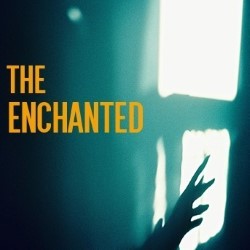
The Enchanted

The Enchanted is a show all about disconnection, both in its subject matter and the way that it’s performed. It is also a hard-hitting and a compassionate look at prisoners on Death Row, based on a novel by Rene Denfeld.The set is dark and bare apart from the columns of bird cages the actors move between. The movement of the actors evokes both the jerks and twitches of marionettes and the fluidity of dancers. There are a couple of real marionettes brought out during flashback scenes while children’s voices chatter on the sound system: the overwhelming effect is that of dreamlike dread.This is all carefully orchestrated for the story being told. Arden, our narrator, has committed crimes that are unspeakable even for his inmates, the worst of criminals. Nonetheless, he is someone who sees enchantment in the walls of the underground prison, and hope in the snatches of sky seen from the only window. He weaves us a tale about his fellow prisoner York, and The Lady, an investigator determined to understand and help him. We see her delving into the horrors of York’s past and some of the characters along that path, the jerking dances of the cast punctuating the narration and dialogue. Even when interacting, the actors never fully face each other. Since the audience is on three sides of the stage, this is pragmatic, but it also adds to the uneasy disconnectedness. Words and actions skate over each other. At times, this technique highlights the unspoken things in our interactions, such as a doctor’s aggressive reaction to the investigator becoming expressed physically even as the conversation remains at the level of the polite, everyday discourse.This spellbinding story will refuse to let you go. It is a play with a message to tell about the treatment of human beings and the possibilities of redemption, and it delivers this with skill.

theSpace on Niddry St • 5 Aug 2016 - 27 Aug 2016

The Hours Before We Wake

The Hours Before We Wake presents us with a world where you can customise your dreams and upload them to DreamShare when you wake up. Personal interaction is limited to “Have you seen my dream from last night?” and “Classic!”, while robotic voices, pleasant dings and pings and whooshy-door sounds accompany your days. The elevator music’s still the same though.This show enjoys displaying all of our familiar social media habits back at us in witty ways. Holding it together is the story of hapless Ian, who works at Cognetix. Ian dreams of being a hero and saving Janice, the love of his life but who doesn’t seem that interested in him. He’s got a soft spot for old movies and absolutely no aptitude for heroics. Excellent use of the sound and lights helps to firmly place us in this futuristic world where people walk around with screens embedded in their arms, and the acting too is very smooth.While the storytelling is generally interesting, it sometimes slips a little, sacrificing plausibility for where the story needs to go. Ian meets Bea, who lives on the edge of society and doesn’t take the sleeping pills. She convinces him to help her break into the omnipresent Cognetix. At first she manipulates him through his desire to be a hero and save Janice, but both this and their subsequent friendship both feel a bit off-key at times. Other moments put convenience or comedy above consistency, which sometimes works — such as the part where everyone seems to know how to karate chop people’s necks to knock them out, apart from Ian — and sometimes feels more forced, like the homemade biscuits gag. (This play has an obsession with baking as well as with social media; mostly very amusing).It all ties together nicely towards the end though, with the witty humour keeping us chuckling throughout. The ending is somewhat ambiguous, which is deliberate but means that the finish is slightly less strong than the earlier parts. Overall this is a vivid, funny and thoughtful piece of theatre that has some interesting questions to pose. 

Underbelly, Cowgate • 5 Aug 2016 - 28 Aug 2016

Alice Unhinged

This is an accomplished show from Young Pleasance, which re-imagines Lewis Carroll’s Alice in Wonderland with just the right blend of Carroll-esque surrealism and a new, fresh vision. This production is a beautiful homage to Carroll’s original work. By combining it with their own smooth dialogue and a modern perspective, whilst retaining Carroll’s most beloved characters – the daring Alice, the mysterious Cheshire Cat, the ruthless Queen and a very laddish Knave of Hearts – Young Pleasance manage to have their cake and eat it too.Much of this is thanks to the cast, all young actors ready to make their mark at the Fringe. They are all extremely professional, with the main roles, especially Phoebe Stapleton as Alice, delivering very strong performances. Credit must also go to the production crew for the music, lights, set and costumes, as well as the excellent scriptwriting. The Wonderland setting is an excuse for extravagance and phantasmagoria, atmospheric music, and feathered top hats in this distinctly steampunk production. Though it lacks the finesse of a more adult company, everything is tightly choreographed, while onstage action is thoughtfully structured and synchronised.Lovers of the original books and newcomers alike will enjoy the fantastical display, either recognising familiar scenes or experiencing the bafflement of Wonderland firsthand. Particular highlights of this reimagining are the love story between the white rabbits (“I’m late – for a very important date!”) and the displays of dream logic such as the ‘oubliette’ as the literal place where people are forgotten, or lines like “Straight answers can’t help you here Alice, they always get stuck in the corners”. The piece as a whole presents a strong storyline while retaining all of their source material’s whimsy, and this leads to a very successful conclusion (which I won’t give away). These young people are ones to watch.

Pleasance Courtyard • 5 Aug 2016 - 20 Aug 2016

My Ain Countrie: 17th-19th Century Songs of Scottish and Northern Emigration

This informal hour long recital, starring singer Elspeth McVeigh and fiddle player Gabi Maas, features a variety of folk songs, or ‘Broadside Ballads’, from 17th to 19th century musical traditions originating in Scotland, Ireland and Scandinavia. The entire programme deals with the common theme of travel and the inevitable farewells that accompany it along the way. Some of these songs are popular even today; others are more esoteric.The entire event is very informal and relaxed, ill-befitting of its darkened and artificial theatrical venue. The opening song, “An Honest Man”, begins when the audience has scarcely sat down, and McVeigh seems a little strained in her higher vocal register. After a general introduction to the programme and the thematic similarities, and a historical note on the Broadside Ballads, the two embark on a very moving and unique rendition of the much-loved favourite folk tunes, “The Oak and the Ash”. This is followed by a series of songs about spurned maidens, including “If I were a blackbird” and James Joyce’s personal favourite, “The Lass of Ochrin”. Maas plays a couple of unaccompanied pieces, including a lively Finnish polka, followed by a couple of songs based on poems by national poet, Robert Burns. The recital then draws to a close with the titular song, “My Ain Countrie”, a gorgeously sentimental Scottish song dating back to the 18th century.Eslpeth has an entrancing folk voice, which has a quality of real purity and integrity to the genre, although it occasionally lacks freedom and openness in its uppermost register. Her singing has a storytelling quality to it, which takes the listener on a metaphorical journey. Gabi Maas’ fiddle is truly excellent, exhibiting real versatility and musicality when accompanying and playing solo items - which apparently change daily. Maas really shows the best of what the folk violin has to offer. My Ain Countrie is a charming concert that introduces some of the loveliest folk music from the area in a comprehensive and extremely musical way. A very enjoyable evening.

theSpace @ Surgeons Hall • 5 Aug 2016 - 20 Aug 2016

Shakespeare Syndrome

In Shakespeare Syndrome, brought to Edinburgh by the talented Mermaidsgroup from the University of St. Andrews, some of Shakespeare’s most beloved and complex characters find themselves in psychiatrist Dr. Bard’s office, with hilarious results. This innovative show highlights and brings to comic light some of the greatest absurdities of Shakespeare’s work, from homicidal maniac Richard III, complete with Lancashire accent and hobby horse, to the murderous Macbeths, and from the angsty adolescent Hamlet to the psychedelic-infused Puck, with various others in between. Shakespeare puns and gags run riot in this edgy new update on some of the most interesting characters, and the concept itself is fitting as well as innovative: Freud, after all, based numerous case-studies on examples extracted from the playwright.A functional knowledge of at least the outlines of the plays is useful to gain full enjoyment, but even to someone less well-versed, who struggles to distinguish their Hamlet from their hamstring, Shakespeare Syndrome is still relatively enjoyable. The actors are young, innovative and talented, committing to their roles and gaining laughs consistently throughout from the relaxed and grinning audience. Overflowing with delightful puns, witty one-liners and visual slapstick moments, Shakespeare Syndrome is cleverly written and charismatically performed by a strong ensemble. Though light-hearted and enjoyable, the plot is not wildly compelling and the show relies on the moment to moment jokes instead of a grippingly tight narrative to maintain the audience’s attention. Energy seemed to wane somewhat halfway through, before picking up again at the excellent entry of Nick Bottom (Oli Savage), the vainglorious ‘act-or’. Furthermore, although beautifully portrayed and well acted, it is unclear why Olivia from Twelfth Night has wound up as Shakespeare’s receptionist. The ending is a little weak but is redeemed from the moving and powerful epilogue from Puck, based on the gorgeous final monologue of A Midsummer Night’s Dream, highlighting the group’s desire to raise funds for a worthy cause in honour of a lost friend.The group could have benefitted from a slightly bigger and quieter space within Greenside, as visibility can be somewhat limited from the back of the room, but enjoyable despite spacial restrictions. Shakespeare Syndrome is a fun and upbeat show that would especially appeal to people fond of Shakespeare’s work, and light-hearted but well-performed by young, upcoming talent. 

Greenside @ Infirmary Street • 5 Aug 2016 - 20 Aug 2016

Shakespeare Shorts – Hamlet

Shakespeare Shorts: Hamlet - Shakespeare’s Hamlet condensed into an hour by kids, for kids. Performed by eleven kids from Shakespeare at Traquair, this was a very entertaining piece with the script reduced and simplified to make it more accessible to youngsters. Rosencrantz and Guildenstern, Hamlet’s two best friends, stole the show. Dressed in Laurel and Hardy apparel that was also reminiscent of Beckett’s Gogo and Didi from Waiting for Godot, the double act created a great rapport with the audience, testing them on their mental ‘arithmictic’ and doubling up as the comedic gravediggers. Deviations from the plot and their heightened role were also acknowledged, with references to Stoppard’s play, Guildenstern and Rosencrantz Are Dead. The two female characters, Ophelia and Gertrude, were trivialised a bit too much. Ophelia seemed oblivious to Hamlet, reading Harry Potter in the famous ‘To be or not to be’ speech, and it is therefore not obvious why she commits suicide as all tragic aspects of the character are removed. Gertrude, meanwhile, goes through the entire play inexplicably plastered, making her utterly oblivious to anything going on. This, too, greatly oversimplifies her character and neither of the women are portrayed particularly favourably. Furthermore, the musical choices, comedic as they are, further reduce the tragedy. The adaptation itself is weak, lacking any real vision and was too jovial to represent the tragedy. The cast, however, worked incredibly well with the material with some well-delivered jokes in the script - laughter could be heard from the audience throughout. The very talented young actress who plays Hamlet in particular manages to tackle some of the complexities of the role and does it justice. The entire cast is full of enthusiasm, with some very talented young people involved.Shakespeare Shorts:Hamlet was a nice effort; jovial and often entertaining but lacked any real profundity which the capable cast could have tackled. However, as a fun show to take the kids to, it is a pretty safe bet.

theSpace on Niddry St • 5 Aug 2016 - 12 Aug 2016

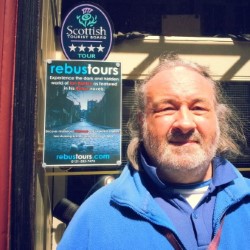
Rebustours: Hidden Edinburgh

You’d be forgiven for thinking this was a generic literary tour, because of the way it had been marketed in the Fringe programme. Instead, it turned out to be a two-hour tour of crime writer Ian Rankin’s Edinburgh, following in the footsteps of the eponymous character from the bestselling Rebus novels, presented by the jovial and amiable Colin Brown.Colin, with his encyclopaedic knowledge of both Rankin’s works and Edinburgh’s literary history in general, does an excellent job catering for both die-hard Rebus fans, and those like myself who haven’t had much exposure to the books, with a more general interest in Edinburgh’s authors. The tour is simultaneously fun and intellectual, but also accessible to the wide-ranging audience. Those with a non-advanced knowledge of English may struggle a little with the fast-paced idiomatic language, but Colin did do a good job grading his speech to the non-native speakers in the group, although they still seemed a little out of the loop. Rebustours differ in that they take you off the beaten track, a promise many tours make but fail to deliver. I personally have been based in Edinburgh for a number of years, and yet found myself walking down streets I didn’t even know existed, being exposed to history I was unaware of. No matter what your background is, you will definitely learn something from this tour.Rankin fans will definitely feel the thrill that occurs when you visit a place you have read about and imagined in detail; non-readers (like myself, as I kept being cheekily reminded of by Colin, to the amusement of the rest of the group) will almost certainly not be able to help themselves from picking up one of the novels from a local bookstore as soon as the tour ends, their palate for crime novels whetted. Rebustours is a little out of the way, presenting unvisited areas in an imaginative and amusing way to a diverse audience in terms of age and backgrounds. Colin, who is a truly wonderful storyteller, really grades his tours so that they cater to the individuals in the group, creating a personal and amicable touch that is so often neglected on walking tours. Appropriate for all literary and crime fiction fans, not just devotees of Ian Rankin, Rebustours was a very pleasant, unexpected surprise and a lovely way of spending a couple of hours around the city. 

The Royal Oak • 5 Aug 2016 - 27 Aug 2016

What Kind of Fool Am I?

Helen Wood’s one-woman show is a journey of self-discovery complete with a bit of psychology, personality quizzes and a sense of fun. Helen’s goofy but charming show gets quite a few chuckles as she leads us through her life with the help of several props and the occasional well-chosen soundtrack. From a stuffed Labrador to scrabble-board stamp art, and of course a very important door, this is good-natured foolery with a point: what kind of a fool is Helen, and how can she find out?Whether Helen is telling us about how she cheated on eye tests in primary school or having a recurring nightmare about being interviewed for the role of herself, her delight in a bit of wordplay or a funny prop makes this show a zany take on the quest for personality. Helen is also a sucker for a good quote, even if problematic, which leads to her asking things like: “If those that can, do, and those that can’t, teach, then what do those that can’t teach do?”.There’s even a chance to learn a bit more about ourselves, with the personality test free at the door, which is a nice touch. Light-hearted and engaging, this personal comedy may leave you thinking. 

theSpace @ Surgeons Hall • 5 Aug 2016 - 13 Aug 2016

Book Lovers' Tour

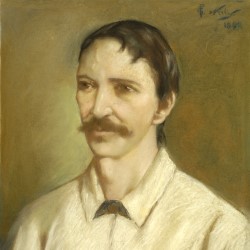
Allan Foster, a writer whose name is practically synonymous with Edinburgh literary tourism, is our guide on the Book Lovers’ Tour, which specialises in introducing tourists to the literary haunts of some of Scotland’s most renowned writers. The tour focuses on the likes of Sir Walter Scott (Waverley novels), R.L. Stevenson (Treasure Island, The Case of Dr. Jekyll and Mr. Hyde), Sir Arthur Conan Doyle (Sherlock Holmes books), J.M. Barrie (Peter Pan), Alexander McCall Smith (No. 1 Ladies’ Detective Agency), crime writer Ian Rankin and of course, Harry Potter author J.K. Rowling. Although Robert Burns is cited on the advertisements, no reference is made to him throughout; Foster runs a separate tour for Burns fans.Foster is very informed in his subject matter, and is able to answer any question thrown at him. His storytelling was very vivid and engaging, and he managed to personalise these well, which made it incredibly enjoyable for his audience; this creates an intimate experience which included every member of the group. His selection of stories were varied, and well-geared towards the group. He is able to provide enough background detail so that those with little or no knowledge of the authors would enjoy the tour just as much as someone who has studied them and read them many times over. He seems well-connected in the literary world, and makes it feel like a real privilege to see Edinburgh through his knowledgeable eyes. Occasionally, the tour seemed a little rushed: the less mobile of the group did struggle to keep up, and it sometimes felt that he was hurrying slightly, or that he was growing impatient. Certain aspects of the actual route could have been improved: at the beginning especially, the long hilly detour down to the Cowgate seemed unnecessary, as the stories were fairly insubstantial and an alternative route may have allowed for fewer hills and more material, without excessively long sections of just walking in between. He did a good job of keeping the group off the Royal Mile, always a good idea during the Fringe. Occasionally, his volume dropped a little, making it hard for him to be heard, as he didn’t always bunch the group in closely as tour guides are often recommended to do.Not a single person will have left the tour without learning something; even as a former Edinburgh guide and final year English literature student at the University, I found myself learning facts about Edinburgh’s wealth of literary history that I would never before have fathomed. Foster’s tour is engaging, extremely well-informed and makes for a very entertaining couple of hours in Edinburgh for visitors and lifelong residents alike. 

Book Lovers' Tour Departure • 5 Aug 2016 - 28 Aug 2016

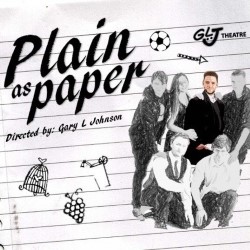
Plain as Paper

Plain as Paper is an energetic physical theatre show centred around where our imaginations can take us using only paper—though what is going on there and why is not always plain.Trying to tell many stories through their actions and paper props, we are left with no consistent stories or characters to follow. The young cast act out various scenes set—as a handy sign points out—from Germany to China, New York, and London, with music and lights providing the timing and mood. There’s no talking, just nonsense words reminiscent of the Minions from Despicable Me. Schoolboys with paper aeroplanes morph into WW1 soldiers, dancehalls turn into Chinese processions, and New York workers walk around with eyes fixed on their paper, and while these transfigurations may be interesting in themselves all this character- and scene-shifting leaves you somewhat at sea.While some parts are undeniably amusing—as when they break out into bobbleheaded typewriter characters from New York—others are very hard to follow, and the piece as a whole lacks a proper narrative. The possibilities of the imagination may have been used to create the show, but for those watching it’s more like trying to understand someone else’s dream or a particularly insistent three year old—wacky, but not that intelligible or important to you. We’re not able to get a handle on any of the characters since they are constantly changing, so even when they’re acting out tragedy, love, or other scenes that are supposed to evoke our compassion, it’s hard to summon up the right emotion.This is an amateur performance that has some potential, but won’t blow anyone away. Instead, we are left wondering how much paper must be used in this production every day. 

Greenside @ Nicolson Square • 5 Aug 2016 - 20 Aug 2016

Vivaldi for Breakfast!

Vivaldi for Breakfast is an interesting attempt to dramatise the enigmatic life of notorious Baroque composer, Antonio Vivaldi, as he worked in the famous Pietà orphanage for young girls in Venice. The subject matter, as someone interested in classical music, proved promising. The reality of the performance, however, was somewhat disappointing.The performance was incredibly amateur, from the writing, which had a tendency to endlessly recycle lecherous, puerile and facile jokes that were not particularly funny the first time round, to the acting, which lacked commitment and any real profundity of understanding of the characters and their plights, resulting in a lack of emotional range. The playing too, although very pleasant, lacked the passion that so characterises the composer’s work, and therefore failed to do justice to the fascinating life and power of the protagonist. Although conceptually interesting, Vivaldi for Breakfast failed to deliver a performance tailored to any particular type of audience. For someone coming to appreciate the music, the playing and singing was underwhelming, with numerous moments that lacked support, phrasing or shape, in addition to questionable tuning at times, in addition to more technical slips, such as in incredibly famous Winter. Largo section of the Four Seasons. Nor is it aimed at people for an introduction to classical music and Vivaldi’s work, with one audience member calling it ‘uncompelling’. The blatant sexual references throughout also made it inappropriate for children, although the nature of the jokes were too childish to extract much laughter from the audience. Most of the gags were met with stony silence, with the greatest chuckle being at the arrival of a delivery man wearing a baseball cap, breaking the convention of period dress.Vivaldi for Breakfast is the product of amateur fumblings into the history of music, with nothing lucrative being gained from this exploration, and it commits the horrific crime of passing up the golden opportunity to engage new audiences in classical music, due to its tendency to drag on. Furthermore, the themes, which were of a sexual and church-bashing nature, seemed inappropriately serious and distasteful for a ten o’clock show. The epilogue that tied together this musical patchwork was also a disappointing end to an already ill-paced show, trying to pass off forty five minutes of the historical inaccuracies of the plot as fact, with no artistic merit in this pursuit. More passion, commitment and vigour to wake up the already drowsy audience would not have gone amiss. 

Sweet Grassmarket • 5 Aug 2016 - 12 Aug 2016

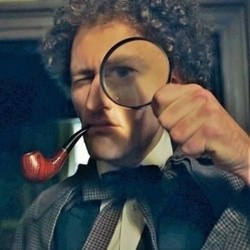
Sherlock Holmes' Smarter Brother in the Case of a Study in Blood

Sherlock Holmes, true to its original with all the same characters and tropes that keep fans hooked, but with a twist. The famous detective becomes a Godot figure, never actually emerging on stage despite being central to the action. Sherlock Holmes’ Smarter Brother, meanwhile, does not in fact refer to Mycroft, as the title would suggest: instead, it refers to Tyson Jackson (Matt Boatright-Simon), his black, LA ‘detective consultant’ half-brother, a womaniser and wise-cracking wit. Jackson is brought to London, armed only with “a toothbrush, 100 condoms and a Lonely Planet guide,” to solve the case of the disappearance of Sherlock and the death of their father, Professor Holmes. Initially clashing with the stiff upper-lipped male Brits (less so with the women), Jackson uses the same sorts of methods as Sherlock to solve the mystery.Opening in media res in front of the corpse of a murdered father, Tyson ‘Mothafucking’ Jackson has the audience hooked, possessing the same genius that attracts people to Sherlock Holmes, but with an added streetwise, larger-than-life dimension. Jokes leave the audience in stitches and laugh at just about every line emerging from Boatright-Simon’s mouth. Fans of Holmes will also notice consistencies with the books, making the addition of this long-lost half-brother very plausible. Casual misogyny pervades throughout, worthy of both Sherlock Holmes and James Bond combined. The play is very funny, although maybe too many sex jokes and jibes about how much Jackson stirs up the status quo, at the expense of plot. The acting was in general superb, although the romantic subplot between Jackson and Agnes Jane Pumplechook (Francesca Manzi) lacked conviction. The clash between the emotionally stagnant and repressed British and the lively and often un-PC Jackson is marvellously entertaining. As an hour of light entertainment, Sherlock Holmes’ Smarter Brother is a real laugh for late night viewing. 

Spotlites • 4 Aug 2016 - 20 Aug 2016

Nathan Cassidy: 42

Nathan Cassidy offers comedy fare that fits right in at the Fringe, a mixture of social observation, wordplay, ranting and anecdotal amusement. Depending on how you react to explicit language and David-Cameron-and-a-pig jokes at 7.45pm, feel free to add or subtract from the star rating.What distinguishes Nathan’s show and redeems some of the rockier moments is the framework that he works with for it, which is concerned with—what else—the meaning of life (the universe, and everything). Within the material there’s scope for improvisation and some amusing segues as he tries to link the ten out of forty-two randomly chosen topics for the night into a coherent show. It also allows Nathan to indulge in some thoughtful moments on his quest to find the meaning of life (as well as the openly flippant or more abrasive, such as when we hear how doing stand-up comedy won’t make him happy. To give him credit, he does self-consciously point out that we may not want to hear that, but more charm is needed to change our opinion at times). It also allows a somewhat unconventional finale, where—if you can follow Nathan out of the crowded venue and along the street, which in our case was being deluged by the classic Edinburgh downpours—the meaning of life itself will be revealed to you.This is improvised comedy, and as such it can have its ups and downs—my biggest criticism is that Nathan sticks to his material even when it’s not going down that well, when in-jokes or references aren’t being picked up on. On the other hand, quite a few jokes that began along the format of angry-ranting-man (not my favourite type of comedy) were redeemed by a bit of clever misdirection and trickery, which if Nathan could consistently pull off would definitely improve the show. There is good comedy here, though, and it promises to be different every night. As Nathan says, “Imagine all the infinite different shows there could be...”. 

Laughing Horse @ The Free Sisters • 4 Aug 2016 - 28 Aug 2016

Vladimir McTavish: Scotland In Sixty Minutes

Scottish comedian and Fringe veteran McTavish has celebrated his 60th birthday this year, and has therefore adopted a more ponderous and docile approach in his set, instead of dedicating it exclusively to politics as he has done in previous years. Instead, he talks about Scotland and its idiosyncrasies, after using his free senior citizen bus pass to visit large parts of the country, some of which are rather off the beaten track. He also sneaks in a good section on the Scottish Independence Referendum, and speaks about Scotland’s love of creating tourist attractions where they are unneeded.McTavish is utterly charming and has a gentle, very Scottish sense of humour, at once self-deprecating and poking fun at fellow Scots (Aberdonians and Ardrossen, the ferry port to get to the Isle of Arran, suffer most in particular). His jokes are not excessively rude or excessively offensive, but instead remain in safe and well-trodden territory, gaining a good giggle from the audience, which is made up of a range of ages. McTavish is prone to being a little bit too self-deprecating in his jokes, questioning the audience’s desire to attend, which is unnecessary; he could afford to blow his own trumpet more. He also fails to liven up the room, although does engage the audience nicely from time to time, although this seems more out of habit than genuine interest. Parts of the set whizz past, with some cracking one-liners and well-articulated truisms about Scotland. Other parts dragged a little bit more, especially when talking about standing stones and Drinking, a subject that’s just exhausted at the Edinburgh Fringe. None of his material is wildly cutting edge, but instead McTavish possesses a harmless, cheeky and good-spirited sense of humour. He seems a little out of touch with the younger folk, but that’s ok too. For a flavour of Scottish humour and charm at a festival otherwise saturated with Londoners performing to Londoners with jokes about London (why do this in Scotland, one sometimes wonders?), McTavish is a safe and often enjoyable choice. His cultural insights, though often unoriginal, are spot-on.

The Stand Comedy Club 5 & 6 • 4 Aug 2016 - 28 Aug 2016

Paul Foot: 'Tis a Pity She's a Piglet

For a comedian with such a cult following, renowned for surrealist originality, I was very excited about my first encounter with Paul Foot’s comedy. It is immediately apparent, however, that Foot divides crowds. Some love him, others, myself included, remain surprisingly stoic and unmoved. ‘Tis Pity She’s a Piglet proved gravely disappointing, propped up by mediocre material, delivered in a strange manner of near delirium. Judging by the audience of middle aged couples, the twenty one year old English literature student is probably not his average demographic, however.Foot is a definite eccentric, appearing on stage with magnificent silver lace-up shoes, a padlock attached to a belt loop, a paisley tie, and that highly unique haircut -- short on top, long and wavy on the sides, resembling Filch from Harry Potter-- that manages to look suspiciously well-maintained, something of a novel gimmick. His entrance leaves the audience in roars of enthusiastic laughter, as he attempts to ‘mount’ a member of the audience, getting right in there with highly personal questions about their sexual prowess. He does a good job of warming up his crowd, who break into peals of laughter at his every second word. The youngsters like myself seem comparatively unmoved, making one wonder whether it is our generation or the one above that lacks a real sense of humour.After opening on the awfulness of attending an all-boys school, which raised some very good and pithy points about single sex education, Foot moved on to married couples going on holiday, embarking on one of his famed tirades, building to a point of exhausted fury in the mimicry of an ageing couple, ending with sweat dripping from his brow. His act certainly is high energy, and judging by the levels of laughter, people find his fit hilarious. This technique of repetition of a simple idea, building up to levels of frustration never before seen reoccurs several times throughout the set; in isolation, these are funny, but they seem to cover for what appears to be a sparsity in material, and the device is overused.A series of “literal surrealist” scenarios follow. This is a form of comedy coined on the spot by Foot, indicating “comedy that is possible but highly unlikely”, all possessing the common punchline that there is no punchline. They are surrealist at best, incoherent at worst, with a few interesting commentaries in the middle. There are admittedly some fantastic one-liners in this part, and his delivery is like no other, but once again, it’s just not really my thing. Foot’s show does leave much room for audience participation, culminating in getting the most kind-looking member of the front row to punch an adorable stuffed animal in the face. Foot certainly knows how to rouse a crowd, and his fans seem to adore him; one man next to me had literal tears of laughter rolling down his face. His delivery certainly relies on his eccentricity and his wild movement, in addition to the rants and tirades that are almost synonymous to his name. The material however felt sparse, with punchlines being repeated far too often; sections that could have come to a comic close much sooner were drawn out for minutes at a time. As a performer, Foot has many aspects to be appreciated. For witty, pithy and quick comedy however, Paul Foot’s ‘Tis Pity She’s a Piglet is probably not for you.

Underbelly, Cowgate • 4 Aug 2016 - 28 Aug 2016

Bethany Black: (Extra)Ordinary

Bethany Black is a forthright, funny, and unapologetic comedian, cheerfully rousing the audience as she lets fire her jokes. She’s quick to point out that she fulfils every lesbian stereotype but turns this into good-natured fodder for laughs – and she’s experienced enough to make jokes on the way that her jokes are getting received. A responsive audience, and not an easily offended one, is appreciated. Being in the small Stand venue with her has the feeling of being at the pub with your mates, listening to the banter, complete with digressions, anecdotes and observations.She’s here to talk about her life and the humour she’s found around her. While some of this is bleak - as she acknowledges, saying we’ll quickly move onto the funny stuff - it’s also cleverly funny. On the differences between being dumped and being bereaved, on Jesus Christ’s status as a comedian, on the ignominious fate of bleeding to death in your own shower, Bethany displays her sure sense of humour. We learn about how Bethany achieved the lifestyle of a rock musician but without the music part, about how she tried to pull her life together and how life gave her a truly horrible year before allowing Bethany to finally get where she is today, standing up for our entertainment at this year’s Fringe. Leave your preconceptions at the door and enjoy the fun.She may not have achieved her goal of “galactic ruler” yet but there’s still time. If brash, biting comedy is your thing then Bethany’s worth a listen. 

The Stand Comedy Club 2 • 4 Aug 2016 - 28 Aug 2016

Giacinto Palmieri: Nietzsche, Women and I

Italian comic Giacinto Palmieri, in this hour of comedy, tries to draw comparisons between himself and renowned misogynist and philosopher, Friedrich Nietzsche in their approach to us womenfolk as romantic prospects. The show was clunky and a little awkward at best, with many of the jokes falling flat. Palmieri, somewhat unforgivably, makes countless sexist comments, and remarks about what can only be described as domestic violence that go unelaborated. In the tiny room of the Free Sisters, the seven audience members had to sit through an uncomfortable hour listening to quite disturbing autobiographical comments from Palmieri.Palmieri began by illustrating Nietzsche’s own dry proposal to a woman he had barely met by getting an unsuspecting female audience member to read out an entire letter whilst he made very banal interjecting jokes, which were clunkily and awkwardly delivered. Palmieri went on to discuss his own “marriage-like” relationship of eight years, insulting the woman before telling us a story of him throwing her out of his (thankfully parked) car, failing to acknowledge the severity of the action, or implied violence. He treats this action as normal human behaviour, just as he fails to bat an eyelid when he recounts the tale of kicking his ex’s fridge in. This made for a lot of uncomfortable squirming and glancing around the audience, who thankfully didn’t share his rather warped sense of humour. For someone with such disturbing stories and feeble material, Palmieri seemed ridiculously confident in his delivery. The jokes in the final section on “impossible women” fell very flat, and at many times over the hour, nobody but himself seemed amused by his material. For someone who has apparently “found himself” through comedy, the results are very poor: Palmieri doesn’t appear to be a particularly good comedian, and his storytelling shows a lack of understanding of his audience. He seemed very disconnected from the whole room, making far too many assumptions about the people there, in addition to accusing women on numerous occasions of being ”cockteases”. Nietzsche, Women and I made foruncomfortable and distasteful viewing. Palmieri seems to have a lot of bottled up anger and resentment towards the women in his life, and uses this opportunity as a form of therapy session. I suppose a few questions have to be asked about someone who compares their love life to a man who died sad, mad and alone in an asylum.Palmieri’s set was poorly structured, poorly delivered, making far too many audience assumptions, and frankly, just really creepy. As a woman, I would have felt incredibly uncomfortable had I attended alone. 

Laughing Horse @ The Free Sisters • 4 Aug 2016 - 28 Aug 2016

Mixed Doubles: Fundraiser

Quartet, Mixed Doubles, have brought a comedy sketch show to this year’s Edinburgh Fringe, framed with four peculiar characters from the peaceful UKIP-voting Middle England village of Little Comberton, who are attempting to raise money within a fundraiser for a new village pavilion. These include town GP and amateur thespian (Paul Aitchison), perverse librarian (Rose Robinson), dimwitted and well-meaning gentry (Will Close) and massage parlour owner (Megan Smith). In between this inventive and topical frame narrative, the group perform sketches of their own devising, occasionally interrupted by parish notices or contributions to the town soap box, the ‘Big Talk Stand’.The sketches are a real amalgamation of the very funny and clever, and the underwhelming. Some of the sketches are deliberately bad, reflecting the frame characters’ attempts at writing comedy sketches; others are just simply accidentally bad, with poor punch lines and overuse of awkward and dramatic pauses. Certain gags are overdone, such as the recurring Jools Holland gag, which appears three times throughout the show. Some of their sketches are fairly inventive and unique: the magician sketch is particularly impressive, and some of their visual gags were rather amusing. The parent-friendly song at the end of the set made for a really strong ending to an overall strong show, which had many very funny moments. Sadly, for every extremely funny sketch, there was one that just failed to land.As a group, Mixed Doubles work very well together. Their comedy is fairly inoffensive and conservative, being neither particularly new or edgy. Very safe brand of comedy. For a safe show that will get a few very solid laughs from the audience, Mixed Doubles is an incredibly safe bet. The frame narrative helps connect the sketches in a way that a lot of sketch shows fail to do, so that there is no wasted time in between. A bit more risk-taking would not go amiss however, and it would be interesting to see what this extremely promising and amiable the group come up with in the future.

Just The Tonic at the Caves • 4 Aug 2016 - 28 Aug 2016

Queen Lear

Queen Lear is a re-telling of Shakespeare’s Lear story from the perspective of his queen, confined in her chamber while pregnant with his expected male heir. The queen, her serving woman, Ursula, and the physician, Father Lawrence, take turns telling each other and us tales from their pasts as the queen slowly sickens. The play is determined to deal with the female question but it does this with just a bit too much polemic for it to really fly.Expect discussion of men’s violence and cruelty, pleas for the recognition of motherhood and a small touch upon one of Shakespeare’s favourite topics, swapping gender identity (though this last is somewhat random in this case). There’s also talk of free will and guilt, with an interesting resonance between a woman’s lack of choices in Lear’s time and the madness that we are told King Lear chooses – though this, like other things in the play, is not pushed far enough, and too often there is no outside perspective or conflict among these characters for any of their discussions to go more than skin deep. Lear, for example, never appears, but is mostly talked about in terms of his bestiality and cruelty to his wife. There are moments when this can be both poignant and political—such as when the queen remembers her courtship to Lear and dwells on what his hands looked like—but by and large the emotional and the polemical form an uneasy mix. The actors are all very able, with Alice Allemano as the queen being a particularly strong lead as she hovers between delirium and reality. The scriptwriting is lyrical, drawing on Shakespearean language as its inspiration but possessing a style of its own that stops it from becoming too stilted. It is often not quite as fluent and its images less forceful than those written by the Bard, though of course that’s a bit of an unfair comparison, despite the links between the two. While the queen’s pregnancy and pain do build to a narrative climax, made richer from the memories and secrets that have been uncovered between her and her attendants, overall this piece feels a bit too contrived and lacking in the contradictions that make people and plays so fascinating. It could have been stronger with a little less telling and little more showing, and a little more nuance in the issues it deals with.

Assembly Roxy • 4 Aug 2016 - 29 Aug 2016

Adventures of the Improvised Sherlock Holmes

Based on audience suggestions, the hour’s traffic of the stage is an improvised case which promises to be ‘the greatest Sherlock Holmes story ever’, The Case of the Lemon Posset. The show was framed with a mysterious guest talking to Dr. Watson, leading to an improvised flashback. The premise was dealt with very originally, with the improvised play being set on a dairy farm in Berkshire, with a superstitious staff who still believe in witchcraft.The quality of the improvisation was strong: tropes from the Sherlock Holmes stories were relatively adhered to, although key characters lacked many of the characteristics they are most known for. The dialogue was very fluid, with a coherent plotline, and many many laughs along the way. Like the detective himself, the cast of five do a great job of improvising their way out of the trickiest of situations in an entertaining manner that grips the audience from start to finish. The addition of dramatic music in the background added real atmosphere, and props were used to great amusement, especially when Holmes disguised himself as a fur-clad milkmaid. The resolution of this unlikely tale of seemingly unrelated incidents, including a smallpox-giving lemon posset and an impoverished Presbyterian family of nobles, somehow comes together in a manner almost worthy of the great Conan Doyle, who incidentally, was an Edinburgh man himself.Adventures of the Improvised Sherlock Holmes was very entertaining, with plenty of cheesy humour from Lord Emental and his wife, the Dutch Lady Edam. For fans of the great detective, and of Edinburgh’s literary history, these five fantastic improvisers are well worth your time; Adventures of the Improvised Sherlock Holmes is funny and an excellent quality improvised comedy, showcasing the cast’s wit and tight ensemble work. Just remember to get there early, because the large auditorium lacks bleachers, making it very hard to see the stage beyond the first few rows. 

Just the Tonic at The Community Project • 4 Aug 2016 - 28 Aug 2016

Laura Lexx: Tyrannosaurus Lexx

Any good joke can fall flat on its face if the delivery is rubbish, but for Laura Lexx with her bubbly personality, infectious smile and merry sense of wit, this is never going to be a problem. Her show is packed full of jokes of all stripes, from the deliberately corny (delivered with much giggling) to the complex, complete with running jokes, wordplay and some self-confessed dodgy accents: and you can’t help but be charmed with all of them.This is, as Laura confesses after what she calls her rock-and-roll entrance, just a small woman from Brighton talking about her husband. This theme occupies Laura for most of the show, yet plenty of variety is packed in as well, notably a trip to the Serengeti and back in time alongside the builders of Stonehenge. There’s some saucy content—yes, at 2.30pm—so don’t bring kids along, but otherwise it’s accessible for all ages and Laura works hard to include everyone.With fresh, out-of-the-box thinking and self-aware wit (“I don’t want to be one of those comedians who complain about their other half—but...”), there’s plenty to laugh at here, and even when touching on such subjects as feminism and social media Laura retains a light touch. We also see Laura carrying on a conversation with a wall-socket or examining the archaeological layers of the hoover drum, with plenty of other quirky stories.Delighting in misdirection, and delivering even her sarcasm and irony with a sparkly grin, there’s no stopping Laura (Tyrannosaurus) Lexx. 

Just the Tonic at The Mash House • 4 Aug 2016 - 28 Aug 2016

Overshadowed

Overshadowed by Sunday’s Child is a small-scale but well-made show with plenty to say about anorexia, being an outcast and growing up. It is especially strong on the differences between how other people see us and how we see ourselves, and on how hard it can be to help someone who doesn’t want to help themselves. It deals with a dark theme, but brings sensitivity and emotion to the problems surrounding eating disorders.There’s only a handful of actors here but they all give strong performances. The action moves between scenes of Imogene’s slow decline and monologues of her letter to fellow misunderstood and messed-up teen, Eamon Delaney, and we get to see both the good times and the bad along Imogene’s path. The main storytelling innovation that dramatises Imogene’s disease and adds intensity to the story is the monster Caol, a strange, tightly-suited creature under whose shadow Imogene lives. Eva O’Connor does a great job of this sinister, sinuous monster that winds its way into Imogene’s life and manipulates her through her insecurities. She’s both a part of Imogene and an externalised version of the disease, who can be seen with other girls at school, as Imogene admits early on. For Imogene and Caol, this is about control, and the various dynamics of this—who controls who, how you can control your own life and how you can lose control—are played out carefully over the course of the hour. We watch as Imogene punishes not only herself but her mother and her sister too by pushing them away when they want to help, and they both do a good job of showing how the shadow of Imogene’s condition extends over those who care about her.The script as a whole is nicely plotted, leading us gently towards the more dramatic conclusion. The finale avoids the confrontation of personal demons that you may be expecting, making its point in a way that is clichéd, perhaps, but for good reason. The show perhaps suffers from its early afternoon time slot, since it is heavy fare for Fringe-goers looking for something less serious. However, for those drawn by the subject material this should definitely not stop you, and it is a sincere and worthwhile piece of theatre from a fresh Irish company.  

Assembly Roxy • 4 Aug 2016 - 29 Aug 2016

Impromptu Shakespeare

Every single audience member is given a ping pong ball with Shakespearean tropes written on them upon entry. The audience then have to throw these balls into the baggy breeches of one of the cast. The ones that land inside the breeches are then written up on a board, and from these, a premise and a play is born. Thus, we were to spend an hour watching an improvised Shakespeare play performed by six talented and hilarious actors, containing standard Shakespearean tropes of ‘purity, betrayal, forest, shipwreck, a storm’, and the curiously entertaining ‘pig’s bladder’. Further audience questioning leads to an opening monologue, which sets up other typical Shakespearean tropes, including location (Sicily) and a melancholic and noble male protagonist reminiscent of Hamlet, Count Orsino or Jacques. Next enter a brother and sister who wish to usurp their ducal cousin so that they could reign in a land of cake and wine, followed by a clown who fails to make his master laugh. These fairly conceivable Shakespearean concepts are all raised to a comedic level through the use of language, which is fairly authentic-sounding, complete with wordplay, conceits and metaphors, some of which are just plain silly.As the improvisers get into the swing of things, a hilarious narrative that checks all of the ping pong ball tropes is spun. The humour of the piece increases, with the entry of Juna, a maiden marooned on a desert island, with only a pig’s bladder to keep her occupied. I would never before have imagined how many jokes could be spun from this single idiotic object, but somehow it turned into one of the hilarious improvised scenes I’ve witnessed in a long time. The story turns into a neatly concluded comedy or romance, with couples and a long-lost daughter being discovered and married off to the fool.As far as improvisers go, these guys are simply sublime. They work extremely well together as an ensemble, not letting a single strand go unconcluded, with endless jokes along the way that left the audience roaring away and doubling over in their seats. The way they dealt with the language was also remarkable, showing a profound knowledge of the conventions, which they manipulated with fluency and ease to hilarious results. There is a lot of really terrible improvised Shakespeare around, but Impromptu Shakespeare falls far from the category of the cringe-worthy, managing to produce side-splittingly hilarious improvised comedy almost worthy of the Bard himself.

Just The Tonic at the Caves • 4 Aug 2016 - 28 Aug 2016

Shylock

Guy Masterson and Gareth Armstrong deliver a tour-de-force of history, drama and comedy in this one-actor show. Starting with Shylock in The Merchant of Venice, we are taken on a journey that spans both centuries of Jewish persecution and centuries of the play and its various incarnations. What does it mean to be Shylock, at once the villain and the victim, and the star of his play; what does it mean to be any Jew throughout history?This show, written and directed by Gareth Armstrong, takes a look at what Shylock means for his creator, for his audiences then and today, and for the only other Jew in Shakespeare’s works—Tubal. This is Masterson’s role—underlooked in the original, perhaps, only eight lines long: but vital. Tubal is an essential character on this journey, but Masterson flits between roles as the narrative switches from history to theatre and back again. We hear about the slaughter of Jews in York in 1190 woven in with the performance of Barabbas from The Jew of Malta by Shakespeare’s contemporary, Christopher Marlowe. The origin of the blood libel slips into a performance of scenes from the Bible. Folklore, theatrical conventions, and the Puritans; superstition, politics, and tragedy. This is compelling material, and with its careful structure, and an actor as skilled as Guy Masterson, it is displayed to the fullest advantage: not a lecture (though it is heavy on the historical information) but a piece of theatre in its own right.Masterson is in complete control, both our jolly guide with plenty of jokes up his sleeves and the angry Jew who has been silenced too long. That’s just in his role as narrator. He slips in and out of multiple characters throughout: Shylock, Tubal, Barabbas, Portia, Pontius Pilate, Charles Matlin, Thomas and Henrietta Bowdler, and Hitler, to name a few.There’s well-timed comedy (especially of the ironic variety), but a steely determination to uncover aspects of the truth underneath. At one point Masterson, exasperated with people who want to cut and edit Shylock’s part, demands that the plays are just left to speak for themselves. This is a show that aims to deepen our understanding of the issues around Jews, history, and the theatre, not to dictate or proselytise. A word for the set and the techs as well: both are stark and effective, well integrated with the performance. Well-researched and well-delivered, this is a forceful and thought-provoking piece of theatre. 

Assembly Roxy • 4 Aug 2016 - 28 Aug 2016

My World has Exploded a Little Bit

At the end of this show, our two performers, Bella and Eva, tell us that they are available for hugs if any are needed. At the beginning, they smile, shake your hand and welcome you in. The reason for all this solicitousness? These two are as prepared to play on your heartstrings as surely as Eva plays on her keyboard. And there’s a lot in store.The innocuous stage becomes the setting for the doubled performance of Bella, by turns the grief-stricken case study of mourning, and her brisk counterpart who will walk us through the “Logical and Philosophical Guide to Managing Mortality”. Providing the comic relief, dramatic flourish and excellent music is Eva, who is quick to earn the affection and laughter of the audience in her interactions with her cold and logical partner as we go through the seventeen steps of managing mortality. Veering between the framework of this sensible guide and the lyrical fragments of Bella’s father’s dying, we are putty in their hands: one moment laughing, the next near to tears. There’s some nifty and understated animations on the screen at the back which both enhances the pathos of Bella’s mourning and provides the point-by-point guide as a slideshow, but those with bad eyesight will want to sit relatively close for the writing that appears on occasion (as I learnt to my cost).We learn about what not to do with a urinal, how to change a bed with someone still in it, and how to administer the correct kind of hug. The NHS anthem is another comic highlight. Much in this performance is bittersweet, however. Not only do we learn about her father’s death, but her mother’s suffering from multiple sclerosis and her death, too, and these parts are heartbreaking. Some might find it too uncomfortable in its honesty, but somehow the combination of death-related humour, lyricism and hectoring really works.Gradually, the lines begin to blur as Bella begins to deal with her own ability to cope - to cope too well. She’s even made a Fringe show out of it. It’s funny, it’s charming, it’s absurd, and it’s very poignant. Highly recommended.  

Underbelly, Cowgate • 4 Aug 2016 - 28 Aug 2016

Jane Eyre: An Autobiography

Jane Eyre – An Autobiography has to be one of the most moving pieces of theatrical storytelling ever created; quite simply, it’s astounding. Hands down the best adaptation of Jane Eyre I have ever seen, in any medium. And there have been quite a few.Fiercely loyal to the novel, Jane Eyre – An Autobiography has been adapted by Elton Townend Jones, retaining much of the original text, to be performed by the unbelievable talent of Rebecca Vaughan. She plays Jane, fully formed, telling her story from childhood at Reed Hall to time at Thornfield, her escape to Moor House and her final return to her lover. Vaughan plays all the roles, using vocal variety and her skill in physical theatre to her advantage. This was done so expertly and seamlessly that it is possible to forget you were watching one single actress, and, instead, are able to lose yourself in the expert and evocative storytelling. The narrative was told with complete commitment and conviction, and Vaughan embodied the character of Jane so fully and realistically, bringing out all her humour and wit and independence. Rochester is not portrayed as a typical romantic lead, with all of his Byronic flaws being brought out in the open instead. His portrayal is very loyal to the book, and yet aspects that one may have skimmed over in reading are brought out: his manipulations, his jealousies… The unlikeable qualities managed to make the tale more realistic and powerful, however, and the interpretations of the novel were absolutely convincing throughout.Jane Eyre- An Autobiography is a fantastic introduction to Bronte’s masterpiece, but for those who know and love the novel, it is a show not to be missed. The performance is powerful, polished and absolutely unique, breathing life into the characters like nothing I’ve ever seen before. 

Assembly Roxy • 4 Aug 2016 - 29 Aug 2016

The Ruff Guide to Shakespeare

Fun for parents and children alike, The Ruff Guide to Shakespeare is a brilliant introduction to Shakespeare: the man and his plays. Cleverly structured around the ‘seven ages of man’ from As You Like It, it entertainingly informs the audience about Shakespeare’s own life, in a dynamic and varied way that is reminiscent of BBC’s Horrible Histories.The show is fantastically educational: crammed with facts and silliness that had children, as well as the number of unaccompanied adults who attended, giggling away. In addition to an in-depth coverage of Shakespeare’s life, the cast also manage to cover all 37 of the plays to some degree. There are a few opportunities for the audience to get involved, which is always wonderful in a kids’ show. They could have possibly done a little more of this; the first half in particular left small children sitting quietly for quite a while, resulting in a few beginning to fidget and lose focus. The second half definitely made up for this, however, with the “Shakespearean Insult Game”, which went down very well with youngsters. The fun death sequence at the end was truly inspired and very funny to watch. Other highlights include the recurring character of Shakespeare’s embarrassing dad, the musical talent of the group and the section on Shakespeare’s poetry, which was made accessible to children. The songs were beautifully performed; Come Away in particular was so beautifully sung that it actually produced goosebumps, which was definitely a pleasant surprise in a children’s show. The acting was of a very high standard, incredibly well tailored to the audience and the group clearly have a lot of individual talent as well.Despite being advertised as a children’s show, The Ruff Guide to Shakespeare seemed to have attracted a number of adults as well, possibly seeking some refuge from the chaos of George Square and the Old Town. I for one found myself enjoying it far more than I had expected to; I even learnt a few things. If you are looking for a show suitable for the whole family that will introduce children (and possibly yourself) to the world’s most performed playwright, The Ruff Guide to Shakespeare is for you. 

Assembly George Square Gardens • 4 Aug 2016 - 19 Aug 2016

Scottish Falsetto Sock Puppets Do Shakespeare

Possibly the most ridiculous show at the Edinburgh Fringe, the Scottish Falsetto Sock Puppets are in their ninth year and were greeted with a sell-out audience. Most of the crowd were returning fans, making the show feel a bit like being initiated into some sort of cult.The two socks, one of whom is kilted, give their two pennies worth on the Bard, performing a selection of songs about socks and Shakespeare on their instruments, who are all nicknamed ‘Steve the Technician’, before making a series of jokes and puns on the subject of the playwright. Initially, these are quite funny, and I laugh with the rest of the audience. But, my goodness, there are so many puns. Laughing turns to groaning, and the audience became divided: devoted fans continued to roar and clap alongside the over-enthusiastic and well-lubricated members of the front row, whilst others, myself included, grew restless, like someone stuck at the dinner table too long with Great Great Uncle Fred, hearing the same stories- or are they? Who can tell?- for the hundredth time. Twenty five minutes in, I reached saturation point.The humour was occasionally bang on, making use of long, drawn out lists to illustrate points, with frequent ‘comic’ mishearings between the two socks. The show itself is quite novel, the sort of thing that would only ever sell out at the Edinburgh Festival Fringe, but the jokes did grate a little bit after a while, and rude dad humour, performed by two socks with the same falsetto voice, is something that can only be taken in moderation. The Shakespeare component is very light-hearted, with less of a focus on accurate Bardic representation, but predominantly there to make ‘Dick’ jokes about the history plays. The retelling of Romeo and Juliet is fun, but comes near the end of the show, which is altogether too long.A fantastic show for a vocal audience with ample opportunity to exercise your eyes through frequent rolling, due to the show’s predictability. A fun novelty at best, an encyclopedia of Shakespearean puns at worst. Scottish Falsetto Sock Puppets is definitely unique.

Gilded Balloon Teviot • 3 Aug 2016 - 29 Aug 2016

Shit-Faced Shakespeare

The Edinburgh Fringe ‘smashed’-hit Shit-Faced Shakespeare returns in its seventh year to perform Measure for Measure in its unorthodox and unique inebriated manner. You might think that this “problem play” about nuns, corruption and threatened rape is already contentious enough without getting a member of the cast utterly plastered. Surprisingly however, this year’s production works well, despite its serious themes. The highly controversial plot is changed, re-empowering the trainee nun Isabella. This is a bold choice, turning a very problematic ending into a more comedic and resolved one, but makes sense considering the light-heartedness of the company’s nature.Every evening, one member of the cast is well oiled with a high dosage of alcohol. A compere, or as they should probably be called, ‘chaperone’, ensures that the inebriate behaves themselves. Two members of the audience are given the power of adding to the actor’s smashed-ness, by being given a bugle or a cowbell to sound when the risk of sobriety presented itself. The actor will then be refueled with a beverage on stage, and the mayhem resumes. The other actors then attempt to carry on with the play, improvising around the drunkard as much as possible when lines are missed, blockings are confused and character is broken. This evening, the character unfortunate enough to be drunk on stage was joker and gentleman-bawd Lucio (Stacey Norris). In a way, it seemed something of a lost opportunity that the drunk character was the one who is supposed to be silly and big-mouthed in the first place; wouldn’t a noddy-headed nun or a disorderly duke be much more rewarding? In spite of this, Lucio managed to do a fine job of disrupting the performance, rushing through lines, frequently breaking character to berate or embrace her fellow actors, and running up to audience members, only to be held back by her babysitter/compare before any major damage was done. The production itself was as silly as Measure for Measure can get: ridiculous codpieces, Sia and Lady Gaga music performed in a period style (a nice touch), a belligerent and potty-mouthed Juliet… The performance certainly lacks gravitas, but the emphasis is certainly more on the “Shit-faced” than the “Shakespeare”. The novelty of watching one character does wear off after about 20 minutes, but as a late night show to go and see with the lads or the gals, Shit-Faced Shakespeare is hard to beat. Whatever you do however, don’t even think about bringing the kids.

Underbelly, George Square • 3 Aug 2016 - 29 Aug 2016

Randy Writes a Novel

Randy is a bald, bright purple Australian stand-up puppet with a really quick wit and a sharp tongue. In Randy Writes a Novel, Randy speaks to us from behind his desk, preparing himself to share the first draft of his magnus opus first novel, Walking to Skye. However, time and again he fails to summon the courage to share his work and instead wiles away the time sharing hilarious anecdotes relating in some way to books and literature.Particular highlights from the show include his three minute biography of Ernest Hemingway, his story on Harper Lee’s Go Set a Watchman and a long and side-splittingly funny story about picking up a bookshelf from Gumtree. Puppeteer Heath McIvor does a fantastic job of making this very simple puppet come to life, to the point where one occasionally forgets that he’s not just a peculiar-looking little guy. His delivery is ridiculously funny, and the use of puppetry for what is essentially just a stand-up set somehow results in a much freer- and consequently funnier- act, as audience members aren’t making instant judgements based on appearance and body language. Randy responds with lightning-quick wit to hecklers, turning comments into opportunities for funny stories and remarks. Prone to outbursts, Randy is unpredictable and quirky, yet also has a deeper, more philosophical side, as shown in his musings about the meaning of art and the point of artistic legacy. Full of amusing anecdotes and intelligent points, delivered in an explosive and hilarious manner, Randy the literary puppet had his audience roaring with laughter from beginning to end. McIvor is clearly very intelligent and talented, somehow masterfully coordinating a top quality stand-up act with manoeuvring a puppet in such a convincing and lifelike way. He seemed very present and responsive to his audience, despite being incapable of even seeing them. I found myself laughing uncontrollably on numerous occasions, and the hour flew by. Randy is a fantastic way to liven up your evening in an unusual and very, very funny way.

Underbelly Potterrow • 3 Aug 2016 - 29 Aug 2016

Zoe Lyons: Little Misfit

Zoe Lyons, recent winner of the Chortle Comedy Award and with appearances at Live at the Apollo, The John Bishop Show, Mock the Week and The News Quiz under her belt, is in Edinburgh with a new show. This show focuses on the ways we fit or don’t fit into society, which Lyons tells us she’s always had problems with. Under this umbrella theme we find not self-pity (“We’ve all moaned about how misunderstood we are”, after all) but humour made from pointing out the ridiculousness of some of the boxes that we put ourselves into. Politics, sexuality, religion, technology and beauty salons are all up for mockery in this hilarious show, but Lyons’ real target is narrow-mindedness. Pausing first in amazement at her victims, Lyons gets us to marvel at the shapeshifting Conservatives or illogical homophobes before gleefully ripping them to pieces. Political correctness does not go unmentioned, either.This is comedy that is well-balanced and deftly executed, though treading the line at times between jokes that separate and jokes that bring the audience together—after all, this is all about our “gangs”. Whatever the subject, though, Lyons is adept at showing off its humour. At its best when weaving jokes together along the narrative of the show, or when dwelling on how sofas and fridges end up “nearly-thrown-out” beside British bins, we see many sides of society here, with Lyons’ imitations bringing it all to life.Bouncing around the stage, unafraid to ad lib, and airing her personal life for our entertainment, Lyons is showing as well as telling us that she is comfortable, now, as a misfit. She may hope that politicians never say what she is thinking, but it makes for a good show for us.Broadway Baby Podcast Interview: www.broadwaybaby.com/news/on-the-mic-edinburgh-podcast-zoe-lyons-little-misfit/1384

Gilded Balloon Teviot • 3 Aug 2016 - 28 Aug 2016

The Cambridge Footlights International Tour Show 2016: Lagoon

The Cambridge Footlights have such a reputation that their name is practically synonymous with the Edinburgh Festival Fringe. Founded in 1883, the group has been the launching pad for countless comedy greats, from the Pythons to Mitchell and Webb, Emma Thompson, Stephen Fry and Hugh Laurie, and many, many others. For the five members on their ambitious world tour, this is quite a reputation to live up to.But somehow, they do just that. Wildly funny, with a quality worthy of their predecessors, but with an up-to-date and fun show that appeals to all audiences, Lagoon is an hour extremely well spent at the Edinburgh Fringe. The team, made up of Sarah Creedy-Smith, Guy Emanuel, Sam Grabiner, Jordan Mitchell and Rob Oldham do their predecessors justice, whilst bringing something new to the table.It was lovely, amongst the mass of poor shows, to just sit back and be entertained with their frolicsome, clever and wickedly funny sketches, covering the themes of childhood, the sexuality of ABBA, and showing off their prowess with accents. The first sketch, set in a guitar shop, was a little bit weak, but the show grew into one of the funniest hours I have experienced this year, going from strength to strength. The conkers sketch and the adorable children’s sleepover and swim race interview were all fantastic, and the 4D finale had audience members close to wetting themselves. As an ensemble, they work well together, and are remarkable in their delivery, clearly sharing in the enjoyment of the audience, who are in stitches from beginning to end. They have a contagious energy, and throw themselves fearlessly into their material, to great results. All five members are extremely funny, with great material presented with intelligence, wit and enthusiasm. Don’t miss this year’s Footlights, comprising of the crème de la crème of British sketch comedy. For a fun show full of up-and-coming talent that appeals to all the family, Lagoon is a great choice. Catch this brilliant lot now before they go onto greatness. My only real criticism is that it was too short. 

Assembly Roxy • 3 Aug 2016 - 29 Aug 2016

Sarah Kendall: Shaken

Sarah Kendall’s stand-up routine has a different format to most: it’s all centred around a single tale, and it’s in the hands of someone who really knows their way around storytelling. In fact, that’s what it’s about: how Sarah learnt to tell tall tales, and get away with it. And turn it into material for a stand-up show at the Fringe.Personally, I love a good story, so Sarah’s kind of comedy is very refreshing; it’s sustained rather than cut up into segmented stand-up bits, but the story as a whole needs to be solid for it to work. Sarah’s certainly is, and I particularly enjoyed the storytelling-in-a-story structure: she’s telling us about telling a story to her therapist, which opens up a whole new area for comedy. Hearing how she treated her therapy sessions as comedy shows is amusing in itself.Sarah treats us to what happens when an overlooked teenager tells a lie and it soon spirals out of control. Having told her schoolfellows about the man who supposedly tried to abduct her on her way to school, teenaged Sarah gets both the welcome popularity and the unwelcome policemen; it’s the biggest thing to happen in Newcastle (Australia) and everyone’s talking about it. Mounting inconsistencies and mounting stakes align as Sarah confronts the principal, policemen, journalists and her whole community, all of whom are captivated by the story. And so are we. She spins a very good yarn. There’s plenty of jokes, both throwaway lines and running jokes that weave back into the story. Her mother’s constant non-sequiturs are one amusing minor example of this.Is any of it true? Well, that’s the gist of it, as Sarah would say. There’s much hilarity here in how Sarah wittily uncovers the mechanics of both lying and story-telling (ironies like her distrust of journalists who would “make things up” and her outrage at a fellow student who takes up the false story too are particularly apt), but there’s also a sobering yet touching end to this tale. As a performer, Sarah is an engaging raconteur and well worth a listen.

Assembly George Square Studios • 3 Aug 2016 - 28 Aug 2016

Wendy Wason: Tiny Me

If you cosy up in the Turret of Teviot’s Gilded Balloon with Wendy Wason, you’ll get a stand-up comedian who’s got a friendly, motherly attitude and whose stories are completely ‘everyday’: supermarkets and school runs, disappointed parents and plenty of gossip.She’s keen to make everyone welcome in her little space, so there’s a bit of audience interaction (and lots of reassurances about this). There’s plenty of charm as well as humour in her stories, which run us through her various roles as well as “tiny me”, the Wendy who “likes red wine, silence, and baths—baths of red wine”. But she’s also a daughter, a mother, a friend, a wife, and all of these have their problems. We hear about how to disappoint your mother early, the difficulties of social media and sex education with her children, and how David Bowie just might have been the secret ruler of the world (and we’re not doing so well without him). Vivacious, gossipy, and bubbly, Wendy suddenly feels like your best friend.There’s a bit of political content as well, from recent referenda to the kind of everyday sexism that she’s noticed. This is all formed by anecdotes about Wendy’s life (and occasionally people she knows), and she’ll chatter on, take tangents, and loop back and forth, which she’s upfront about telling us about. “This is just me, wanging on,” she says. It doesn’t strike as all slick and rehearsed then, but more it feels more genuine for that, and she knows what she’s doing. From the flashes of dark humour, the friendly neighbour feel, and the uplifting end of the show, it’s an enjoyable hour. 

Gilded Balloon Teviot • 3 Aug 2016 - 28 Aug 2016

Showstopper! The Improvised Musical

Showstoppers! have a strong reputation preceding them, made evident by the number of people in the packed auditorium murmuring excitedly before the lights go down. The atmosphere is similar to that of the West End of London, which makes sense, considering during their time there they won an Olivier Award.It is obvious from the start that their reputation is entirely warranted. Prompted by audience suggestions – in this case, a musical called A to Zika set in the Olympic Athletes’ Village in Rio – we are transported on a journey of passion and humour, of jealousy and desire. The plot tonight revolves around the athletes of that well-known Olympic discipline, Mixed Doubles Running (basically a three-legged race). Songs drew from a variety of suggested musicals, from High School Musical to Les Misérables. Somehow, the improvisers manage to virtuosically weave the absurd audience suggestions into a perfectly coherent and incredibly entertaining narrative, finishing with the heart-warming new classic performed by the runners, “I will literally be beside you every step of the way”. They pass through a variety of musical numbers, echoing other well-known and loved musicals, before concluding in a heart-warming and hilarious manner. Full of pithy one-liners and taglines that will remain in the audience’s mind long after the lights have gone out, there is no doubt that they have every right to their claim as the top musical improvisers in the business.You have to see this show. It’s not just a passing fad; Showstoppers! is compulsory Fringe viewing. Just book in time, because it is sure to be a sell-out performance once the five star reviews start flooding in. Every single person on this cast deserves to be there sharing in the Olympian glory of Showstoppers!: these are the most versatile and adept improvisers out there, and the live improvised band are also a force to be reckoned with. The audience were constantly immersed in the drama, and everything they suggested was brought out in the plot. Showstoppers!, with its unbelievable ensemble and West End-quality singingis silly, funny and a little bit naughty; it really has it all. 

Pleasance Courtyard • 3 Aug 2016 - 28 Aug 2016

Darktales

Beckman Unicorn presents Darktales, an accomplished piece of storytelling, which seamlessly weaves together stories while skillfully managing to subvert and play with its audience’s expectations until the very end.To be a true horror tale, a good control of suspense is certainly helpful, and Beckman Unicorn has certainly mastered that. The tale is brought together by the storytelling abilities of Alex Crowley and Sean Ward, with some technical aid setting the scene, which is predominantly spooky, with some effective sound and lighting. We are in a dilapidated study where Burke and Hare are rumoured to have dissected dead bodies (“though they say that about every place in Edinburgh”), where the tension between two men, a professor and a former student, works itself out over the course of several macabre stories, revealing only at the climax the real reasons that they are there. Particularly effective is Lucy, the woman who lurks as a disembodied voice offstage and onstage in memories that are part of the action, and who seems tied up in the struggle between these characters - though motives are carefully concealed. There are several twists and turns to this Poe-like tale but it succeeds in keeping its audience guessing until the last moment. Suffice to say, there’s obsession, mysterious relationships, writers’ pride and photographs of dead Victorians to deal with. This show was performed at the Fringe twenty-one years ago and caused a sensation at the time; today’s updated performance is designed to elicit a few gasps and shocks as well, though they don’t miss out on the chance to get a bit of humour in. If horror is your thing, this is a must-watch for this year’s Fringe. For those less keen on the genre, this is a well-scripted and well-acted production, though all of the issues raised are directed towards the twists and turns of the ending. Either way, it’s worth a watch.

Pleasance Courtyard • 3 Aug 2016 - 29 Aug 2016

William Shakespeare's Long Lost First Play (abridged)

In a festival saturated with comedy shows about Shakespeare, the Reduced Shakespeare Company continue to reign supreme as the undisputed masters at reimagining the Bard into hilarious entertainment. Their new show, William Shakespeare’s Long Lost First Play equalled, and in many ways exceeded, the genius of their previous material.The premise is brilliant, with the Reduced Shakespeare Company stumbling upon the long lost 100-hour play of seventeen year-old William Shakespeare. This masterwork includes all the characters of his later works, entwined in hilarious and often surprising liaisons with one another. If you ever found yourself comparing Puck and Ariel, wondered what it would be like if Lady Macbeth was to end up with someone other than her husband, or day-dreamed about the merging of two of the greatest theatrical villains into one being, this show is for you. It is fun for all audiences, from those who paid only a little attention to the compulsory lessons on Romeo and Juliet at school, to the more seasoned Shakespearean scholar. Tropes from the plays and quotes are manipulated into a hilarious show that is certainly a laugh a line. As always with the Reduced Shakespeare Company’s work, the entire show is incredibly current, with popular culture references ranging from Disney to Brexit and everything in between, making the show entertaining for all ages. The verbal wit would appeal to any speaker of the English language.For a dynamic and side-splittingly funny show based around the work of one of the funniest playwrights ever to set quill to paper, William Shakespeare’s Long Lost First Folio is the best out there. The three actors (Reed Martin, Teddy Spencer and Austin Tichenor) are exceptionally charismatic, able to win the audience immediately and create a fun and gripping atmosphere. This particular audience, filling the enormous auditorium, seem to be of a similar consensus, as they laugh uproariously throughout the entire show. At the biggest theatre and comedy festival in the world, this should be up there on your list of must-see performances.

Pleasance Courtyard • 3 Aug 2016 - 29 Aug 2016

Poena 5X1

How can hell be liberal and forgiveness be punishment? Contradictions like these are part of the challenge of this provocative piece of writing and performance.The premise is simple, if you buy it: we are listening to a report on a drug that has been developed as a “humane” punishment or deterrent. The implication is it’s going to be used on terrorists as well as the test subjects who have already received it, who were criminals supposedly having shown signs of repentance. One woman talks to us from the stage, as if we are government officials in the know, so already there’s a lot of information and context to be parsed by reading between the lines. This is done skilfully through the various reveals hidden in the script, dropped at the appropriate time and containing a few surprises. The trick is to keep us in suspense as well as fulfill the semblance of an official presentation. Some poetic licence is taken here too which means it’s not always seamless. Personally, I’d rather have the poetry and besides, not everything is as it seems here.The content of the show is firmly up-to-date, political as well as moral and philosophical, going straight for the jugular from the chilling opening tale about John “Jack Black” Pershing’s pig’s blood deterrent for Muslim terrorists in the Philippines, in the early twentieth century. Ethical dilemmas over punishment are stripped bare and Cathy Conneff does an outstanding job of portraying the scientist, Bryony Adams, who is struggling to resolve these conflicts.Punishment and rehabilitation, deterrent and empathy, love and hate, are all laid bare in this show. The austere set, the lights and the otherworldly music all create the skewed atmosphere of a dream, or a nightmare, and we’re unsure of what’s really going on for a lot of the time. Free will goes unmentioned in the world evoked here, a world governed by shadowy officials and market values as well as these consciousness-manipulating drugs.Poena 5x1 is not a play for all tastes. Nonetheless this is definitely a worthwhile, well-crafted and thought-provoking play. 

Underbelly Med Quad • 3 Aug 2016 - 29 Aug 2016

Notflix

Waiting for the Call: The Improvised Musical’s Notflix has to be one of the best improv shows I have seen at the Edinburgh Fringe this year. And for such young improvisers, the standard is truly remarkable. Upon entry, audience members are given a slip of paper on which to write the name and the basic plot of the last film they saw. After handing them in, two are pulled out of a hat, and the audience get to vote on which improvised musical version of the film they would rather see. Our selection was between LOL and The Dark Knight. Unsurprisingly, the latter got the majority vote. The favourite character, scene and location are then selected, and a musical, of the sort you would never find on Netflix, is born.The girls – for the company is made up wholly of roaringly funny and incredibly talented young women – then improvised a US cop drama, featuring the Joker, who just pulls slightly gory but relatively innocent pranks on those around him to endear himself to the receptionist, and Angela, who chooses to fight crime on her own after being fired. The plot is absurdly cheesy, containing many motivational songs along the journey of personal and discovery and growth that they undergo. The singing is of a surprisingly high quality, with songs being improvised on the spot and being used to further develop the plot. A mash-up of a few tunes from Les Misérables gets a particular giggle, and all of the songs are fun and relevant. There is no denying that these girls are all fantastic improvisers: they communicate well, listen to each other and don’t let a single strand go undeveloped. The plot is neatly tied up by the end, with many laughs along the way. Live musical accompaniment is also very well used, and it is clear that everyone on stage is completely in sync, working tremendously as a team. Live flute accompaniment was sadly drowned out by the electric piano, and better projection when playing would not have gone amiss; a real pity, as the player’s songs at the beginning and end were very fun and she was clearly a good musician.It is inevitable that in a show like Notflix, the setup has to be relatively formulaic. However, the show felt very fresh and original, making many references to the original The Dark Knight, and the teamwork allowed for a flexibility and spontaneity not often seen in improvised comedy- especially musicals. The Waiting for the Call team has to have been some of the best young talent I’ve seen at the Fringe this year; I can’t wait to see what they have up their sleeves for next year!

Gilded Balloon Teviot • 3 Aug 2016 - 29 Aug 2016

Californians Dreamin’

Californias Dreamin’, performed by California Poly SLO’s company Smile and Nod, comprises a mixture of short and long form improvisation, based on audience suggestions.This particular show began with a single suggestion based on the prompt “a recurring nightmare”, without any real introductions or warming up of the audience as one might expect in this sort of show. The first suggestion, “being naked at school”, turned into a painful and drawn-out long form improvisation, with very little material to sustain the fifteen-odd minutes of this single opening scene. The group failed to develop any initial absurdity, landing themselves in a stalemate where performers were too scared to do anything particularly daring that might move the scenario forward. Nor did any of the improvisers have the confidence to cut the scene when they realised it wasn’t going anywhere. Instead, the group chose to neglect their audience by letting the scene drag on, with its awkward pauses, unconvincing scenario and excessive references to humour points that simply don’t translate well across the pond. Trying to start a show with such little material and such a long scene was never going to be a successful idea; even the most experienced of improvisers would run out of steam. It was a real pity that this is how they chose to open, as it immediately alienates the audience.The second half of the show did pick up, moving into a slightly more manageable format with frequent scene changes. Bouncing off the prompt “being in a plane crash”, they managed to create some very entertaining scenes about two trainee pilots unleashed on a Boeing-747 for the first time, an aggressive air steward victimising the unsuspecting man in seat 7B. This section saw some amusing scenarios and cut ins, making real progress on a very feeble first half. However, the improvisers still refused to pick out the absurdities of scenarios and miss out on some very obvious choices, making it seem like they weren’t 100% committed to what they were doing. Although it did improve as the performers found their feet, Californias Dreamin’ does feel like the amateur fumblings in improvisation, indulging in too much campus humour. They didn’t seem particularly aware of their demographic and what kind of humour might appeal to their audience, leading to a very studenty, and not particularly universal in its appeal. Fine for college comedy, but for a £10 show, it’s really not worth the money.

C venues - C nova • 3 Aug 2016 - 29 Aug 2016

The Oxford Imps: Hyperdrive

The Oxford Imps’ technologically-heavy Fringe show, Hyperdrive, perform a mixture of long and short form improvisation, using technology as stimulus. However, instead of being particularly cutting edge, this diluted and convoluted an already weak show, with an incredibly gimmicky quality.The show starts, rather unimpressively, with one member getting a bunch of youtube pages up. Throughout the course of the show, they will make a weak joke about drones, Facetime a strange for a mediocre reaction, improvising a song in their honour, and forming a ‘binary orchestra’. Audience are supposed to text in feedback and answers to silly questions on a slow and glitchy website at the beginning of the show, only for them not to be used. They then facebook stalk members of the audience, in order to gain material for a longer form improvisation at the end, which felt disjointed and just not particularly funny. Technological problems abound: the youtube screen of the music played is inexplicably left up, posing a visual distraction to improvised scenes in addition to projecting amateurishly onto the performers; the website doesn’t work, and a bad connection means that the FaceTime gag falls pretty flat; minutes are lost getting someone to log onto Facebook; the show starts late and finishes late. Despite its incredible prominence, none of the technological gimmickry is particularly funny, but instead just feels like a way of filling time to extend the show to an hour. The improv itself is also fairly underwhelming. Some of the short form games, such as the attempt to define the mispronounced ‘Réseau des Emetteurs Français’ starts rather comically, as does the improvising responses to existing text conversations. They also do a good job rousing the crowd and creating a good energy in the room, and the variety of long and short form was fun and dynamic. However, the quality of the actual improvisation was mediocre: there was an overwhelming sense of them trying too hard to get laughs, which inhibited their ability to listen and communicate with each other. On multiple occasions, they would bring in a new idea before the existing one had been developed, or would fail to listen to emerging ideas from other members, leading to a disjointed and underwhelming performance. The main recurring jokes were overused, considering they weren’t particularly strong in the first place. Hyperdrive, which on paper may have seemed like modern and cutting edge, in reality was something of a flop. Many of the improvisers showed real promise, but the inability to work as a unit and reluctance to take risks meant that it was a below average show from what would be expected from one of Oxford University’s premier comedy groups.

Gilded Balloon Teviot • 3 Aug 2016 - 29 Aug 2016

They Built It. No One Came.

This is the story of two men who were very, very good at failing. From this true story, Fledging Theatre have created a rather enjoyable show. Hunkered down in a bunker with a relatively bare set, this production—mainly three actors, an on-stage actor/musician, and some technical aid—explores the lives of two hapless men who set up a peaceful commune in a world that doesn’t really care. The challenge is to make us care about the two self-confessed uncharismatic founders, and Christopher Neels and Patrick Holt as Tobias and Alexander certainly make a good job of this. Endearingly bumbling, yet sincere, they are able to capture the audience immediately and establish their flaws at the same time, right from the offset. Not only uncertain of what they mean as a commune, they also keep contradicting and qualifying each other in a series of running jokes that demonstrate some of the fault lines in their project. We have songs and silly dances that build on this and allow much of the comedy—both scripted and physical—to shine.However, this isn’t just a piece of fluff. Even as the hilarity builds to its peak with the help of the flamboyant yet chronically anxious Brother Pablo, the only new member of the commune since its founding, the blend of tragedy and comedy suddenly takes a turn. Some may find this jarring but as a whole it works, and we can’t say that we weren’t forewarned. In adversity, we can really see how much idealism, loneliness and an inability to fit in have contributed in getting Brother Tobias and Brother Alexander to this point, and still without a written manifesto or any PR. These are men who try to find beauty in the effigies of themselves that their neighbours are burning outside their door, and try to turn tales of homophobic abuse into examples of their integrity in unconventional ways. While these stories are often played for their comedy, there is sadness lurking underneath.This production does a lot with a little in this surprising tale of how hard it is to live the life you want (and who you should involve in doing that). Much like the commune that it explores, this show won’t change the world: it’s more about enjoying the contrast of silliness and seriousness, and seeing the relationships play out as these men try to deal with their failures and (relative) successes. 

Pleasance Courtyard • 3 Aug 2016 - 29 Aug 2016

Rhapsodes

Improvised comedy at its most virtuosic, Sean McCann and Adam Meggido (of Showstoppers! The Improvised Musical and School of Night fame) are two masters of their artform, with an awe-inspiring level of verbal and imaginative prowess and wit.Rhapsodes, named after the Greek discipline of reciting poetry after finishing sporting events in order to be voted the most able and win a laurel crown, is a one-hour show in which these two incredibly talented men improvise an entire Shakespeare play. This is based on the audience’s choice of genre (comedy, tragedy, history or late play), and on the stories and words provided. In our case, the play of the day was a late play, or ‘Romance’, about a The Wizard of West Bow and his wife, burnt at the stake for bestiality, as prompted by the audience. They do so in perfect iambic pentameter, adding flourishes of rhyming couplets where appropriate. Just to show off, they also improvise poems based on audience stories, using rhyme schemes derived from poets Edgar Allan Poe and Robert W. Service. They perform in the style of Harold Pinter, and act in the four Elizabethan humours, impersonating a range of actors: Mark Rylance, Roger Moore... They even improvise in Middle English in the style of Geoffrey Chaucer. To complete the spectacle, they improvise an entire Shakespearean sonnet. They do all of this with an ease and humour worthy of the Greek gods themselves. Rhapsodes is the closest thing you will ever witness to verbal Olympic games. Their skill is truly mind-blowing, and I might even go so far as to argue that these must be two of the most skillful performers at this year’s Fringe; quite a feat considering it is the biggest arts festival in the world. Both of them are supportive of each other, yet there is a sense of quiet competition that makes the entire performance captivating; the audience is on the edge of their seats waiting to see what will happen next. Sean McCann and Adam Meggido are true artists, using their astounding wit and talent by creating humour out of nothing to entertain an audience in a way I have never seen before. Absolutely incredible, from start to finish.

Pleasance Courtyard • 3 Aug 2016 - 14 Aug 2016

Frankenstein

As one of the most commonly adapted works in the English canon, Frankenstein often leaves one unmoved when he or she leaves the auditorium. However, this version of the tale brings both the monster and his maker to life in a way not seen before, maintaining the integrity and passion of the book whilst bringing something new and engaging to the table. It possesses all the grotesque grittiness of the original, in addition to being well-paced and humorous, it even has the power to move one to tears as we follow the tragic tale of the abandoned pathos-filled brainchild of Dr Frankenstein, and his increasingly inhumane creator. As the play unfolds, one is led to wonder: which is the monster and which the man?The gothic scenery includes clever use of technology and lighting to create a compelling atmosphere. Furthermore, the sincerity of the performers, in addition to the well-adapted and fast-flowing script, help bring this tale of doom to life in a way that is unique and somehow entirely what one would hope for in a live performance, bringing to life the true voice of Mary Shelley. Thematically, it brings to light plot points and themes only hinted at in the novel, and the strong character development and growth is notable throughout. The entire production is immaculately crafted, well-cast and acted with feeling and a strong sense of unity among the cast. The performance would be as enjoyable for those encountering the story for the first time as for someone devoted to the novel; Frankenstein, in addition to being an absorbing tale, also bears particular relevance to the modern world, where science, technology and ethics are constantly in conflict. The intertwining of Edinburgh’s own gory history with the story also does not go amiss, and has the audience laughing whole-heartedly. For a performance pertinent to the modern world and, in this adaption, to Edinburgh, Frankenstein is an excellent choice, immersing both the senses and the mind. 

Gilded Balloon Teviot • 3 Aug 2016 - 29 Aug 2016

Teatro Delusio

Possibly the most beautiful show you will watch at the Edinburgh Fringe this year, Teatro Delusio is a marvel: original, stunningly choreographed, very funny and incredibly moving. This is physical theatre at its zenith.The show follows the lives of young hotheaded Bob, the bookish Bernd and the bullyish glutton Ivan, three stage technicians working backstage of a large theatre. The entire show is set behind the scenes, with three immensely talented masked actors portraying a wide range of characters, bringing this marvel to life in a dynamic and dramatic environment. Technically speaking, Teatro Delusio is virtuosic, with endless new characters making their entrances and their exits to create the illusion of a bustling backstage area. The characters are such astute representations of well-known archetypes in real life. Opera divas, forgetful ballerinas, dozy violinists, ego-filled directors… Every possible figure encountered in a performing arts environment is replicated in an eerily convincing manner, capturing all the hilarity, hope and heartbreak that exists within the world of theatre. There is not a single dull or unoriginal moment in the 75 minute show, with a plot that is both unpredictable and entrancing. This show is much more than a simple comedy with good stagecraft: through bodily movement alone, the static masks betraying nothing, the characters portrayed are brought to life in a creative and extraordinarily convincing way. Teatro Delusio is physical theatre at its absolute best: you will be immersed in the story and become so invested in the characters that it will seem to end far too soon. Mime has never been so powerful, and these three masked geniuses from German are definitely not to be missed at Fringe. From the very first moment, when the puppet ghost child is animated and brought to life by the three actors, you know you are in for a good show. Well-known classics such as Barber’s Adagio for Strings gain a new power in the context of this extraordinary narrative.Teatro Delusio has everything, except words. It is perfect for old and young, theatre aficionados and novices. It’s also the perfect show for foreign visitors with limited English. Whatever you see at Fringe this year, Teatro Delusio is absolutely unmissable. 

Pleasance Courtyard • 3 Aug 2016 - 29 Aug 2016

The Snow Queen

Theatre Anon’s production of Hans Christian Andersen’s The Snow Queen is a heart-warming family show, complete with a bit of sing-song. Kids will love the fairytale characters brought to life by the small cast, and there’s plenty for adults to chuckle at too in this well-made production.Forget summer (not too hard with Edinburgh’s idea of August): this is a tale that takes us to the land of eternal snow, when the Snow Queen whisks away Gerda’s best friend Kay and she must set out on a journey to rescue him. On her way, she is helped and hindered by many characters, often stopped the longest by the ones who simply want her to stay with them and be loved. Even the Snow Queen simply wants a companion.The story is narrated with great panache and all the actors are very energetic (and they need to be; they’ve each got several characters to play). There’s plenty of exciting props to take us to this fantasy land, and the music is original and enjoyable. We have a guitar and on one occasion a flute that provide nice accompaniments to the narration. It’s most suitable for children who don’t get scared by loud noises though, and preferably know the meaning of “eternal” (it’s part of the story). While this is an enjoyable show, this is perhaps its drawback: it conflates some of the age groups that it is appealing to, requiring extended concentration from the youngest and serving as a hammier kind of acting to older children. Nonetheless everyone can still take something different away from it, and it’s broadly appealing to the whole family. With assured storytelling, smooth acting and some lovely songs, this is a solid, if not exceptional, piece of theatre based on a classic fairytale.

Gilded Balloon at the Museum • 3 Aug 2016 - 29 Aug 2016

Philip Pullman's The Ruby in the Smoke

Reprint Productions present The Ruby in the Smoke, a detective story that delights in its Victorian setting, following the adventures of resourceful Sally Lockhart. Much like the novel by Philip Pullman that it is based on, it appeals to both young and old.Being a fan of the books, I am always inordinately pleased when performances bring to life the stories that I love without feeling that they need to change them simply for the sake of putting their mark on it. For those whom books are less important to, suffice to say that Philip Pullman is an excellent storyteller and in sticking to his work this production already has a well-structured, well-researched and intriguing tale.It’s a shame that the cast have to deal with a small venue for a play that has a pretty large scope, which means that as they run almost in circles around their set we change from open moorland to opium den. The cast has to deal with a few more characters than they have actors for, too, but they do a good job of changing both scene and character at the drop of a hat (or the addition of a shawl), and so as long as you pay attention you should figure out whether we’re in a photography studio or an Indian palace and who’s who at that point. The cast work hard as the story moves on at a pretty fast rate, but they are definitely up for the task. With competent actors and a little help from the backstage crew—who get the excitement of using a smoke machine at some points—this is a well-produced show. There’s murder, there’s mystery, there’s opium, intrigue and a priceless ruby. Amidst all the clue-cracking and danger-of-death activity, though, the cast fit in a few laughs, with particular highlights being the enthusiastic Jim Taylor and the bashful Frederick Garland, and their showdown against Mrs Holland and her goon Mr Berry near the end. This is an excellent piece of storytelling brought to life in an enjoyable show.

Pleasance Dome • 3 Aug 2016 - 29 Aug 2016

Shakin' Shakespeare

Shakin’ Shakespeare does an incredible job at presenting the playwright’s work in an accessible and side-splittingly funny way. The extremely talented cast, who are performing not one but three different plays at the Edinburgh Festival Fringe this year, performed Romeo and Juliet the morning I attended. I had not prepared myself for anything near as funny, and was very pleasantly surprised;Shakin’ Shakespeare, comprising nine hilarious and remarkably talented cast members, deliver a laugh-fuelled musical, with memorable and catchy songs I found myself humming hours later, and interpreting the characters in a fun and convincing manner: the nurse is pretty much straight out of Monty Python, whilst Paris is a lecherous and narcissistic Frenchman. Friar Laurence is presented as a bashful Irishman. The play also features a very strong and comical Mercutio (Sandy Bain), complete with hip wiggling and a suave arrogance that completely suits the character. The Edinburgh-based Captivate Theatre presented a very strong performance, suitable for children and adults alike. Shakin’ Shakespeare has all the fun of a pantomime, whilst also catering to presenting plays that are so integral to the English canon in an intelligent and accessible way, placing their own critical commentary on the play, making it a good choice for parents and for children studying the play in class: Rosaline, for example, who is a character who is only ever alluded to in Shakespeare’s text, gets her own song, and the ‘saucy, bawdy’ nurse plays a more prominent role which is entirely warranted. Juliet’s mother is also presented as being something of a sociopath, all of which are very plausible and entertaining new ways of delivering the world’s best known play. Shakin’ Shakespeare is fresh in its delivery, bounding with energy, making it entertaining and accessible for all levels and ages.The costumes are great, and the props and staging is fun. Occasionally, the recorded music would drown out the singing, particularly in the rap numbers. The quality of the music was very high however, with a variety of fun and current songs, ranging from rock and power ballads to pop and rap; Lady Capulet in particular (Meg Laird-Drummond) has an impressive and unexpectedly powerful voice.Full of great tunes, endless moments of hilarity and an incredibly talented cast both in terms of their acting ability, their comedic delivery and timing, and their real musicality, Shakin’ Shakespeare is possibly one of the best children’s shows at the Fringe this year. The kids in the audience – and the adults too, for that matter – really enjoyed the show with its recurring jokes and fun, vibrant delivery. Shakin’ Shakespeare is very worthwhile Fringe viewing. 

Gilded Balloon at the Museum • 3 Aug 2016 - 29 Aug 2016

Shakespeare for Breakfast

What Edinburgh Fringe would be complete without a trip to Shakespeare for Breakfast? Now in its 25th year at the festival, the group have not lost their touch. Alongside their characteristic croissants and coffee, this year they’re presenting a comic retelling of A Midsummer Night’s Dream, with an abundance of jokes, puns and gags to regale the audience.As in previous years, Shakespeare for Breakfast pride themselves in successfully creating accessible adaptations of theatre filled with popular culture references, from Star Wars and the Spice Girls, to Boris Johnson and the Great British Bake Off. The show is tremendously silly, something in which the audience seems to delight. The energetic cast and the interaction demanded from the audience throughout make for a wonderful start to any day at the Edinburgh Fringe. Always a favourite with audiences, A Midsummer Night’s Dream is particularly popular at this year’s Fringe. However, the fast-paced, pun-filled update still feels fresh, and the Mechanicals scene at the end, where Bottom, Quince and friends try to put on a play is a scream: Thisbe, in particular, has the audience crying with laughter at her death. Romantic clichés abound, and social stereotypes are amusing, but possibly a tad facile. Shakespeare for Breakfast is a fantastic introduction to Shakespeare for the whole family. Most of the audience were older (aged 40+ on average), but a few grinning young faces were scattered around the sell-out audience of 200 or so. The performance is so upbeat that it is impossible to come out without having blown away the cobwebs and feeling energised for the morning ahead. However, my expectations were a little dashed: it lacked the originality and variety that was so memorable the last time I saw the show, and instead was more of a Shakespeare pantomime. Nonetheless a worthwhile start to anyone’s morning.

C venues - C • 3 Aug 2016 - 29 Aug 2016

The Potter Trail

This free walking tour is geared for Potter fans young and old: Plenty of Harry Potter lore blended with some mild speculation, historical information and plenty of jokes. You’ll be informed on where JK really hung out, which parts of the city contributed to which part of the books and learn a bit about real events such as the fate of witches in Medieval Scotland, what The Elephant House is really the birthplace of and such characters as Lockhart, a notorious lawyer and McGonagall, a poet who made his money from being deliberately awful.The tour lasts for an hour and a half but does not involve too much walking, starting at the Greyfriars Kirkyard and ending further up at Victoria Terrace. Though the groups are often large, the tour is delivered with enthusiasm, and is worth it for the small gems of Potterlore that you will take from it. Match your tour guide’s enthusiasm with your own and you won’t find a damp squib among the jokes—and there’s enough off-beat information about Edinburgh for those who have been dragged along by friends or family to stay entertained. It is a good way to see parts of the city that you may not be familiar with, or that you know well but still hold secrets. For the real fans, there are points up for grabs for your chosen Hogwarts house, and there’s even the chance to use some magic with the house-coloured wands provided—even if Hufflepuff is left out (again). 

Meeting Point at Greyfriars Bobby Statue • 1 Aug 2016 - 31 Aug 2016

Celts

The Celts exhibition at the National Museum of Scotland is well worth a visit. Entry to the museum as a whole is free, but buy a ticket for the current exhibition and you’ll come out with a richer knowledge of the enigmatic Celts and what they mean for us today.There are four rooms laid out both chronologically but also thematically, exploring different ways of understanding what we mean by ‘Celts’. After a general introductory room—featuring the impressive two-faced sandstone statue made 2500 years ago in today’s Germany—there is an archaeology-centred look at the ancient tribes of Northern Europe. They were referred to as Celtic despite the fact that they were diverse peoples, however the displays show the aesthetic style that they share, and which contrasts with the realism of Classical Greek and Roman art. This Celtic style of curves, swirls, and lurking animals is our continuity into the next two rooms which look at the influence of the Roman Empire and the Christian world it left behind, focusing on Britain and asking questions about the ways in which cultures interact and what effects this has on identity. The final room frames these questions in terms of our own historical understanding by looking at the resurgence of ‘Celtic’ as a term to understand Britain’s past throughout the seventeenth, eighteenth and nineteenth centuries, especially in the context of Irish, Scottish and Welsh understandings of national identity. Of course, plenty of these issues sound familiar in today’s world, and the well-written signs bring to attention some of the similarities when thinking about migration, cultural identity and nationalism.The displays feature many artefacts, from statues to swords, cauldrons, jewellery, standing stones and paintings; some objects, such as the impressive carnyx (a type of horn) and the chariot, have been reconstructed from the available evidence. Informative and thoughtful signs and video displays help us navigate through this material, and there are interactive screens to for more in-depth information.The exhibition faces the challenge of telling a coherent story out of a concept that has been much overworked and misunderstood, and in response to this it is both comprehensive and detailed on what it means to talk about the Celts—both who they were, and how we understand them.

National Museum of Scotland • 1 Aug 2016 - 4 Sep 2016